
When Your Engine Has a Vacuum Leak (And You Don’t Have a Smoke Machine)
Knowing how to find a vacuum leak without a smoke machine can save you hundreds of dollars in diagnostic fees — and you can do it with items you likely already have at home.
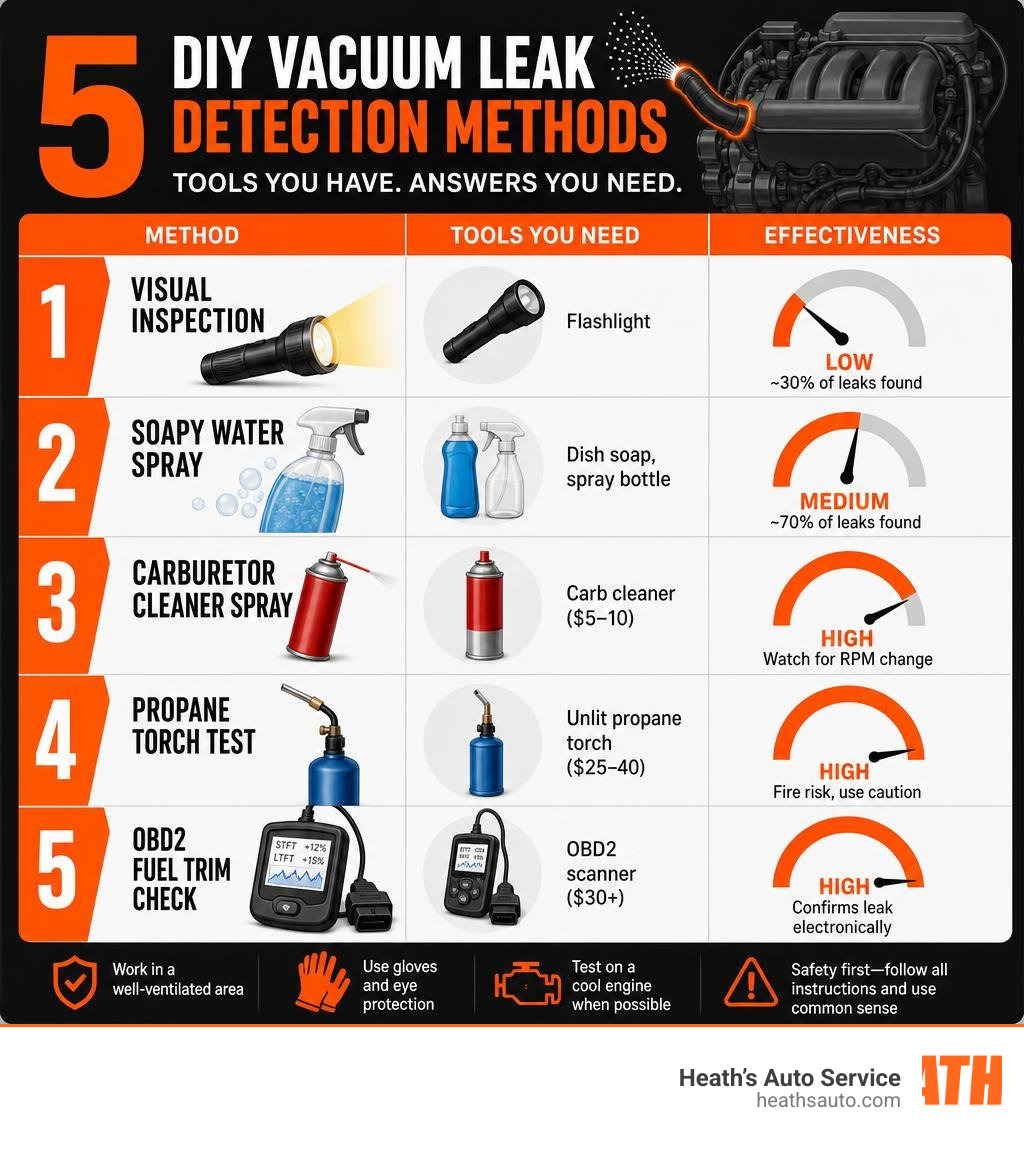
Here are the most effective DIY methods, ranked by ease and safety:
| Method | What You Need | Effectiveness |
|---|---|---|
| Visual inspection | Flashlight | ~30% of leaks found |
| Soapy water spray | Dish soap, spray bottle | ~70% of leaks found |
| Carburetor cleaner spray | Carb cleaner ($5-10) | High — watch for RPM change |
| Propane torch test | Unlit propane torch ($25-40) | High — fire risk, use caution |
| OBD2 fuel trim check | OBD2 scanner ($30+) | Confirms leak electronically |
A vacuum leak happens when unmetered air sneaks into your engine after the mass airflow sensor. This throws off the air-fuel ratio, and your engine starts acting up — rough idle, stalling, poor acceleration, or a check engine light.
The good news? You don’t need a professional smoke machine to track one down. Most vacuum leaks can be found using basic tools and a little patience.
At Heath’s Auto Service, after years of diagnosing vacuum leaks across our Arizona locations, we know exactly where these leaks hide and how to find them — including how to find a vacuum leak without a smoke machine using methods that work just as well for a DIYer at home. Let’s walk through everything you need to know.
Simple how to find a vacuum leak without a smoke machine word guide:
Symptoms and Common Locations of an Engine Vacuum Leak
Before you roll up your sleeves to hunt down a leak, it helps to understand what you are actually fighting. Think of your engine’s vacuum system as its respiratory tract. When there is a hole in that system, the engine draws in “unmetered” air — air that bypasses the Mass Air Flow (MAF) sensor. The engine control unit (ECU) has no idea this extra air is entering, resulting in a lean air-fuel mixture (too much air, not enough fuel).
The Most Common Symptoms of a Vacuum Leak
How do you know you are dealing with a vacuum leak in the first place? Your car will usually let you know through several unmistakable performance issues. If you notice these symptoms, it is highly likely you have a leak:
- Rough or Fluctuating Idle: Your engine might sound like it has had one too many cups of coffee. Instead of a smooth, steady purr, the RPM needle will bounce up and down, or the car will stumble and shake while sitting at a red light.
- Engine Stalling: When you come to a stop, the air-fuel ratio can become so unbalanced that the engine simply gives up and stalls out.
- Unusual Hissing or Whistling Sounds: A vacuum leak is literally sucking air through a small opening. This often creates a distinct hissing sound under the hood, similar to a tea kettle starting to whistle or a snake hiding in your engine bay.
- Check Engine Light (Lean Codes): Your ECU will quickly realize that the oxygen sensors are reading an overly lean exhaust mixture. This triggers the check engine light, typically throwing Diagnostic Trouble Codes (DTCs) P0171 (System Too Lean, Bank 1) or P0174 (System Too Lean, Bank 2).
- Hard Brake Pedal: Because most gasoline engines rely on manifold vacuum to assist the power braking system, a massive vacuum leak can starve your brake booster of the vacuum pressure it needs. The result? A rock-hard brake pedal that requires massive physical effort to stop the vehicle.
If your vehicle is displaying these symptoms, check out our guide on Signs Your Car’s Engine Has a Vacuum Leak for a deeper dive into what is happening under the hood.
Common Locations Where Vacuum Leaks Hide
When you begin your search, you shouldn’t just spray wildly. You need a systematic approach. Focus your attention on the most common failure points:
- Intake Manifold Gaskets: The gaskets sealing the intake manifold to the engine block are constantly subjected to extreme temperature cycles. Over time, plastic or rubber gaskets degrade, shrink, or crack, allowing air to bypass the throttle body.
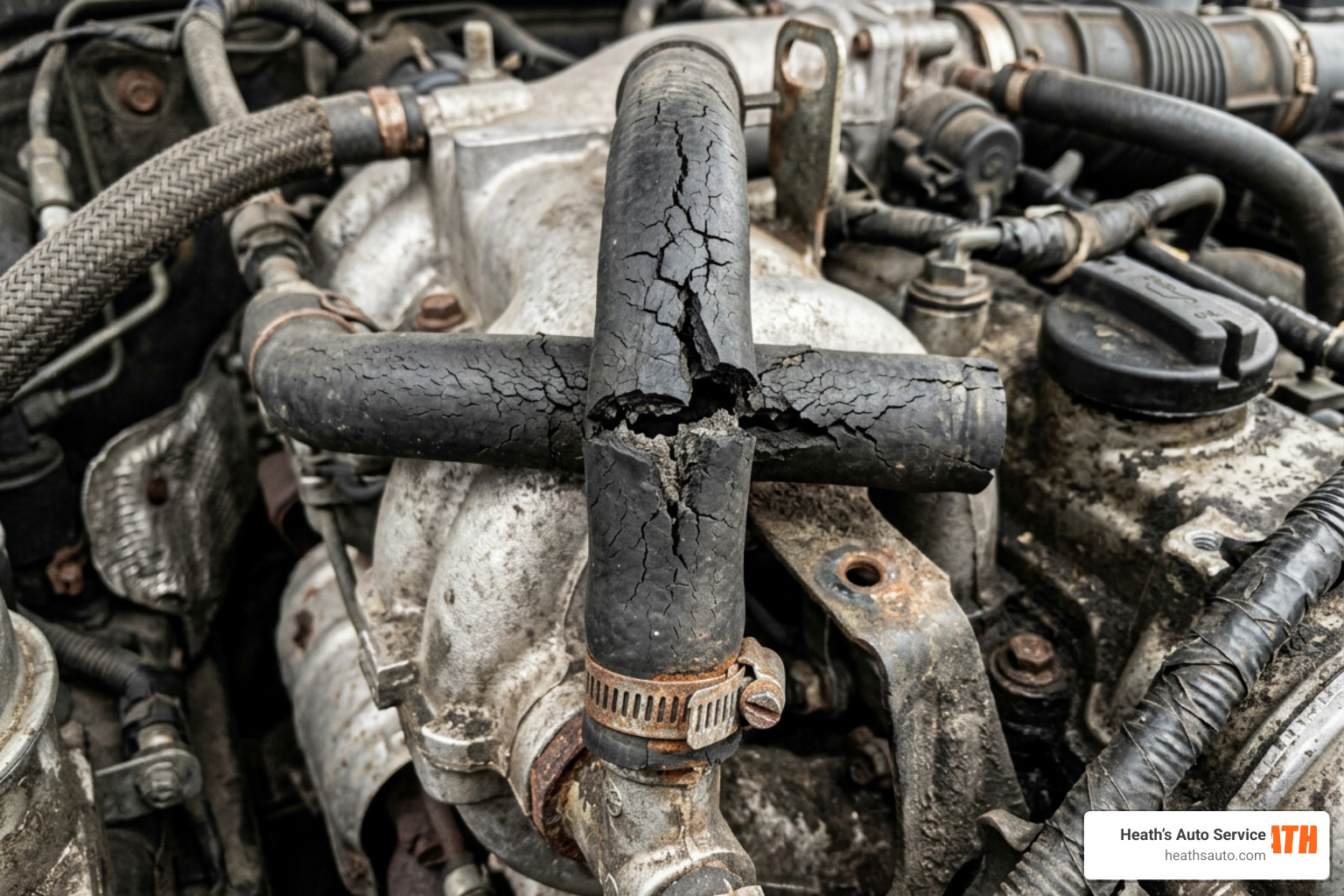
- Vacuum Hoses and Connections: Rubber vacuum lines typically last about 5 to 7 years before they dry rot, crack, or slip off their plastic fittings. Rigid nylon lines can also crack if they are bumped during other maintenance.
- Brake Booster Supply Hose: This is a thick, heavy-duty hose running from the intake manifold to the brake booster. Because of the high volume of vacuum it carries, any split or check-valve failure here will cause a massive leak.
- PCV (Positive Crankcase Ventilation) System: The PCV valve and its connecting hoses recycle crankcase gases back into the intake. A stuck-open PCV valve or a split hose is a very common source of unmetered air.
- Throttle Body Bellows/Intake Boot: The large rubber boot connecting your air filter box to the throttle body can develop hairline cracks in its accordion folds. These cracks are notorious because they often stay closed when the engine is cold but open up as the engine moves under load.
For a comprehensive technical breakdown of these components, you can read How to Find and Diagnose a Vacuum Leak | AutoDTCs.
How to Find a Vacuum Leak Without a Smoke Machine: The Visual and Listening Tests
You do not need to spend money on fancy diagnostic fluids or tools right away. In fact, a highly disciplined visual inspection combined with a basic listening test can identify about 30% of vacuum leaks in under 10 minutes.

Step 1: The Visual Inspection (Start Here)
Before starting the engine, grab a bright flashlight. With the engine off and cool, systematically inspect the engine bay.
- Flex and Squeeze: Don’t just look at the hoses — touch them. Gently bend and flex the rubber vacuum lines, especially at their connection points. Look for dry rot, glazing, soft spots, or visible splitting.
- Check the Accordion Boot: Remove the intake boot if necessary and inspect the valley of each fold. Hairline cracks often hide inside these grooves and only reveal themselves when the rubber is flexed.
- Look for Oily Residue: Vacuum leaks don’t just suck air in; when the engine is turned off, oil vapors can seep out of the leak point. If you see a localized spot of oily grime around an intake manifold seam or a vacuum connection, there is a very high probability a leak is present underneath that dirt.
- Inspect Vacuum Caps: Many engines have unused vacuum ports sealed with small rubber caps. These caps dry rot rapidly and can crumble away entirely, leaving an open vacuum port.
Step 2: The Sound-Based Listening Test
If your visual check doesn’t reveal any obvious culprits, it’s time to use your ears. For this test, you will need to start the vehicle and let it idle.
Because an engine bay is naturally noisy with belt hum and valve train clicking, pinpointing a tiny hiss can be incredibly difficult. To bypass this noise, you can create a makeshift stethoscope using a simple length of household garden hose or heater hose (about 2 to 3 feet long).
- Hold one end of the hose directly to your ear.
- Use the other end of the hose to trace slowly along all vacuum lines, intake gaskets, the throttle body, and the brake booster connection.
- The hose will naturally block out the ambient engine noise and amplify the distinct hissing or whistling sound of escaping air when you pass over the leak.
This classic “old-school” method is incredibly effective for isolating small, stubborn leaks in tight spaces. For more tips on implementing this acoustic approach, check out the guide on How To Check For Engine Vacuum Leaks Without A Smoke Machine.
4 DIY Methods to Pinpoint Vacuum Leaks Using Household Items
If visual and auditory checks leave you empty-handed, you can step up your diagnostic game using simple household items. Below is a comparison table of the top four DIY methods to help you decide which to use first.
| Method | Diagnostic Accuracy | Safety Risk | Required Household Items |
|---|---|---|---|
| Soapy Water Spray | Moderate (~70% success) | Extremely Low | Dish soap, water, spray bottle |
| Carburetor Cleaner | High | Moderate (Flammable) | Can of carb cleaner, rag |
| Propane Torch | High | Moderate-High (Flammable gas) | Unlit propane torch |
| OBD2 Fuel Trims | Extremely High (Electronic) | None | OBD2 scanner / smartphone dongle |
The Soapy Water Spray Test: How to Find a Vacuum Leak Without a Smoke Machine Safely
The soapy water spray test is widely considered the safest DIY method available. It carries absolutely zero fire risk and has an impressive 70% success rate for identifying vacuum leaks.
How It Works
When you spray soapy water over a vacuum leak on a running engine, one of two things will happen depending on the pressure of the system:
- Sucking Action: Because engine vacuum pulls air inward, the soapy water will get sucked into the crack. This temporarily seals the leak, causing a sudden, noticeable change in the engine’s idle speed (it will smooth out momentarily).
- Bubble Formation: If you are testing a turbocharged or supercharged vehicle where parts of the intake system can experience positive pressure, or if you are using a low-pressure DIY pressurization setup, the leaking air will blow outward through the soapy solution, creating a cluster of obvious bubbles.
Step-by-Step Instructions
- Mix a few drops of standard liquid dish soap with warm water in a clean spray bottle. Shake gently to mix.
- Start the engine and let it run at a warm idle.
- Lightly mist the soapy water over suspected areas: vacuum hose connections, intake manifold seams, and around the PCV valve.
- Listen closely for changes in engine RPM. If the idle suddenly stumbles or smooths out, or if you see soapy water being rapidly sucked into a seam, you have found your leak.
Tip: Avoid spraying large amounts of soapy water directly onto electrical connectors, sensors, or hot exhaust manifolds to prevent electrical shorts or steam. If you find a leak near your vacuum pump or related brake lines, you can reference our guide on How to Fix Vacuum Pump Leaks in 6 Simple Steps to get it sorted out safely.
The Carburetor Cleaner Spray Method
If the soapy water test doesn’t yield results, the carburetor cleaner method is a highly effective, time-tested alternative.
How It Works
Carburetor cleaner is highly volatile and acts as an alternative fuel source for your engine. When you spray a tiny, controlled mist of carb cleaner near a vacuum leak, the engine will suck the flammable chemicals into the combustion chamber. Because the engine was running lean due to the leak, this sudden burst of fuel will instantly correct the mixture, causing the engine idle speed to spike or smooth out momentarily.
Step-by-Step Instructions
- Ensure the engine is warm and idling steadily.
- Hold a can of carburetor cleaner (or dedicated brake cleaner/starting fluid) about 4 to 6 inches away from the target area.
- Using the straw attachment for precise aiming, spray short, highly localized bursts along the intake manifold gaskets, throttle body, and vacuum connections.
- Pause for 2 to 3 seconds after each spray to allow the engine time to react.
- If the engine’s RPM increases, stumbles, or changes in tone, you have pinpointed the exact location of the leak.
Safety Warning
Carburetor cleaner is highly flammable. Never spray carb cleaner near the hot exhaust manifold, spark plug wires, or open electrical connections. Keep a fire extinguisher within arm’s reach at all times during this test. For a deeper look at the safety and efficacy of this approach, refer to the Best Way To Diagnose Vacuum Leaks In Your Car (May 2026) guide.
The Propane Torch Test
For those who want the precision of a chemical spray without the messy liquid residue, the propane torch test is an excellent option.
How It Works
Similar to the carburetor cleaner method, this test introduces a flammable hydrocarbon (propane gas) near the suspected leak. When the gas is sucked into the intake manifold, it enriches the lean mixture, causing a distinct rise in engine RPM. Because propane is a dry gas, it won’t leave a sticky residue or damage sensitive plastic components.
Step-by-Step Instructions
- Obtain a standard propane torch (the kind used for plumbing or soldering).
- Attach a length of flexible rubber hose (about 2 feet) to the end of the torch nozzle to allow for precise directional control.
- Do not light the torch.
- Turn the valve slightly to release a very gentle, steady stream of unlit propane gas.
- Slowly trace the end of the rubber hose along your engine’s vacuum lines and intake seams.
- Monitor your tachometer (RPM gauge) or listen closely to the engine sound. A sudden increase in idle speed indicates that the propane has entered a leak.
Safety First: Only perform this test in a well-ventilated outdoor area. Never use this method if your vehicle has cracked spark plug wires or a known ignition system arc, as a stray spark could ignite the gas cloud.
Using OBD2 Fuel Trims: How to Find a Vacuum Leak Without a Smoke Machine Electronically
If you want a highly precise, scientific way to confirm and locate a vacuum leak without guessing, your vehicle’s onboard computer holds the key. By monitoring Short Term Fuel Trim (STFT) and Long Term Fuel Trim (LTFT), you can watch the engine respond to your diagnostic efforts in real-time.
Understanding Fuel Trims
Fuel trim is the percentage of fuel the ECU adds (+) or subtracts (-) to maintain the ideal 14.7:1 air-fuel ratio.
- 0% to +5%: Ideal, normal engine operation.
- Above +10%: Indicates a developing lean condition (the ECU is adding extra fuel to compensate for unmetered air).
- Above +20%: Suggests a severe vacuum leak or fuel delivery issue, which will typically trigger a P0171 or P0174 code.
How to Locate a Leak Using Fuel Trims
- Plug a basic OBD2 scanner or Bluetooth dongle into your car’s OBD2 port (typically located under the dashboard).
- Open your diagnostic app and select “Live Data,” then select Short Term Fuel Trim (STFT).
- Observe the STFT at idle. If it is sitting at a high positive number (e.g., +18%), you have a confirmed lean condition.
- The RPM Test: Rev the engine to 2,500 RPM and hold it there. If the STFT drops significantly (closer to 0%), you have a confirmed vacuum leak. (This happens because a vacuum leak has a massive effect at idle, but becomes negligible when the throttle plate opens and lets in a flood of metered air).
- Pinpointing: While watching the live STFT data on your screen, spray small bursts of soapy water or carb cleaner around suspected leak points. The moment you spray the leak, the STFT value will suddenly plummet into negative numbers (e.g., dropping from +18% to -5%) because the ECU is reacting to the temporary blockage of unmetered air.
Using fuel trims takes the guesswork out of DIY diagnostics. For a comprehensive guide on interpreting these electronic values, read Sucking Air: Your Guide to Vacuum Leak Car Repair.
Safety Precautions and When to Seek Professional Help
While hunting down a vacuum leak using household items is a fantastic way to save money, working around a running engine carries inherent risks.
Crucial Safety Precautions
- Keep a Fire Extinguisher Nearby: If you are using flammable sprays (carb cleaner) or propane, always keep a working fire extinguisher within arm’s reach.
- Watch Out for Moving Parts: Keep loose clothing, long hair, and test hoses far away from spinning serpentine belts, cooling fans, and pulleys.
- Avoid Hot Exhaust Components: Never spray flammable liquids directly onto the exhaust manifold or catalytic converter. These components operate at temperatures high enough to instantly ignite chemical vapors.
- Be Gentle with Plastic: Modern engines use extensive plastic in their intake manifolds and vacuum lines. Over-tightening clamps or using aggressive solvents can warp or dissolve these components, creating even bigger leaks.
When to Call the Professionals
While DIY methods can resolve the vast majority of simple hose leaks, some situations require professional intervention. You should consider bringing your vehicle to a certified shop if:
- The Leak is Inaccessible: Some vacuum lines and intake gaskets (especially lower intake manifold gaskets on V6 and V8 engines) are buried deep within the engine bay, requiring extensive disassembly to reach.
- You suspect a Brake Booster Diaphragm Leak: If the leak is inside the brake booster itself, it cannot be easily detected from the engine bay and requires specialized vacuum testing tools.
- You Have a Turbocharged Vehicle: Turbocharged systems are highly complex and operate under both vacuum and boost pressure. A leak that only appears under positive boost pressure can be incredibly difficult to find without a professional smoke machine.
- You Want a Guaranteed Fix: A professional diagnostic service typically costs between $50 and $150 and can pinpoint every single leak in under 15 minutes using a professional-grade smoke machine, saving you hours of frustration.
If you live in the Arizona area and are feeling overwhelmed, we can help. Our ASE-certified technicians at Heath’s Auto Service can quickly diagnose and repair your system. Check out our Vacuum Leak Car Repair Chandler AZ page to see how we handle these issues. If you want to see what a professional repair process looks like, you can also read How To Find (And Fix) An Engine Vacuum Leak Yourself (2026 DIY Guide).
Frequently Asked Questions about Engine Vacuum Leaks
Can I drive my car with a vacuum leak?
You can drive short distances with a minor vacuum leak, but it is not recommended for extended periods. Running lean increases combustion chamber temperatures, which can damage your spark plugs, burn your engine valves, and eventually overheat and destroy your expensive catalytic converter. Furthermore, a large leak can cause unpredictable stalling, which is a major safety hazard when pulling into traffic or coming to a stop.
Will a vacuum leak cause my car to fail an emissions test?
Yes, absolutely. A vacuum leak disrupts the precise air-fuel ratio required for proper catalytic converter operation. This raises harmful nitrogen oxide (NOx) emissions. Additionally, the resulting check engine light and active “System Too Lean” codes (P0171/P0174) will trigger an automatic failure in states or counties that require OBD2 emissions testing. The leak will also prevent your vehicle’s emissions readiness monitors from completing their self-tests.
Can a vacuum leak cause an engine misfire?
Yes. When a vacuum leak is severe, the air-fuel mixture in one or more cylinders becomes so lean that the spark plug cannot ignite it. This is known as a “lean misfire.” You will feel this as a harsh shudder or stumble during acceleration, and it will often trigger misfire codes (such as P0300, P0301, etc.) alongside your lean codes.
Conclusion
Finding an engine vacuum leak doesn’t have to require a trip to the mechanic or an expensive professional smoke machine. By starting with a thorough visual inspection, using your ears with a makeshift hose stethoscope, or applying simple household items like soapy water, you can locate and resolve most minor vacuum leaks right in your own driveway.
However, if you have tried these DIY methods and are still dealing with a rough idle, a hard brake pedal, or a stubborn check engine light, don’t let a small leak turn into an expensive engine repair.
Heath’s Auto Service In Chandler, AZ
At Heath’s Auto Service, our comprehensive range of services covers everything from routine maintenance to complex repairs. Our certified technicians are skilled in handling oil changes, brake inspections, engine diagnostics, tire rotations, and much more. Whether it’s a minor tune-up or a major overhaul, trust us to get you back on the road with confidence. Contact our team at Heath’s Auto Service today!
We offer a free second opinion, an ASE-certified team of technicians, same-day service, and an industry-leading 3-year/36,000-mile nationwide warranty on all repairs.