

Why Your Steering Wheel Is Shaking While Driving
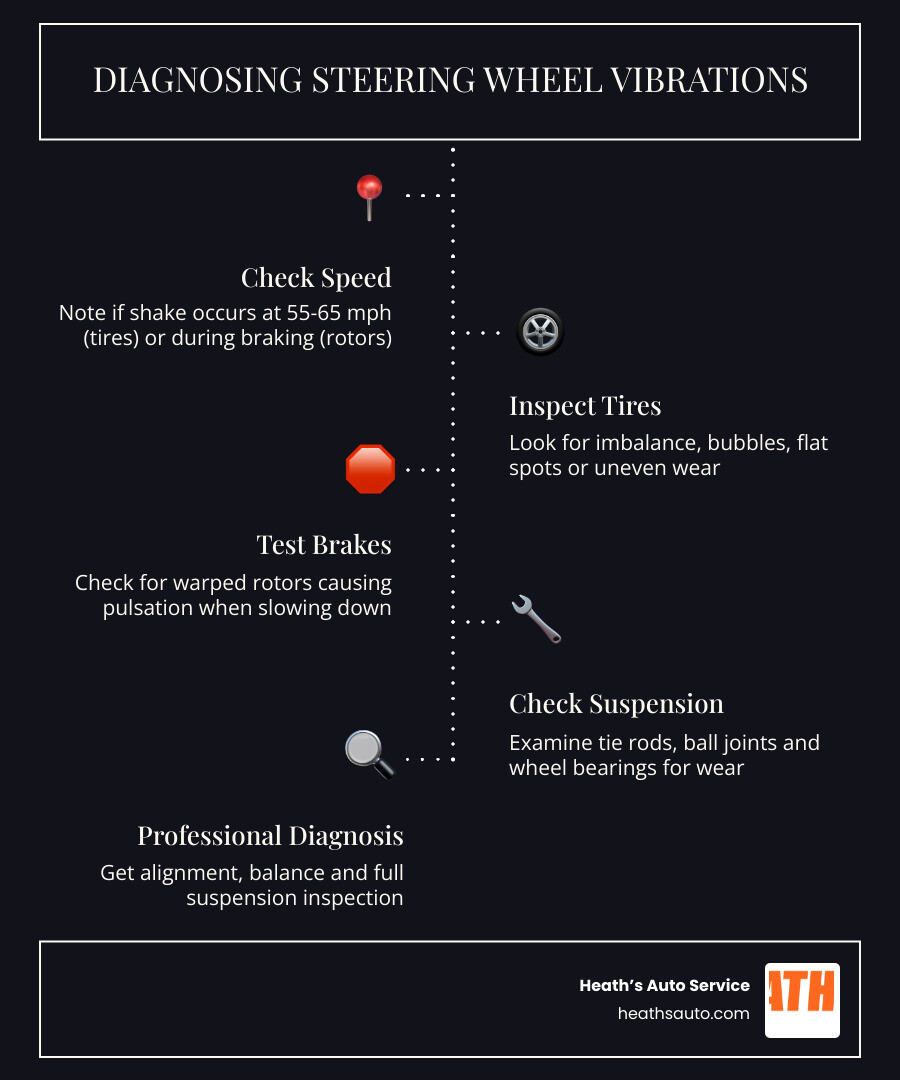
Steering wheel shaking while driving is almost always caused by one of these core issues:
- Unbalanced tires — most common at highway speeds (55–65 mph)
- Warped brake rotors — shaking happens specifically when you brake
- Wheel misalignment — causes uneven tire wear and pulling
- Worn suspension parts — ball joints, tie rods, or wheel bearings
- Sticking brake caliper — vibration during normal driving, not just braking
- Tire damage — flat spots, sidewall bubbles, or uneven wear
That unsettling wobble in your hands is your car telling you something is wrong. It can range from a minor annoyance to a serious safety issue depending on the cause. The good news? Most causes are straightforward to diagnose once you know what to look for.
Common Causes of Steering Wheel Shaking While Driving
When you feel that shimmy in your hands, your first instinct might be to grip the wheel tighter. While that helps you maintain control, it doesn’t fix the underlying mechanical gremlin. In our shops across Arizona, we’ve found that vibrations are one of the top five reasons drivers seek out professional help for steering and suspension issues.
The most frequent culprit is the relationship between your tires and the road. Because tires are the only part of your vehicle meant to touch the pavement, any imperfection there is magnified and sent straight up the steering column. However, it isn’t always the rubber. Sometimes, it’s the “joints” of your car—the suspension—or the “muscles” that stop it—the brakes.
According to Why Your Steering Wheel Shakes: 6 Possible Causes | AAA Club Alliance, identifying when the shaking occurs is the secret to a quick diagnosis. Does it happen only at 60 mph? Does it happen when you tap the brakes? Or is it a constant, low-speed jitter? Each of these scenarios points toward a different component. For more detailed background, you can explore more info about steering and suspension service on our website.

Unbalanced Tires and High-Speed Steering Wheel Shaking While Driving
If your steering wheel shaking while driving starts exactly when you hit 55 mph and seems to smooth out once you pass 70 mph, you are almost certainly dealing with unbalanced tires. This is the leading cause of highway-speed vibrations.
Tires are not perfectly uniform. During the manufacturing process, one side of the tire might end up a fraction of an ounce heavier than the other. At low speeds, you’ll never notice. But as you accelerate, centrifugal force takes over. That tiny heavy spot starts to act like a hammer, slinging the tire up and down or side to side thousands of times per minute.
To fix this, we use lead or alloy weights to counter-balance those heavy spots. Even losing a single small weight can trigger a violent shake. We recommend balancing your tires every 5,000 to 6,000 miles—essentially every time you get an oil change. Research shows that staying on top of this can prevent up to 70% of steering vibration issues. You can read more about the physics of this in this guide on Why Is My Steering Wheel Shaking While Driving?.
Warped Brake Rotors and Vibrations During Braking
Does your steering wheel feel perfectly fine until you try to slow down for a red light? If the vibration only occurs when your foot is on the brake pedal, the most likely cause is warped brake rotors.
Your rotors are the metal discs that spin with your wheels. When you step on the brakes, the brake pads clamp down on these discs to create friction and stop the car. This process generates an incredible amount of heat. Over time, or during heavy braking (common when driving down the steep grades near Flagstaff or Prescott), that heat can actually make the metal malleable. If the rotors cool unevenly or are subjected to extreme stress, they can develop “high” and “low” spots.
When the pads hit these uneven surfaces, they bounce, and that pulsation travels through the brake lines and steering rack into your hands. This accounts for approximately 30% of reported brake-related vibration cases. Ignoring this doesn’t just make for an annoying drive; it can lead to The Scary Reason Your Steering Wheel Shakes When You Hit the Brakes, which often involves premature wear on your suspension and increased stopping distances.
Diagnosing Why Your Steering Wheel Shakes While Driving at Low Speeds
Shaking at low speeds (between 20 and 30 mph) is a different beast entirely. While high-speed shaking is usually about balance, low-speed shaking is often about the physical shape or integrity of the tire or drivetrain.
One common culprit is a “flat spot.” This can happen if you had to slam on your brakes and skidded across the asphalt, or if your car sat parked in the Arizona sun for a long period. The tire loses its perfectly round shape, and you feel a “thump-thump-thump” as you roll down the street.
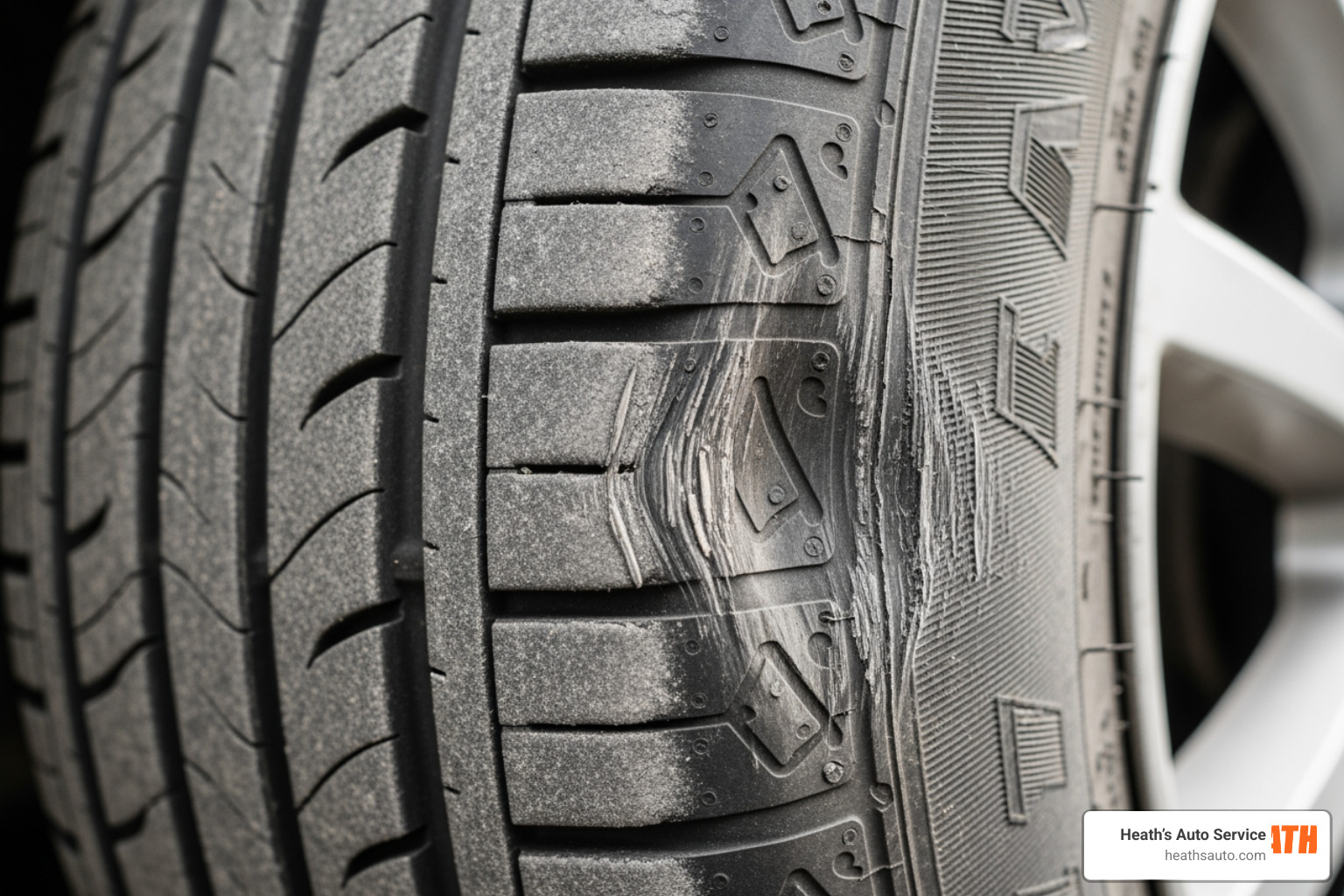
Another dangerous cause is an internal tire bubble or a separated belt. This happens when the internal structure of the tire fails, often due to hitting a deep pothole or a curb. You might see a bulge on the sidewall, but sometimes the damage is hidden inside the tread. For a deeper dive into these specific symptoms, check out our article on Why Your Steering Wheel Shakes at Low Speeds.
Critical Suspension and Steering Components to Inspect
If your tires are balanced and your rotors are smooth, but the steering wheel shaking while driving persists, it’s time to look at the “skeleton” of your vehicle. The suspension and steering systems are comprised of dozens of moving parts that must work in perfect harmony. When one part gets “sloppy,” the whole system can vibrate.
Here are the most common mechanical failures we see:
- Tie Rod Ends: These connect your steering rack to the wheels. If they are worn, your wheels can literally “wiggle” back and forth independently of your steering input.
- Ball Joints: These act as the pivot points for your suspension. When they wear out, you’ll often hear a clunking sound along with the vibration, especially when turning or hitting bumps.
- Wheel Bearings: These allow your wheels to spin freely with minimal friction. If a bearing starts to fail, it creates a rhythmic growling noise and a vibration that changes as you steer left or right.
- Control Arm Bushings: These rubber components absorb road shock. In the dry Arizona heat, rubber tends to crack and dry out faster than in other climates, leading to excessive movement in the suspension.
For those interested in the technical side of these repairs, we have a comprehensive guide: Everything You Need to Know About Suspension Repair Shocks and Struts.
Symptoms Comparison: Worn Tie Rods vs. Bad Wheel Bearings
| Symptom | Worn Tie Rod Ends | Bad Wheel Bearings |
|---|---|---|
| Vibration Type | Shaking at various speeds | Constant hum or vibration |
| Sound | Clunking or squeaking | Growling or chirping |
| Steering Feel | “Loose” or wandering steering | Vibration that changes when turning |
| Tire Wear | Feathering or edge wear | Usually no specific wear pattern |
| Test | Move wheel at 3 and 9 o’clock | Move wheel at 12 and 6 o’clock |
Safety Risks and Prevention Strategies for Steering Vibrations
Is it safe to keep driving with a shaky wheel? The short answer is: No.
While a minor tire imbalance might just be an annoyance today, it is putting massive stress on your wheel bearings, shocks, and steering rack. What starts as a $50 tire balance can easily turn into a $1,000 suspension overhaul if ignored. More importantly, a shaking steering wheel reduces your ability to react in an emergency. If you need to swerve to avoid an object, a compromised steering system might not respond as quickly or accurately as it should.
Prevention is much cheaper than repair. We recommend a “5-6-12” strategy:
- Balance tires every 5,000 to 6,000 miles.
- Rotate tires every 5,000 to 6,000 miles to ensure even wear.
- Align your wheels at least once every 12 months, or immediately after hitting a major pothole or curb.
Proper alignment is especially critical in Arizona. Misalignment contributes to steering wheel shake in over 40% of vehicles with uneven tire wear. By keeping your wheels pointed in the right direction, you reduce rolling resistance, which also improves your gas mileage by about 3%.
Frequently Asked Questions about Steering Wheel Shaking
We get a lot of questions at our Arizona locations about these vibrations. Here are the answers to the most common ones we hear. If you’re wondering what happens during a professional check-up, you can read about What Is a Car Suspension Service on our blog.
Why does my steering wheel shake only when I hit the brakes?
As we mentioned earlier, this is the classic sign of warped brake rotors. When you apply the brakes, the pads press against an uneven surface, causing the steering wheel to flutter. This is often caused by heat buildup or by using low-quality brake pads that don’t dissipate heat properly.
Is it safe to drive with a shaking steering wheel?
It is generally not recommended. While you might be able to limp the car home, a shaking wheel indicates that a component is failing or out of spec. If the cause is a loose lug nut or a failing ball joint, the wheel could potentially detach from the vehicle, leading to a catastrophic accident. Always seek a professional inspection at the first sign of trouble.
How much does it cost to fix a shaky steering wheel?
The cost depends entirely on the “Why.”
- Tire Balancing: Typically $50 – $100 for all four wheels.
- Wheel Alignment: Usually $100 – $150.
- Brake Rotor Replacement: Can range from $200 to $500 per axle depending on the vehicle.
- Suspension Repairs: Replacing ball joints or tie rods can cost between $200 and $600 per side.
For a more detailed breakdown of potential costs, check out our guide on Car Suspension Repair Cost.
Conclusion
A shaking steering wheel is your car’s way of asking for help. Whether it’s a simple tire balance or a more complex suspension issue, addressing it early is the best way to keep your repair costs low and your safety high.
If you’re not sure why your car is vibrating, come see us for a free second opinion. We’ll get to the bottom of it and get you back on the road with a smooth, steady ride.
Heath’s Auto Service In Gilbert, AZ
We stand behind our work with a 3-year/36,000-mile nationwide warranty and offer free second opinions if you’ve been told you need a major repair elsewhere. Don’t spend another day melting in traffic.
At Heath’s Auto Service, our comprehensive range of services covers everything from routine maintenance to complex repairs. Our certified technicians are skilled in handling brake inspections, tire rotations, and much more. Whether it’s a minor tune-up or a major overhaul, trust us to get you back on the road with confidence. Contact our team at Heath’s Auto Service today!