
Why the Cheapest Way to Fix a Catalytic Converter Near Me Is Worth Knowing Before You Pay
Finding the cheapest way to fix catalytic converter near me could save you hundreds — or even thousands — of dollars. Replacement quotes regularly run from $1,000 to over $3,000, and some dealers charge even more.
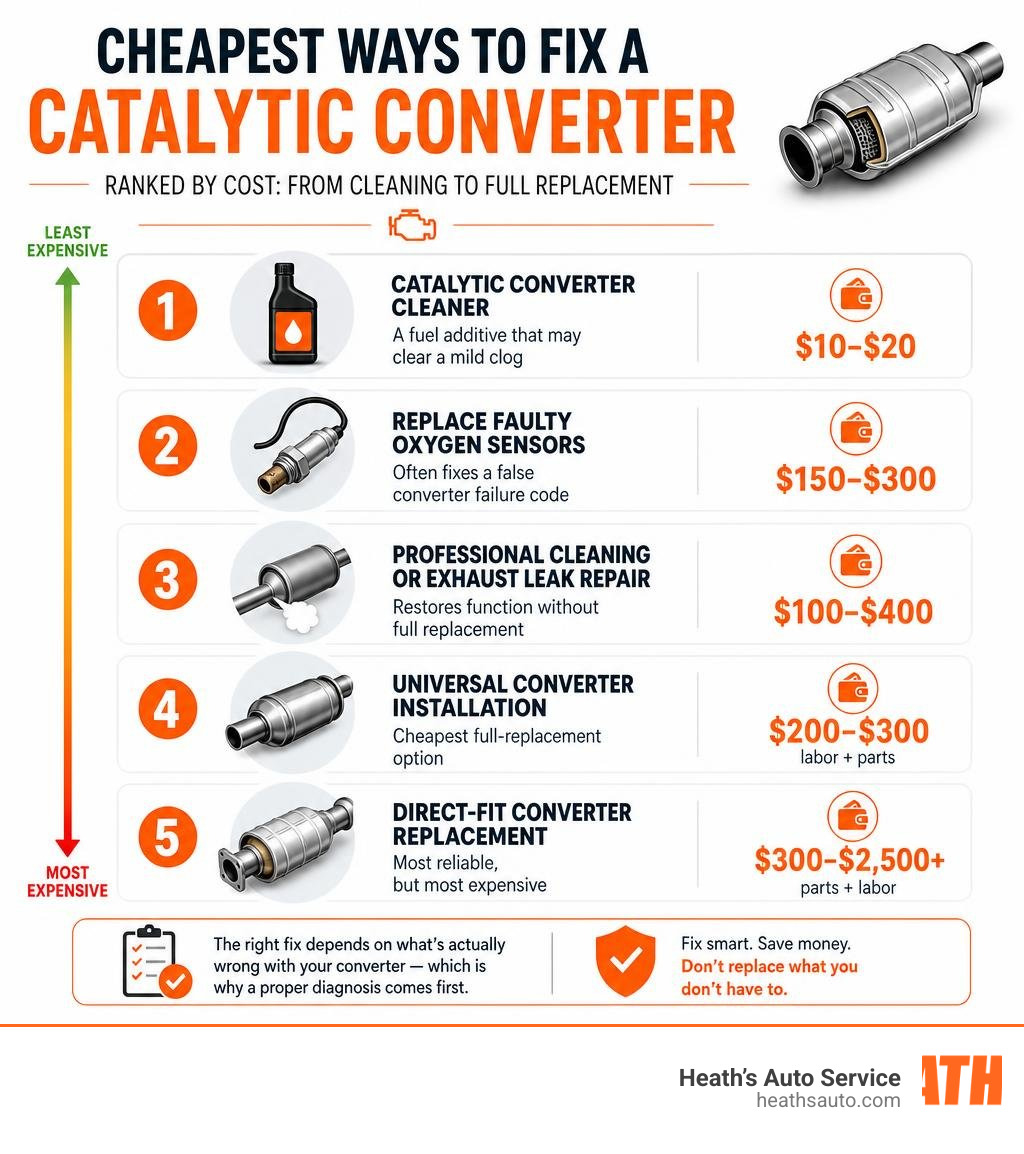
Before you pay a big bill, here are your most affordable options, ranked from least to most expensive:
- Add a catalytic converter cleaner ($10–$20) — A fuel additive that may clear a mild clog
- Replace faulty oxygen sensors ($150–$300) — Often fixes a false converter failure code
- Professional cleaning or exhaust leak repair ($100–$400) — Restores function without full replacement
- Universal converter installation ($200–$300 labor + parts) — Cheapest full-replacement option
- Direct-fit converter replacement ($300–$2,500+ parts + labor) — Most reliable, but most expensive
The right fix depends on what’s actually wrong with your converter — which is why a proper diagnosis always comes first.
The average cost for a full catalytic converter replacement sits between $2,283 and $2,473 according to RepairPal estimates — but many drivers end up paying that much when a $150 oxygen sensor was all they needed. Getting a second opinion before approving any major repair can make a real difference.
Catalytic converter costs have also been climbing in Arizona and across the country. Theft alone has skyrocketed — one Arizona city recorded 431 cases in 2021, up from just 1 in 2018 — driving up demand and replacement prices at the same time.
Key cheapest way to fix catalytic converter near me vocabulary:
What is a Catalytic Converter and Why Does It Fail?
To understand how to save money on your exhaust system, you first have to know what this expensive metal canister actually does.
A catalytic converter is a vital emissions control device positioned between your engine and your tailpipe. It acts as a chemical superheater, operating at scorching temperatures between 500°F and 1,200°F. Inside, a ceramic or metallic honeycomb structure is coated with precious metals like platinum, palladium, and rhodium. These metals act as catalysts to convert toxic engine byproducts—specifically carbon monoxide, nitrogen oxides, and unburned hydrocarbons—into harmless water vapor and carbon dioxide.
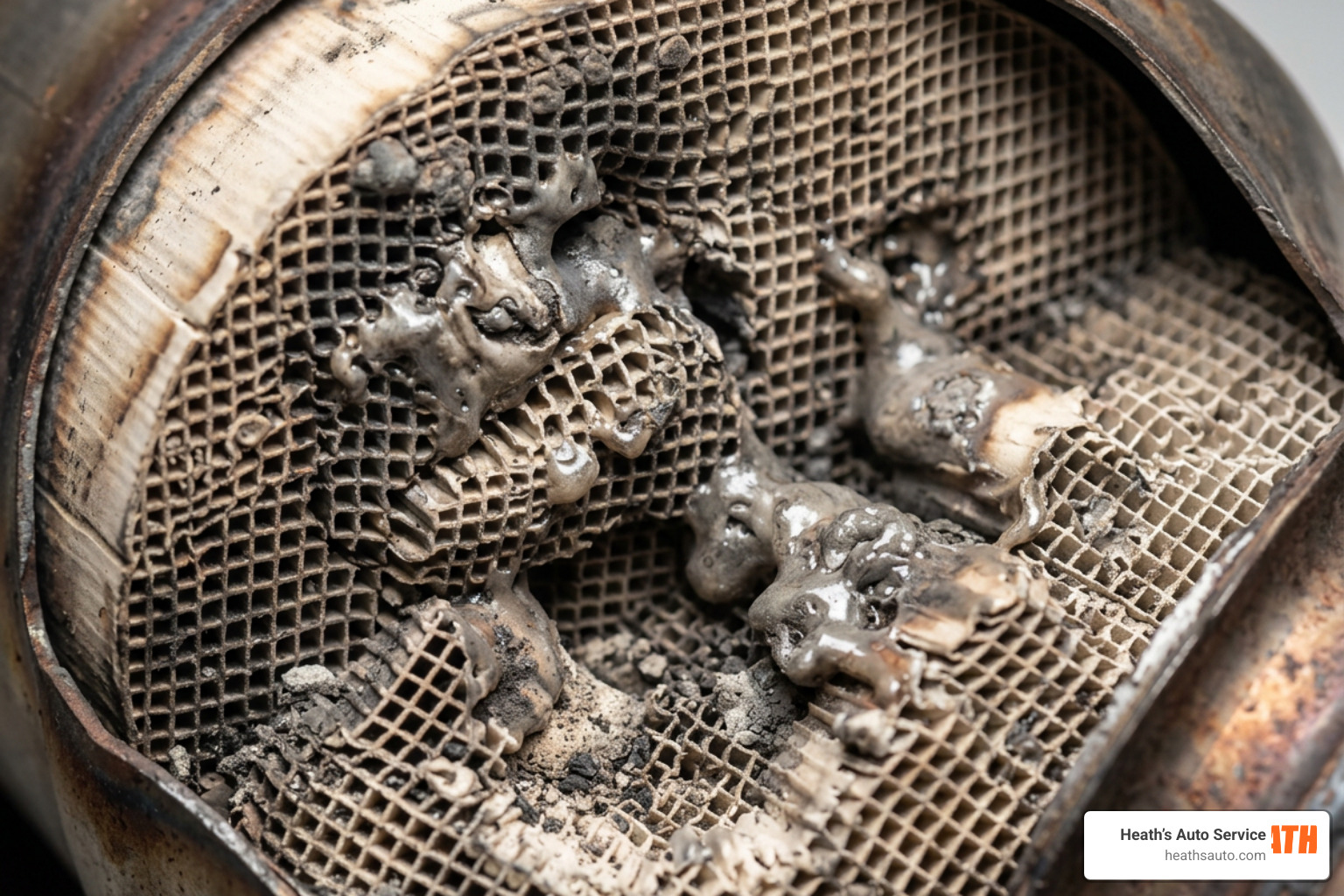
While converters are built to last the lifetime of your vehicle (typically 10 years or 70,000 to 100,000 miles), they rarely fail on their own. Instead, they are usually “murdered” by an underlying engine issue. Common culprits of catalytic converter failure include:
- Engine Misfires: Unburned fuel escapes the combustion chamber and enters the exhaust system, where it ignites inside the converter, melting the delicate honeycomb structure.
- Oil or Coolant Consumption: Leaky internal gaskets allow oil or antifreeze to enter the exhaust. These fluids coat the precious metals, rendering them useless.
- Road Debris: Flying rocks or hitting a deep pothole can physically dent the metal shell, shattering the ceramic element inside.
- Short Trips: Frequently driving only a few miles at a time prevents the converter from reaching its optimal operating temperature, leading to heavy carbon buildup.
If you are noticing early warning signs, checking out a Slugfailing Catalytic Converter Signs Guide is a great first step. Additionally, exhaust issues further up the line can trick your car’s computer into throwing a converter code; you can read about how The Following Problems Are Caused by a Leaking Exhaust Manifold to see if your issue might actually lie elsewhere.
Common Symptoms of a Failing Catalytic Converter
Before your car completely breaks down, it will usually drop several hints that the emissions system is struggling. Keep an eye and an ear out for these common warning signs:
- The Check Engine Light: Your vehicle’s onboard computer uses downstream oxygen sensors to monitor converter efficiency. If it detects a drop in performance, it will trigger the infamous P0420 Code When Your Check Engine Light Is On.
- Rotten Egg Smell: When a converter is failing or clogged, it cannot properly process hydrogen sulfide in the exhaust, resulting in a strong, sulfurous rotten egg odor.
- Sluggish Engine Performance: A heavily clogged converter restricts exhaust flow, creating excessive backpressure. This starves your engine of oxygen, leading to poor acceleration and reduced fuel economy.
- A Loud Rattling Noise: If the ceramic honeycomb inside has shattered due to physical impact or thermal shock, you will hear a distinct metallic rattle when idling or accelerating.
- Deafening Roar: If you start your vehicle and it sounds like a stock car race, your converter might not be broken—it might be gone entirely. You can learn more about The Following Problems Happen When the Catalytic Converter Has Been Stolen to identify the signs of theft.
The Real Cost of Catalytic Converter Replacement
If your converter is truly dead and cannot be saved, you are likely looking at replacement. But why does this repair cause such intense sticker shock?
The primary driver of the cost is the precious metals inside. Platinum, palladium, and rhodium are incredibly rare, and their market prices fluctuate wildly. In fact, these metals are sometimes worth more per ounce than gold, which is precisely why thieves target them.

When budgeting for a replacement in July 2026, you must factor in both parts and labor. Labor rates typically range from $70 to $130 per hour, and a standard replacement takes anywhere from 1.5 to 3 hours.
To help you wrap your head around the numbers, here is a quick look at average replacement costs across different popular vehicles:
- Ford F-150: $1,683 – $1,749
- Toyota Camry: $1,875 – $1,952
- Chevrolet Silverado 1500: $3,062 – $3,188
- Honda Civic: $2,523 – $3,456
For a deeper dive into these numbers, read The Ultimate Guide to Catalytic Converter Replacement Cost or check out our guide on Sticker Shock: What You’ll Actually Pay to Replace a Catalytic Converter. If you are located in the East Valley, you may also want to review Sticker Shock: What You’ll Actually Pay to Replace a Catalytic Converter Gilbert AZ or our local pricing breakdown in The Ultimate Guide to Catalytic Converter Replacement Cost Prescott AZ.
Direct-Fit vs. Universal Catalytic Converters
One of the easiest ways to slash your replacement bill is choosing the right type of replacement part. You generally have two options:
| Feature | Universal Catalytic Converter | Direct-Fit Catalytic Converter |
|---|---|---|
| Average Part Cost | $100 – $300 | $300 – $2,500+ |
| Installation Method | Cutting and Welding | Bolt-on (Direct Replacement) |
| Labor Time | Higher (2 to 4 hours) | Lower (1 to 2 hours) |
| Best Suited For | Older cars, budget-conscious drivers | Newer cars, integrated manifolds |
| Total Estimated Cost | $300 – $600 | $500 – $3,000+ |
Universal converters are designed to work on a wide variety of vehicles. Because they are mass-produced, they are incredibly cheap. However, they do not come with vehicle-specific pipes or flanges. To install one, a technician must cut your old converter out and weld the universal unit into place.
Direct-fit converters, on the other hand, are engineered specifically for your vehicle’s year, make, and model. They bolt directly into place using standard hand tools. While the part itself is much more expensive, the installation is straightforward.
Understanding the labor differences is key to choosing between the two. Check out our resources on How Long Does It Take to Install a Catalytic Converter and our detailed Catalytic Converter Installation Guide to weigh your options.
Finding the Cheapest Way to Fix Catalytic Converter Near Me
If you are searching for the cheapest way to fix catalytic converter near me, you need to balance cost with legal compliance.
First, let’s talk about emissions standards. The United States is split into two regulatory categories: Federal (EPA) standards and California Air Resources Board (CARB) standards. Arizona follows Federal EPA guidelines for emissions. However, if your vehicle was originally sold in California, or if you live in a state with strict CARB rules (like California, Colorado, New York, or Maine), you are legally required to install a CARB-compliant converter. These units contain more precious metals and are significantly more expensive. Installing a non-compliant federal converter in a CARB state is illegal and will cause you to fail your state inspection. You can review the EPA’s guidance on aftermarket catalytic converters to better understand why the correct part matters.
To find affordable, compliant services in Arizona, it helps to work with a trusted local auto repair shop. At Heath’s Auto Service, we have convenient locations across the state to help you navigate emissions compliance and find the most cost-effective repair options. Whether you need assistance in Flagstaff, Prescott, Gilbert, Scottsdale, Chandler, or Cottonwood, our team is ready to help you compare options and ensure your vehicle meets all local standards.
Is Cleaning the Cheapest Way to Fix Catalytic Converter Near Me?
Before you spend money on a replacement, you should find out if your converter can be cleaned. If the internal honeycomb is intact and hasn’t melted, a thorough cleaning might restore its efficiency for a fraction of the cost.
- Chemical Cleaners: Pouring a specialized catalytic converter cleaner into your gas tank is the cheapest method available ($10 to $20). These additives run through your fuel system and help burn off light carbon deposits. For best results, add the cleaner to a quarter-tank of gas and take your car for a 30-minute highway drive to get the exhaust system hot.
- Physical Cleaning: If a chemical additive doesn’t work, a mechanic can remove the converter and physically wash it. This typically involves soaking the unit in a mixture of water and industrial degreaser, followed by a gentle pressure wash to clear out stubborn blockages.
Professional Diagnostics: The Cheapest Way to Fix Catalytic Converter Near Me
The single most expensive mistake you can make is replacing a perfectly good catalytic converter. Many exhaust and engine issues throw the exact same OBD-II trouble codes as a failed converter.
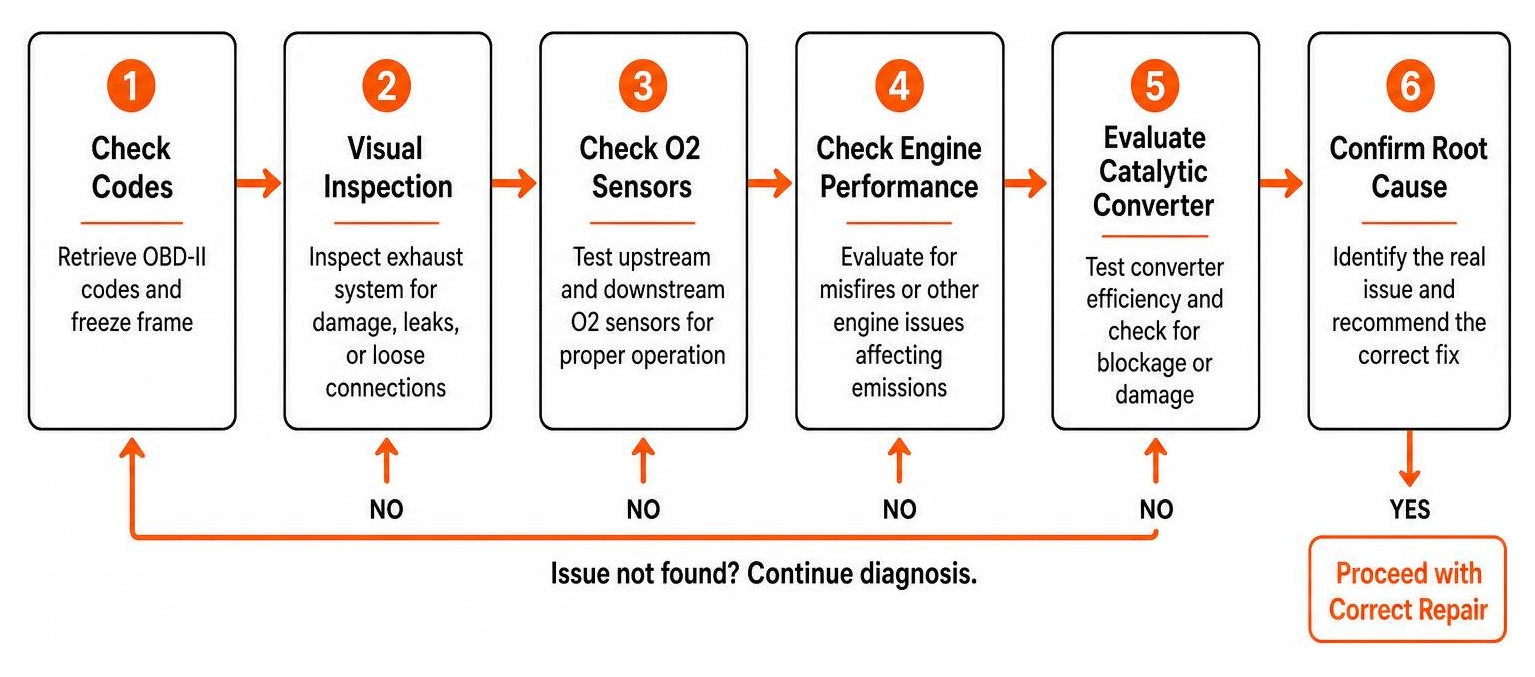
A professional diagnostic check can reveal that your real issue is:
- A Faulty Oxygen (O2) Sensor: Your car uses O2 sensors to measure exhaust gases before and after the converter. If a sensor fails, it may send incorrect data to the computer, triggering a P0420 code even if the converter is working perfectly. Replacing a sensor costs $150 to $300-saving you thousands.
- An Exhaust Leak: A small crack in your exhaust pipe or manifold can let fresh air into the system, tricking the downstream O2 sensor into thinking the converter has failed. Welding the leak shut is a quick, inexpensive fix.
- An Engine Misfire: If your spark plugs or ignition coils are failing, fixing them immediately will prevent unburned fuel from ruining your converter.
Always seek a professional second opinion to identify the root cause of the failure. Fixing the converter without resolving the underlying engine issue means your brand-new converter will likely fail again within a few weeks.
Frequently Asked Questions About Catalytic Converter Repairs
Can I drive with a bad catalytic converter?
Technically, yes, you can drive with a failing converter for a short period, but we highly advise against it. If the converter is partially clogged, it creates exhaust backpressure that starves the engine, reduces your fuel economy, and can cause your engine to overheat or stall. Over time, this backpressure can cause severe internal engine damage. Additionally, driving with a bad converter means your car is releasing harmful pollutants into the air, and you will fail your next state emissions test.
How do I prevent catalytic converter theft?
Because converters contain precious metals, they are prime targets for thieves who can slide under a car and cut them out in less than a minute. To protect your vehicle:
- Park in a locked garage or a well-lit area near building entrances.
- Have a local shop engrave your vehicle identification number (VIN) onto the converter’s metal casing. This makes it difficult for thieves to sell it to scrap yards.
- Install a catalytic converter security shield or cage, which clamps around the exhaust pipes and makes cutting the unit out extremely difficult.
- Calibrate your car alarm to trigger when it detects vibrations or tilting.
Will a cheap universal converter pass emissions?
Yes, a cheap universal converter will pass emissions testing, provided it is certified for your specific vehicle and meets your state’s legal guidelines. In Arizona, a federal EPA-compliant universal converter is perfectly legal and will pass the emissions test, as long as the underlying engine issues have been resolved and the check engine light is off. However, if you drive a vehicle registered in a CARB-compliant state, a cheap federal universal converter will not pass inspection.
Conclusion
When you are looking for the cheapest way to fix catalytic converter near me, cutting corners can end up costing you more in the long run. Whether your vehicle needs a simple chemical flush, a new oxygen sensor, or a welded universal replacement, getting an accurate, professional diagnosis is the most important step.
Heath’s Auto Service In Scottsdale, AZ
At Heath’s Auto Service, we offer a comprehensive range of services and repairs to meet all your automotive needs. Our highly skilled technicians are equipped with the latest tools and technology to ensure your vehicle is serviced to the highest standards. Contact our team today!