
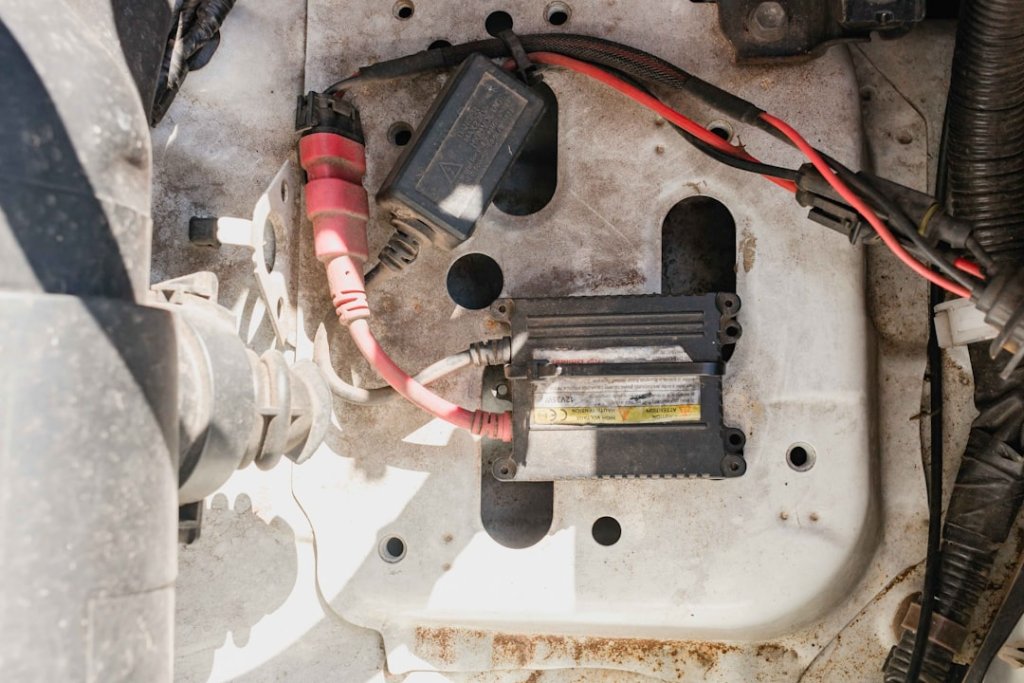
Why Alternator Diode Replacement Can Save You From a Costly Breakdown
Alternator diode replacement is one of the most overlooked fixes in automotive repair — but it can mean the difference between a $15 part and a $400 alternator swap.
Quick answer: What you need to know about alternator diode replacement
- Alternator diodes convert AC power to DC power so your battery and electronics stay charged
- When diodes fail, you’ll notice flickering lights, overnight battery drain, or a dead battery after a few days
- You can often replace just the diode rectifier bridge (cost: $20–$60) instead of the whole alternator ($120–$400+)
- A multimeter AC ripple test can confirm a bad diode before you pull the alternator
- Diodes are vehicle-specific — always match by year, make, model, and alternator output rating
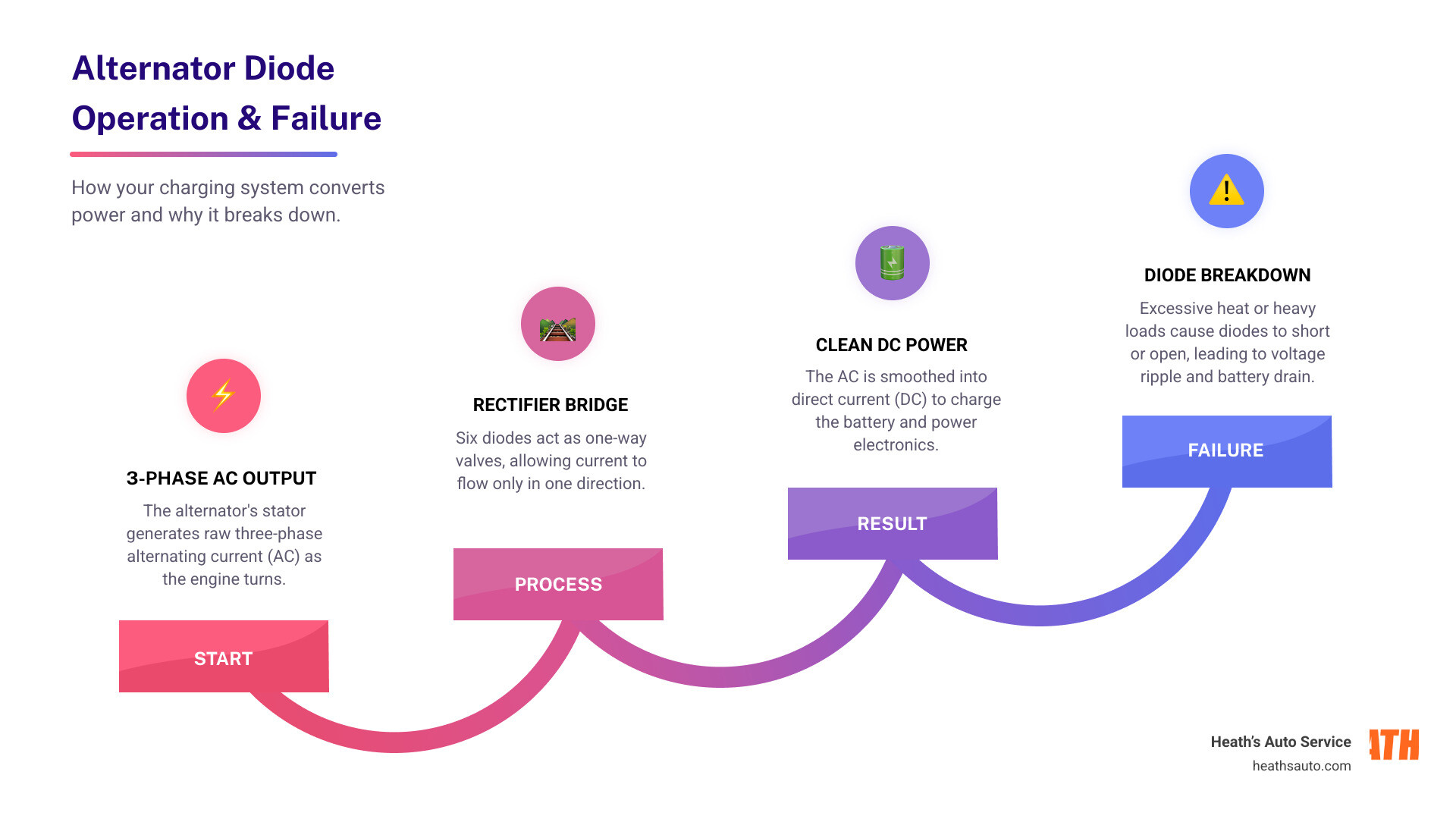
Your alternator produces three-phase AC power. Diodes are what turn that into the steady DC power your car actually uses. Most alternators have six of them, arranged in a rectifier bridge.
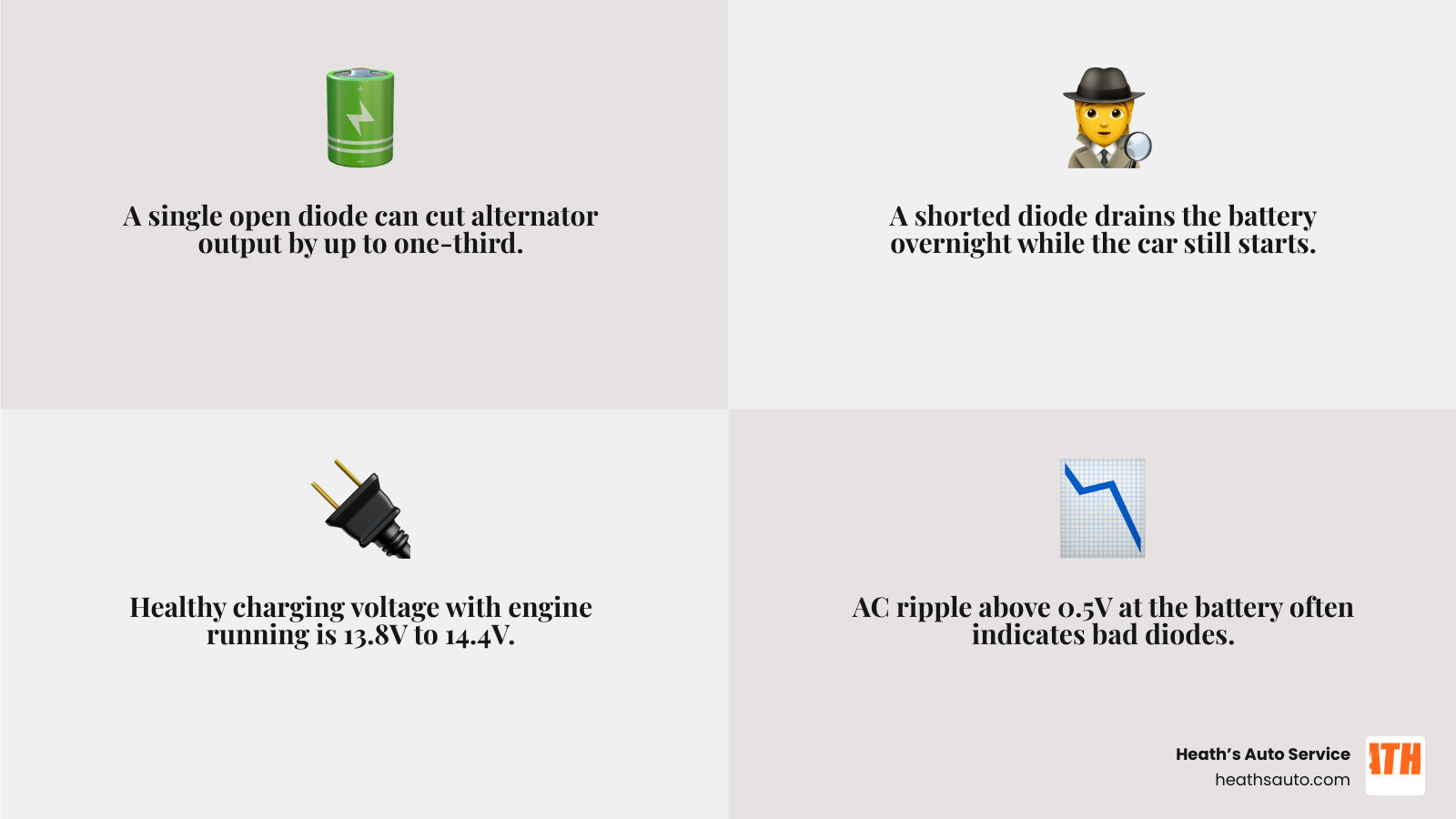
When even one diode fails, your charging system takes a real hit. An open diode can cut output by up to one-third. A shorted diode can quietly drain your battery overnight — even with the engine off.
The frustrating part? These symptoms look a lot like a dead battery or a failing alternator. Many drivers end up replacing the whole unit when a small, inexpensive part was all they needed.
What Alternator Diodes Do and Why They Fail
Think of alternator diodes as one-way electrical check valves. The alternator stator creates three-phase AC current, but your battery, lights, computer modules, and sensors need DC current. The rectifier bridge uses diodes to let current flow in only one direction, which smooths AC into usable DC.
Most passenger-vehicle alternators use six main diodes in the rectifier assembly. Some designs also include extra exciter diodes or a diode trio. These parts are mounted to a heat sink because they get hot in normal operation. And when charging load climbs, heat climbs with it.
Diodes are among the most common alternator parts to fail. That is not surprising when you think about their job: they handle high current, live in engine-bay heat, and deal with vibration all day long.
How alternator diode replacement fits into the charging system
A diode problem is not just an alternator problem. It affects the whole charging system.
Here is the chain reaction:
- The engine spins the alternator.
- The stator generates AC power.
- The rectifier assembly converts AC to DC.
- The regulator helps control output voltage.
- The battery stores power and stabilizes the system.
- The vehicle electronics depend on smooth voltage.
If the diodes fail, DC output becomes weak or noisy. That creates ripple voltage, charging instability, and odd electrical behavior. If you want a deeper look at how we sort out these kinds of faults, here is more info about diagnosing electrical problems.
Common causes of alternator diode failure
Several things can cook a diode before its time:
- Heavy charging load after repeated short trips or a deeply discharged battery
- Overheating from underhood heat or poor heat transfer
- Jump-start mistakes or reverse polarity
- A weak or failing battery that keeps the alternator working overtime
- Poor grounds or loose charging cables
- Age and normal wear
- Vibration that cracks leads or weakens internal connections
A heavy charging load is a big one. Research consistently shows that high current demand can overheat diodes and burn them out. Once a diode shorts instead of simply opening, damage can spread and make a rebuild or full replacement more likely.
How to Tell If Your Diodes Are Bad Before You Pull the Alternator
Before you remove anything, look for patterns. Bad diodes usually leave clues.
Bad alternator diode symptoms you should not ignore
Common signs include:
- Flickering headlights or dash lights
- Battery warning light
- Weak charging or low voltage
- Overnight battery drain
- Radio whine or electrical noise
- Hard starts after the car sits
- Hot alternator smell
- Sulfur or rotten-egg smell from an overworked battery
- Rough idle caused by unstable voltage in sensitive systems
A single open diode can reduce alternator output by up to one-third. A shorted diode is often sneakier because the car may still run, but the battery slowly drains while parked. That is why drivers sometimes replace the battery first, then get annoyed when the “new” battery also dies. Fair reaction, honestly.
If your car shows several of these symptoms, also read our guide to 5 signs your alternator is going bad.
Quick tests for alternator diode replacement decisions
You do not always need to remove the alternator just to get a strong clue.
Start with these checks:
- Battery voltage with engine off
- A healthy fully charged battery is around 12.6V.
- Charging voltage with engine running
- Most vehicles should show roughly 13.8V to 14.4V.
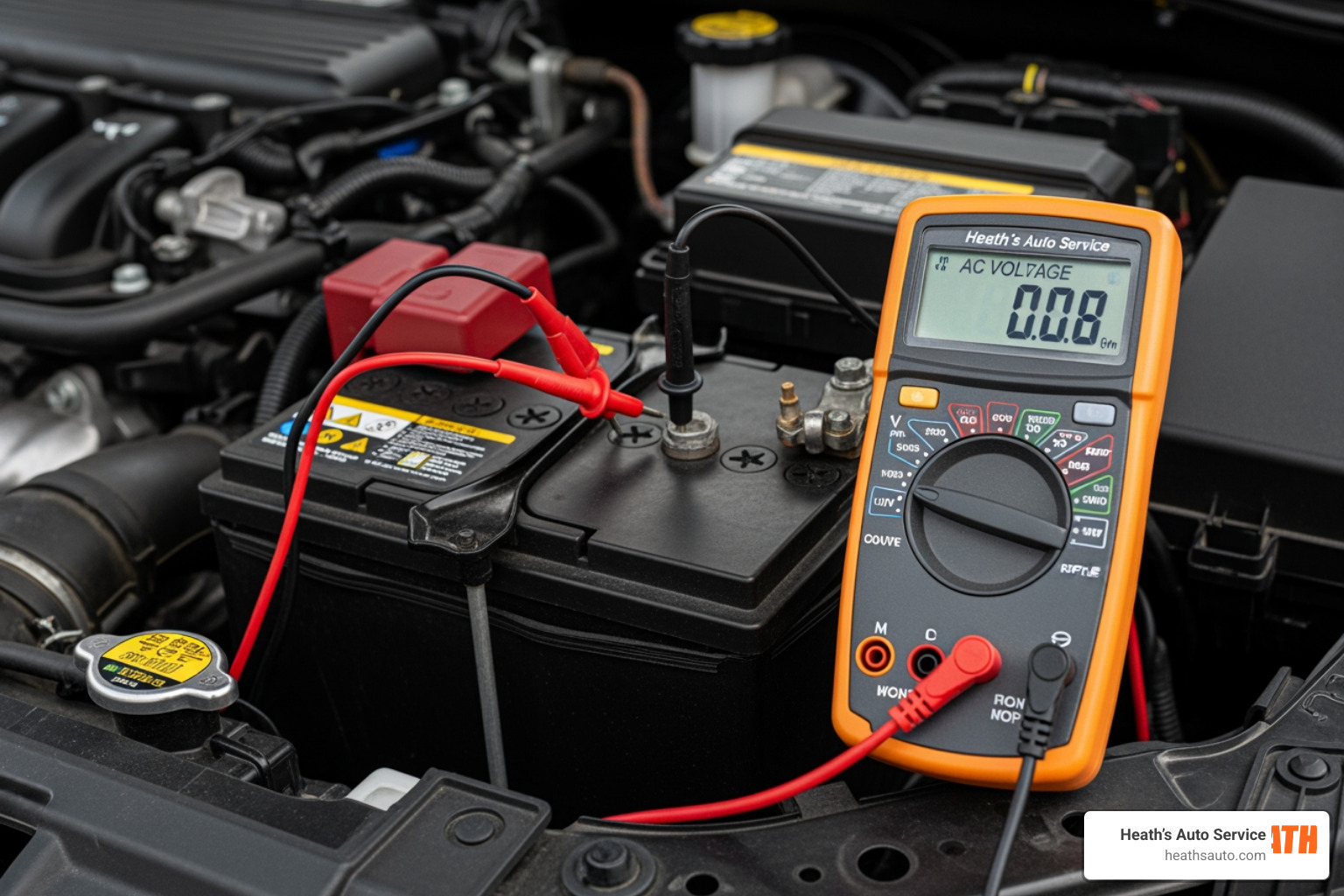
- AC ripple test at the battery
- Set your multimeter to AC volts.
- Measure across the battery terminals with the engine running.
- In many cases, under 0.5V AC is acceptable.
- Excessive ripple above that often points to a diode problem.
- Diode test with alternator removed
- Use the meter’s diode mode.
- A healthy silicon diode often shows a forward voltage drop around 0.4V to 0.6V, sometimes a bit higher on heavy-duty units.
- In reverse bias, the meter should show OL or no conduction.
For a more technical walkthrough, see How to Test Alternator Diodes With a Multimeter – Engineer Fix.
Can You Replace Just One Diode, or Should You Replace the Rectifier or Alternator?
Yes, you can sometimes replace just one diode. The bigger question is whether you should.
If the alternator design is serviceable and the failure is isolated, replacing a single diode or the full rectifier bridge can work well. If the alternator has other wear inside, that bargain repair can turn into do-it-twice labor.
Here is the practical comparison:
| Repair option | Typical parts cost | Best for | Tradeoff |
|---|---|---|---|
| Single diode | Around $8-$20 | Isolated failure on a serviceable unit | Harder to source and install correctly |
| Rectifier bridge/module | Around $20-$60 | Most diode-related repairs | Better reliability than one-diode patch jobs |
| Rebuild alternator | Varies, often $60-$180 in parts plus labor | Good OEM housing, multiple worn parts | More skill and time required |
| Reman/new alternator | About $120-$400+ | High-mileage or badly damaged units | Higher upfront cost but simpler solution |
When alternator diode replacement works well
Replacing diodes or the rectifier usually makes sense when:
- The alternator has a serviceable design
- The correct rectifier or diode kit is available
- Bearings are quiet
- Brushes and slip rings are still in decent shape
- The stator and rotor test good
- The alternator housing is original and fits well
- You want to preserve OEM fitment on an older vehicle
In many cases, replacing the entire rectifier bridge is smarter than changing only one diode. It is still affordable, and it reduces the chance that another old diode fails next month.
When a full alternator replacement is the smarter move
A full alternator replacement is often the better call when you find:
- Shorted diodes that may have stressed other components
- Burnt stator windings
- Worn slip rings
- Noisy or rough bearings
- A seized or failing pulley
- Heat-damaged internal wiring
- Repeated charging failures
- An alternator that is difficult to source parts for
If the unit is already apart and you find multiple issues, replacing the whole alternator usually saves time and comeback headaches. For a broader overview, here is more info about alternator repair and replacement.
Alternator Diode Replacement: Tools, Parts, and Step-by-Step Instructions
If you are considering DIY alternator diode replacement, this is where things go from “I watched a video” to “I hope I labeled everything.” The job ranges from moderately technical to very fiddly depending on alternator design.

Tools and skills you need before starting
At minimum, you should have:
- Digital multimeter with diode test mode
- Basic socket set and ratchet
- Screwdrivers
- Torque wrench if your alternator has specified fastener torque
- Soldering iron and solder sucker for soldered designs
- Arbor press or suitable press tool for press-fit diodes
- Safety glasses
- Gloves
- Thermal paste when required by the design
- Service manual or exploded diagram
- Marker or paint pen for orientation marks
Skills that help:
- Confidence working around charging-system wiring
- Ability to identify polarity correctly
- Basic soldering ability
- Patience with small insulators, spacers, and fragile leads
Always disconnect the negative battery cable first. Also remember that the alternator output terminal can remain live in some situations, so treat charging cables with respect. This is not the place for casual wrenching while half-distracted by a podcast.
For a general outside perspective, see How to Fix a Bad Car Alternator Diode – A Practical Guide.
How to replace alternator diodes step by step
The exact procedure varies by vehicle and alternator model, but the general flow looks like this:
- Disconnect the battery
- Remove the negative cable first.
- Remove the belt and alternator
- Relieve belt tension.
- Disconnect the electrical connector and output cable.
- Remove mounting bolts and take out the alternator.
- Mark the case orientation
- Use a paint pen so the housing goes back together the same way.
- Open the alternator housing
- Separate the case halves carefully.
- Watch for insulators, spacers, and brush holders.
- Inspect the internals
- Look for burnt spots, cracked insulation, broken leads, or melted plastic.
- Spin bearings by hand and check brush wear.
- Test the rectifier and diodes
- Use diode mode on the multimeter.
- Check forward and reverse bias on each diode.
- Replace any diode that fails, or replace the complete rectifier if practical.
- Match the replacement part exactly
- Confirm polarity, physical size, terminal layout, and current rating.
- Positive and negative diodes are not interchangeable just because they look similar.
- Remove the failed diode or rectifier
- Soldered designs require careful desoldering.
- Press-fit designs need proper support and a press tool.
- Do not hammer on a diode. Impact can damage it internally and hurt heat transfer.
- Install the new part
- Clean mounting surfaces.
- Apply thermal compound if the design calls for it.
- Press or fasten the diode squarely.
- Make sure the part sits flush for proper heat dissipation.
- Reconnect leads and reassemble
- Route wires correctly.
- Avoid pinched leads or touching the case where they should be insulated.
- Reassemble the housing in its original orientation.
- Reinstall the alternator
- Refit the mounting hardware.
- Reconnect the plug and output terminal.
- Reinstall and tension the belt properly.
- Retest charging system operation
- Check running voltage.
- Check AC ripple again.
- Verify battery light stays off and accessories operate normally.
Common mistakes that ruin a diode repair
These are the errors we see most often:
- Installing the diode backward
- Using an undersized diode that overheats quickly
- Poor heat transfer because the part is not seated correctly
- Hitting a press-fit diode with a hammer
- Cold solder joints
- Pinched wires during reassembly
- Forgetting insulating washers
- Skipping final voltage and ripple testing
One more big one: repairing only the obvious failed diode while ignoring old bearings, worn brushes, or heat-damaged wiring. That saves money for about five minutes.
Cost, Compatibility, and Where to Buy the Right Diodes
Diodes are vehicle-specific, and more accurately, alternator-specific. Two cars with the same year and engine can still use different alternators depending on production date or equipment package.
How much alternator diode replacement usually costs
Typical 2026 cost ranges look like this:
- Individual diodes: about $7.89 to $20+ each
- Rectifier bridge/module: about $20-$60
- Full alternator rebuild parts: often $60-$180 depending on what is needed
- Reman or new alternator: about $120-$400+
- Labor for alternator removal/replacement: often $80-$150, sometimes more depending on access
That is why diode-level repair gets so much attention. If the rest of the alternator is healthy, replacing the rectifier can save a meaningful amount compared with replacing the whole unit.
Finding the correct replacement part for your vehicle
Before ordering parts, gather:
- Year, make, and model
- Engine size
- Alternator part number
- Alternator amperage rating
- Plug style and terminal layout
- Whether you need a single diode, diode trio, or full rectifier bridge
Then verify:
- Voltage rating
- Current capacity
- Mounting style
- Polarity
- Housing fit
- Heat-sink design
Do not guess based on appearance alone. Research shows that alternator diodes are very much application-specific. Matching by alternator number is often more reliable than matching by vehicle alone.
What to buy if you want a lasting repair
If you want the repair to last, look for:
- Correct amperage and voltage rating
- A rectifier or diode with good heat-sink support
- Quality manufacturing, not mystery-bin electronics
- A complete kit if your alternator commonly needs insulators or hardware
- A warranty from the supplier when possible
In many cases, the best value is a complete rectifier bridge instead of one replacement diode. It costs more upfront than a single component but usually offers better reliability and faster installation.
If your vehicle has ongoing charging or electrical concerns, our related resources may help:
- The Importance of Timely Alternator Repair and Replacement
- Common Electrical Problems in Automobiles
- The Benefits of Professional Auto Electrical Repair
- Auto Electrical Services
Frequently Asked Questions About Alternator Diode Replacement
Can you replace just the diode on an alternator without replacing the whole unit?
Yes, sometimes. If the alternator is designed to be serviced and the rest of the internals are in good shape, replacing one diode or the rectifier can work properly afterward. Reliability depends on correct polarity, correct rating, proper heat transfer, and whether any other parts are already worn. In practice, we often prefer rectifier replacement over one-diode replacement because it gives a more complete fix.
Are alternator diodes vehicle-specific?
Yes. They vary by alternator family, amperage, rectifier design, polarity, and physical mounting style. The safest way to find the right part is to match the vehicle details and the alternator number stamped on the housing. Year, make, and model help, but alternator ID is even better.
Is it better to replace just the diodes, rebuild the alternator, or buy a new unit?
It depends on the condition of the whole alternator.
- Replace just the diodes or rectifier when the failure is isolated and the unit is otherwise healthy.
- Rebuild the alternator when you want to keep the original housing and several wear parts need attention.
- Buy a reman or new unit when the alternator has multiple worn parts, severe heat damage, or poor parts availability.
If you are unsure which path makes sense, that is exactly when a second opinion pays off. We also cover related charging-system topics in Understanding Auto Electrical Repair: A Guide for Car Owners, Mastering Auto Electrical Repair: A Comprehensive Guide from Heaths Auto, and Spark Your Drive: The Vitality of Auto Electrical Repair.
Conclusion: Make the Safe Call Before a Bad Diode Leaves You Stranded
A failed alternator diode can look like a weak battery, a dying alternator, or random electrical gremlins. The good news is that the fix is sometimes much smaller and cheaper than people expect. The bad news is that it is easy to misdiagnose, and a sloppy repair can turn one bad diode into a full charging-system mess.
Heath’s Auto Service In Scottsdale, AZ
At Heath’s Auto Service, we offer a comprehensive range of services and repairs to meet all your automotive needs. Our highly skilled technicians are equipped with the latest tools and technology to ensure your vehicle is serviced to the highest standards. Contact our team today!