
Why Getting Diesel Repairs Right the First Time Matters
Diesel repairs are different from standard gas engine work — and getting them wrong can mean thousands of dollars in unnecessary parts, days of downtime, and problems that keep coming back.
Here’s a quick overview of what diesel repairs typically cover:
| Service Category | Common Examples |
|---|---|
| Diagnostics | Fault codes, live data, drivability testing |
| Fuel System | Injectors, high-pressure pumps, lift pumps |
| Turbocharger | Boost leaks, actuator faults, vane control |
| Emissions & Aftertreatment | DPF cleaning, EGR, DEF, NOx sensors |
| Preventative Maintenance | Oil changes, fuel filters, fluid services |
| Engine & Drivetrain | Overhauls, transmission, differentials |
| Electrical | Wiring, sensors, ECM diagnostics |
Diesel engines are built tough. But they rely on tightly integrated systems — fuel, air, boost, cooling, emissions, and electronics — that all affect each other. When one system slips, the rest can follow quickly.
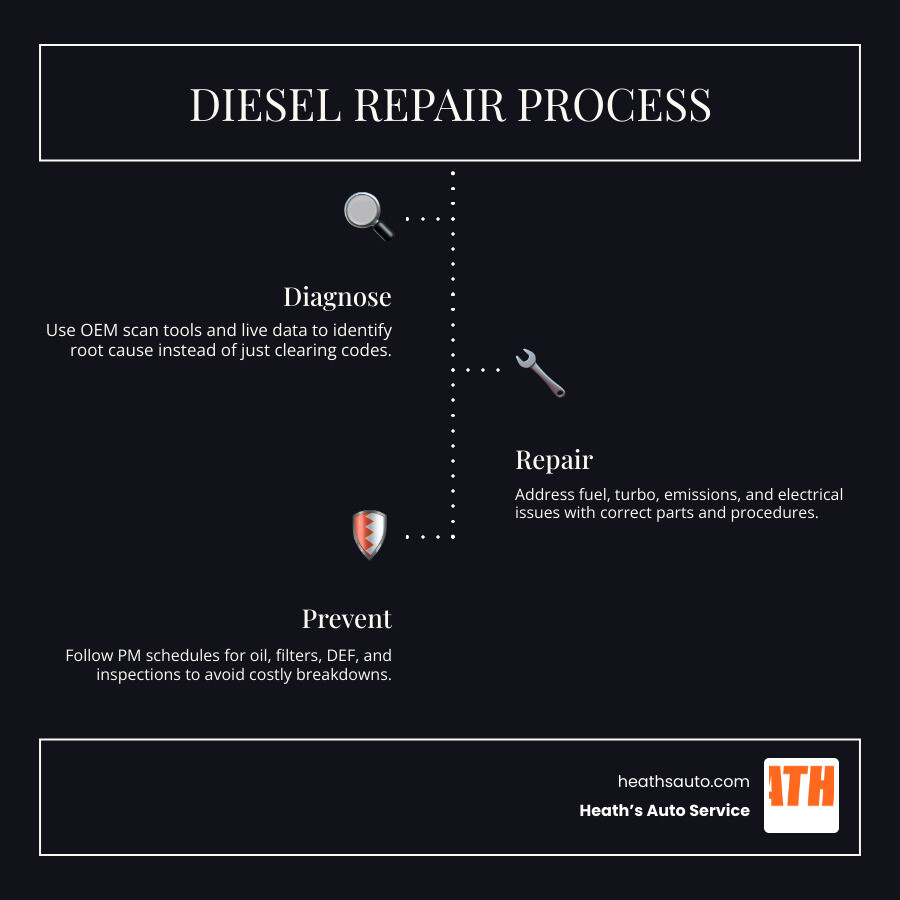
For Arizona drivers, the stakes are even higher. Heat stress, heavy towing loads, and dusty conditions accelerate wear. A shop that just clears a fault code without finding the root cause isn’t fixing your truck — it’s delaying the next breakdown.
That’s where choosing the right shop makes all the difference.
What the Best Diesel Repair Services Actually Include
The best diesel service is not just “engine work.” It is a full-system approach. Modern diesel trucks depend on fuel delivery, turbocharging, emissions controls, sensors, cooling, transmission behavior, and electrical communication all working together.
A quality diesel shop should be able to handle:
- Check engine light and warning light diagnosis
- Preventative maintenance
- Fuel system testing and repair
- Turbocharger and air-management repair
- Electrical and module diagnostics
- DPF, EGR, SCR, and DEF system service
- Brake, transmission, driveline, and cooling system repair
- Major engine repair when necessary
In other words, real diesel repairs go far beyond swapping parts and hoping for the best.
Diesel repairs for warning lights, power loss, smoke, and hard starts
The most common diesel problems that need professional repair usually start with symptoms like:
- Hard starting or no-start
- Reduced power under load
- Poor fuel economy
- Black, white, or blue smoke
- Excessive regens
- Rough idle
- Limp mode or derate
- Warning lights and stored fault codes
These symptoms often overlap. White smoke, for example, might point to poor combustion, injector issues, timing problems, or low cylinder temperature during startup. If you have seen that symptom, our guide on white smoke from a diesel engine when accelerating explains the usual causes in simple terms.
Power loss can come from a boost leak, failing turbo actuator, restricted intake, low fuel pressure, injector imbalance, exhaust restriction, or emissions-related derate. A generic code scan may hint at the problem, but it rarely tells the whole story.
For a broader look at common service needs, see our page on diesel maintenance and repair.
Preventative maintenance services that reduce breakdowns
The cheapest diesel repair is the one you never need. Preventative maintenance is how fleets stay on schedule and how owner-operators avoid those “well, that escalated quickly” breakdowns.
Typical diesel PM service includes:
- Engine oil and filter change
- Fuel filter replacement
- Air filter inspection or replacement
- Coolant level and condition check
- DEF level and quality check
- Battery and charging system test
- Belt and hose inspection
- Brake inspection
- Transmission, differential, and transfer case fluid service as needed
- Visual inspection for leaks, chafed wiring, and loose clamps
Research from diesel service sources commonly points to mileage-based checkpoints like:
- 7,500 miles for basic oil and filter service on many light-duty diesels
- 15,000 miles for fuel filters on many applications
- 30,000 miles for some transmission services
- 60,000 miles for certain driveline and wheel-end services
Those are not one-size-fits-all rules. Towing, dust, idle hours, heat, and short-trip driving can shorten service intervals significantly in Arizona.
If you are wondering whether your truck is overdue, our article on 7 signs your diesel engine car needs an oil change is a helpful starting point.

Emissions and aftertreatment service for modern diesels
Modern diesels are cleaner than older ones, but they are also more complex. Emissions-related repairs now make up a major part of professional diesel work.
Key systems include:
- DPF
- DOC
- SCR
- EGR
- DEF injection
- NOx sensors
- Differential pressure sensors
- Exhaust temperature sensors
When these parts fail or become restricted, drivers may notice:
- Frequent regens
- Reduced power
- Poor mileage
- Warning lights
- Fault codes
- Limp mode or derate
- Failed emissions inspections
A clogged DPF does not always need replacement. In many cases, it can be professionally cleaned if the substrate is intact and ash loading is still within recoverable limits. Proper diagnosis matters because a plugged filter is often the result of another fault, such as injector problems, EGR issues, sensor failures, or interrupted regen cycles. For a neutral reference on how diesel particulate filters work, see Diesel particulate filter.
If you want a simple explanation of the fluid side of the system, read how DEF works in a diesel engine.
How Professional Shops Diagnose Diesel Repairs Correctly
Correct diagnosis is where good diesel repair shops separate themselves from parts-changers. The best shops combine scan data, wiring information, road testing, and mechanical testing to find the root cause.
That means using:
- Professional scan tools
- Manufacturer-level or advanced diagnostic software
- VIN-based vehicle information
- Wiring diagrams
- Live data monitoring
- Pressure and temperature testing
- Electrical testing
- Guided symptom-based troubleshooting
Research in this space shows why advanced information systems matter: some diesel platforms now rely on databases that cover fault codes from early ECM-era trucks through current models, with parts cross-references, wiring diagrams, testing procedures, and VIN decoding all in one place. That level of detail saves time and reduces misdiagnosis.
Fault-code diagnosis is only the start
Fault codes are useful, but they are not a diagnosis by themselves.
A professional diesel diagnostic process should include:
- Reading active, pending, and inactive codes
- Reviewing freeze-frame information
- Checking live data during idle and under load
- Looking at related modules, not just the engine computer
- Following test plans instead of guessing
- Confirming the repair after the fix
Generic code readers can miss manufacturer-specific detail. On a diesel, that matters. The code may name the circuit where the computer noticed a problem, but not the true cause. A low-boost code, for example, could be caused by a torn boot, sticky turbo vanes, actuator failure, exhaust restriction, or a sensor reading issue.

Drivability and no-code diesel repairs require deeper testing
Some of the hardest diesel problems do not set a code at all. Or they set a code only after the truck has been acting up for weeks.
No-code or intermittent complaints often involve:
- Charge-air cooler leaks
- Weak lift pump output
- High-pressure fuel supply problems
- Injector return issues
- Turbo actuator hesitation
- Cooling system performance under load
- Intermittent sensor dropouts
- Wiring faults that only appear with heat or vibration
This is why road testing and real-condition testing matter. A diesel that feels fine in the bay may stumble while towing, climbing, or regenerating. We look at the whole picture rather than treating the scan tool like a magic 8-ball.
Specialized tools and training diesel technicians need
Diesel repair requires specialized equipment and training beyond what many general auto shops use every day.
Important diesel-specific capabilities include:
- ASE certification and ongoing training
- Diesel and aftertreatment system knowledge
- OEM-level or advanced scan software
- Pressure gauges for low- and high-pressure fuel testing
- Compression or cylinder contribution testing
- Oscilloscope testing for sensors and circuits
- Color wiring diagrams and component locators
- Tablet-based diagnostics and service information access
Here is a simple comparison:
| General Auto Repair Tools | Diesel Repair Tools |
|---|---|
| Basic OBD scan tool | Advanced diesel scan software with live bidirectional controls |
| Standard multimeter | Multimeter plus scope and circuit load-testing tools |
| General repair database | VIN-specific diesel diagrams, test plans, labor guides |
| Basic pressure tools | Fuel, boost, cooling, and exhaust backpressure testing tools |
| Broad mechanical training | Diesel fuel, turbo, aftertreatment, and drivability training |
That extra complexity is why diesel labor and diagnostics often cost more than gas vehicle repair. There is more to test, more to verify, and more money on the line if the first call is wrong.
The 7 Best Diesel Repair Services Compared by Use Case
Not every diesel owner needs the same service mix. A daily-driven pickup has different needs than a fleet work truck. Below are the seven most valuable diesel service categories and who they help most.
1) Preventative diesel maintenance programs
Best for:
- Owner-operators
- Daily-driven diesel pickups
- Fleet trucks
- RV owners
- Work vans and service bodies
A solid PM plan is the best uptime strategy available. For many light-duty diesel trucks, a maintenance rhythm around 7,500, 15,000, 30,000, and 60,000 miles helps catch wear before it becomes failure.
Typical PM program items:
- Oil and filter service
- Fuel filters
- Air filters
- DEF checks
- Fluid top-offs and condition testing
- Brake and steering inspection
- Battery testing
- Leak inspection
- Cooling system evaluation
- Service record tracking
2) Fuel system and injector diesel repairs
Best for:
- Hard-start complaints
- Rough idle
- Low power
- Fuel contamination issues
- Trucks with poor mileage
The diesel fuel system is precision equipment. Small contamination issues can cause big bills. Common fuel-related repairs include:
- Lift pump replacement
- High-pressure pump diagnosis
- Injector testing and replacement
- Fuel line repairs
- Fuel filter housing service
- Water contamination cleanup
When fuel pressure is unstable, drivability falls apart fast. That can show up as hard starts, hesitation, smoke, poor throttle response, or a truck that feels lazy under load.
3) Turbocharger and air-management repairs
Best for:
- Power loss
- Smoke complaints
- Whistle noises
- Underboost or overboost codes
- Towing performance issues
Turbo system problems are common because the turbo does not work alone. Air filters, charge pipes, boots, intercoolers, actuators, sensors, and exhaust flow all affect performance.
Common turbo and air-management repairs:
- Turbocharger replacement
- Turbo actuator testing
- Vane control repair
- Charge-air leak repair
- Intercooler and boot replacement
- Boost sensor diagnostics
A turbo code does not always mean the turbo itself is bad. Sometimes the culprit is a leak, sticky mechanism, or bad control signal.
4) DPF, EGR, DEF, and aftertreatment repairs
Best for:
- Frequent regen complaints
- Derate or limp mode
- Failed emissions tests
- Poor fuel economy
- Trucks with repeated warning lights
This is one of the biggest categories in modern diesel repairs. Common service includes:
- DPF cleaning or replacement
- Forced regen when appropriate
- EGR valve and cooler service
- DEF system testing
- NOx sensor diagnosis
- SCR efficiency testing
- Exhaust temperature sensor replacement
If your truck keeps asking for regens or drops into reduced-power mode, aftertreatment diagnosis should happen quickly. Waiting usually increases downtime and repair cost. You can also read more in our diesel maintenance and repair guide.
5) Electrical and module diagnostics
Best for:
- Random warning lights
- Communication faults
- Intermittent no-start issues
- Sensor codes that keep returning
- Trucks with wiring damage
Diesel trucks are packed with modules and sensors. A bad ground, corroded connector, weak battery, or rubbed-through harness can mimic much more expensive failures.
Electrical diesel service may include:
- Harness repair
- Sensor circuit testing
- Battery and charging diagnosis
- Ground integrity testing
- Module communication diagnosis
- ECM update-related troubleshooting
6) Engine, transmission, and drivetrain repairs
Best for:
- Major mechanical failures
- Coolant loss
- Overheating
- Head gasket concerns
- Shift complaints
- Noise or vibration from the driveline
This is the heavy end of diesel service. Depending on the vehicle, work may include:
- Cooling system repair
- Head gasket diagnosis
- Engine teardown or replacement decision-making
- Transmission service
- Differential service
- Transfer case repair
- Axle and driveline repair
The key is not jumping to the biggest repair too quickly. Sometimes “it needs an engine” is said long before all supporting systems have been properly tested.
7) Performance upgrades and diesel repairs after modifications
Best for:
- Towing-focused builds
- Enthusiast trucks
- Drivers wanting better response or airflow
- Trucks with existing modifications that now have issues
Common upgrades include:
- Tuning
- Intake upgrades
- Exhaust upgrades
- Turbo upgrades
- Intercooler upgrades
- Fuel system upgrades
- Transmission upgrades
Common reliability tradeoffs to think through:
- More heat
- More stress on the transmission
- Emissions complications
- Reduced towing reliability if the setup is too aggressive
If you modify a diesel, the smartest plan is balanced performance, not maximum bragging rights. Your transmission usually votes on that, even if you do not ask it.
Light-Duty vs Medium-Duty vs Heavy-Duty Diesel Repairs
Not all diesel platforms are repaired the same way. The truck class changes the tools, labor time, parts access, and service strategy.
Light-duty diesel repairs for pickups and vans
Light-duty diesels include pickups and diesel vans used for commuting, towing, and work duty. These vehicles usually combine passenger-vehicle electronics with diesel-specific systems, which creates its own kind of complexity.
Common light-duty needs include:
- Fuel injector and pump issues
- Turbo and charge-air leaks
- EGR and DPF faults
- Cooling system service
- Ride, brake, and steering repairs
- More frequent service when towing or idling
Medium-duty and heavy-duty diesel repairs for commercial use
Medium-duty and heavy-duty diesel vehicles include box trucks, larger commercial chassis, buses, some RV applications, and vocational work trucks. These repairs often involve:
- Longer labor times
- More expensive parts
- Greater emissions-system complexity
- DOT-focused maintenance and safety inspections
- Higher downtime costs
- Chassis and suspension work under heavy payload conditions
Commercial trucks also tend to accumulate idle hours and severe-service wear faster than personal trucks, which means interval planning matters just as much as mileage.
How diesel repair costs compare and what drives the bill
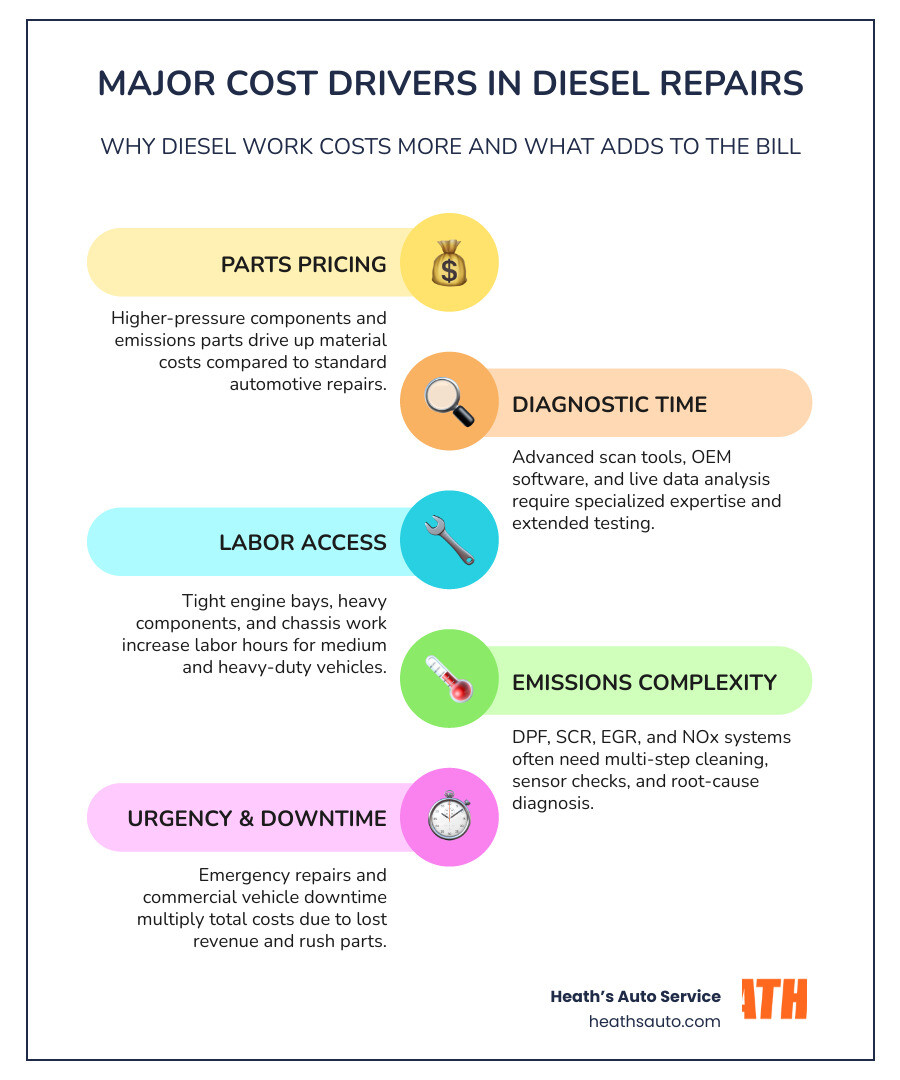
Diesel repairs usually cost more than general automotive repairs. That is not because diesel shops enjoy drama. It is because diesel systems are higher-pressure, more specialized, and more tightly integrated.
Major cost factors include:
- Parts pricing
- Diagnostic time
- Labor access difficulty
- Emissions component cost
- Specialized software and tooling
- Extent of contamination damage
- Whether the repair is planned or urgent
- Vehicle class and engine layout
- Warranty coverage
A clogged aftertreatment system, for example, may involve multiple sensors, cleaning, confirmation testing, and root-cause diagnosis. Fuel contamination can spread damage through pumps, rails, injectors, and lines. That escalates quickly.
How to Choose a Reliable Shop for Diesel Repairs
Choosing a diesel shop should feel more like hiring a specialist than picking the cheapest line item on a search page.
Look for a shop that offers:
- ASE-certified technicians
- Diesel-specific diagnostic capability
- Clear documentation and written estimates
- Good communication
- Quality parts
- Real warranty support
- Honest recommendations
- Turnaround that respects your time
At Heath’s Auto Service, we back our work with a 3-year/36,000-mile nationwide warranty, offer free second opinions, and provide same-day service when possible at our Arizona locations.
Certifications, warranties, and expertise to verify
Before approving work, verify:
- ASE certification
- Current diesel training
- Experience with emissions and aftertreatment systems
- Access to quality scan tools and service information
- Written estimates and inspection reports
- Warranty terms in writing
A strong warranty is not everything, but it is a good sign the shop stands behind its repairs.
Questions to ask before approving major diesel repairs
Ask these questions:
- What testing confirmed the root cause?
- What were the actual test results?
- Are there repair options?
- Can the DPF be cleaned instead of replaced?
- Are you using OEM-quality parts?
- What other systems should be checked at the same time?
- How long will the truck be down?
- What maintenance should follow the repair?
These questions help protect you from paying for guesses.
How fleets and owner-operators minimize downtime
The best downtime strategy is boring in the best possible way: maintenance, planning, and records.
Smart fleet and owner-operator habits include:
- Following service intervals based on real use
- Tracking both mileage and idle hours
- Doing pre-trip inspections
- Scheduling PM before peak work periods
- Keeping repair history organized
- Checking fuel quality and water contamination risk
- Watching for regen frequency changes
- Handling small leaks and warning lights early
With fuel costs still a major concern in 2026, reducing breakdowns matters even more. Our article on high diesel prices in 2026 and how to keep your diesel on the road covers practical ways to protect uptime and budget.
Frequently Asked Questions About Diesel Repairs
How often should diesel trucks be serviced to avoid major repairs?
For many light-duty diesel trucks, 7,500-mile oil service and 15,000-mile fuel filter service are common starting points. Some transmission and driveline services show up at 30,000 and 60,000 miles. But the real answer depends on:
- Towing load
- Idle hours
- Dust exposure
- Short-trip driving
- Heat
- Manufacturer recommendations
Arizona drivers often need severe-service thinking, especially if the truck tows, idles, or works in dusty conditions.
Can a clogged DPF be cleaned, or does it always need replacement?
It can often be cleaned, but not always. If the filter is physically damaged, melted, cracked, or overloaded beyond recovery, replacement may be necessary. If the structure is still sound, professional cleaning can restore flow and save substantial money compared with replacement.
The important part is diagnosing why it clogged in the first place.
What should Arizona drivers look for in a diesel repair shop?
Look for:
- Diesel diagnostic experience
- Emissions and aftertreatment expertise
- ASE-certified technicians
- Clear estimates
- Good warranty coverage
- Fast turnaround when possible
- Familiarity with towing, heat, and dust-related wear
Conclusion
The best diesel repairs are the ones built on accurate diagnostics, smart maintenance, and long-term thinking. Whether you are dealing with power loss, hard starts, smoke, DPF issues, electrical faults, or major engine concerns, the goal is the same: fix the actual problem and keep it from coming back.
Heath’s Auto Service In Flagstaff, AZ
At Heath’s Auto Service, our commitment to the community is built on a foundation of expert diagnostics and honest communication. We don’t just want to fix your car; we want to make sure you feel safe every time you turn the key. If you’re looking for our Flagstaff Location, you’ll find a team of professionals ready to treat your vehicle like it was our own.