
Why Your Auto AC Service Can’t Wait in Arizona’s Heat
Auto AC service is the maintenance and repair of your vehicle’s air conditioning system – including inspection, refrigerant recharge, leak detection, and component checks – to keep your car blowing cold air reliably.
Quick answers:
- What it includes: Visual inspection, compressor check, refrigerant evacuation, vacuum test, and recharge with the correct refrigerant
- How often: At least once a year, ideally before summer or every two years per many manufacturer schedules
- Warning signs: Warm air, weak airflow, musty smells, clicking noises, or water on the floorboard
- Why it matters: Low refrigerant damages the compressor – one of the most expensive parts to replace
- Who should do it: A certified technician with proper equipment; EPA refrigerant regulations require proper handling and recovery procedures
Driving without working air conditioning is uncomfortable anywhere. In Arizona, it can make every commute miserable – and ignoring a small AC problem today often leads to a much bigger repair bill later.
A/C systems do not just lose refrigerant overnight. They lose their charge gradually and can become contaminated over time. By the time your vents are blowing warm air, the damage may already be underway.
At our service centers, with locations across Flagstaff, Scottsdale, Chandler, Gilbert, Cottonwood, and Prescott, ASE-certified technicians diagnose and repair auto AC service issues on virtually every make and model that rolls through Arizona. In this guide, you’ll learn what service includes, when to schedule it, and how to avoid overpaying.
Understanding Professional Auto AC Service
When you bring your vehicle in for a professional auto ac service, the job is not just “topping off” the system. A true service is a comprehensive process designed to restore the system to factory specifications. In 2026, modern vehicles require a level of precision that goes far beyond a simple DIY can from a hardware store.
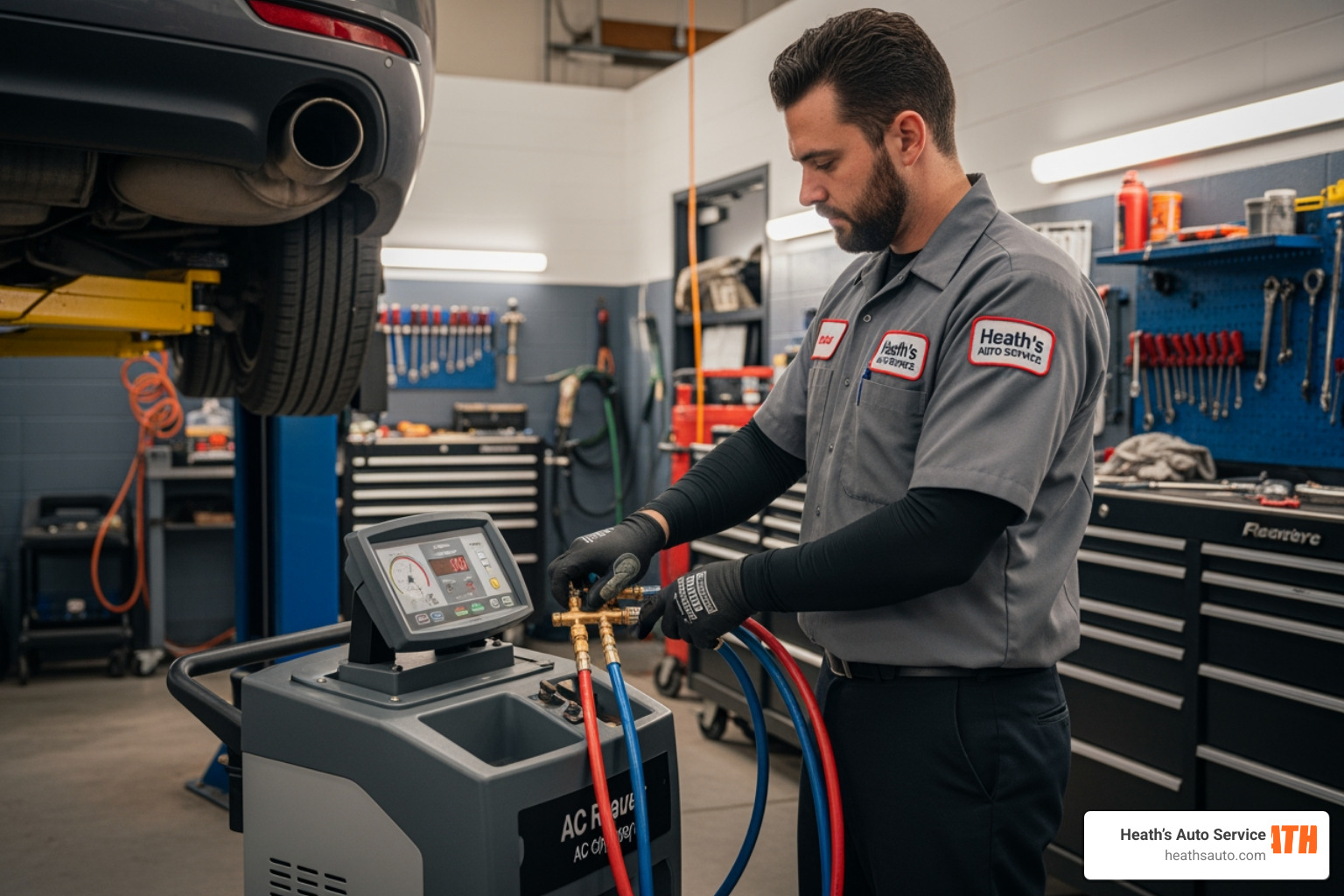
The core of this service is the evacuation and recharge process. First, specialized equipment recovers any remaining refrigerant from the system. This is a closed-loop process because refrigerants are environmental hazards that cannot be vented into the atmosphere. Once the system is empty, a vacuum test is performed. This involves pulling a deep vacuum on the system to remove moisture and air. Moisture is the enemy of your AC; it combines with refrigerant to create corrosive acids that can damage seals and internal components.
If the system holds the vacuum, that indicates there are no major leaks. It is then recharged with the exact weight of refrigerant specified by the vehicle manufacturer. Whether your car uses the classic R-134a or the newer R-1234yf, precision is key. If you’ve wondered how to remove excess Freon from car AC, the answer is usually that you should not have to – if it was charged correctly by a professional in the first place. Overcharging can be just as damaging to your compressor as undercharging.
The Mechanics of an Auto AC Service Recharge
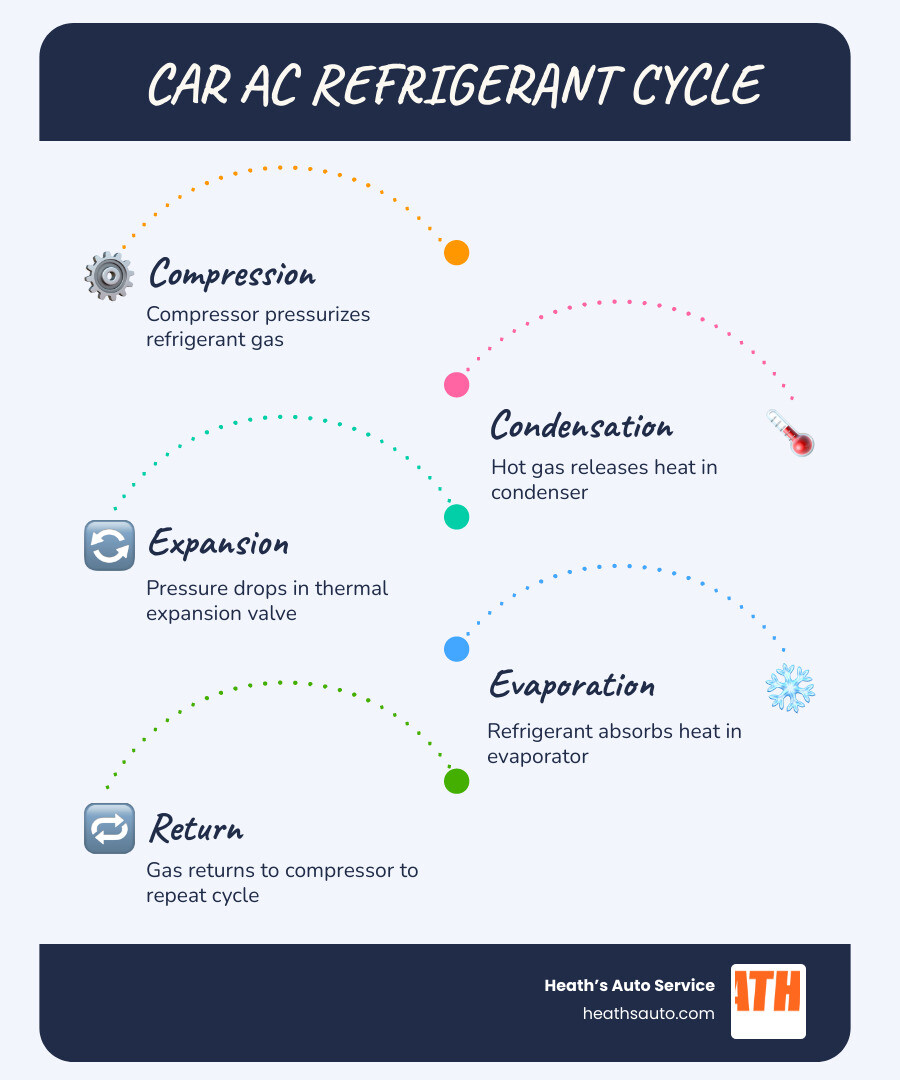
To understand why a recharge is so effective, it helps to understand the cycle. Your AC system is essentially a heat mover. It does not “create” cold; it removes heat from the cabin and releases it outside.
- The Compressor: Often called the heart of the system, it pressurizes the refrigerant gas. If you are experiencing issues, you may need to learn how to test car AC compressor health to see if it is engaging properly.
- The Condenser: Located at the front of your car, it looks like a small radiator. It cools the hot, high-pressure gas into a liquid state.
- The Evaporator Coils: These are hidden behind your dashboard. As the liquid refrigerant evaporates back into a gas, it absorbs heat from the air blowing across it, leaving you with that chilly breeze.
- The Thermal Expansion Valve: This acts as a gatekeeper, regulating how much refrigerant enters the evaporator.
Why Refrigerant Type Matters in 2026
By 2026, the shift toward R-1234yf is nearly complete for newer vehicles. This refrigerant is much better for the environment but requires specialized equipment to service. If you drive an electric or hybrid vehicle in places like Flagstaff or Scottsdale, your AC system may do more than just keep you cool; it can also help manage the temperature of the high-voltage battery. A failure in the AC system could contribute to reduced battery performance or life.
When to Schedule Your Car Air Conditioning Maintenance
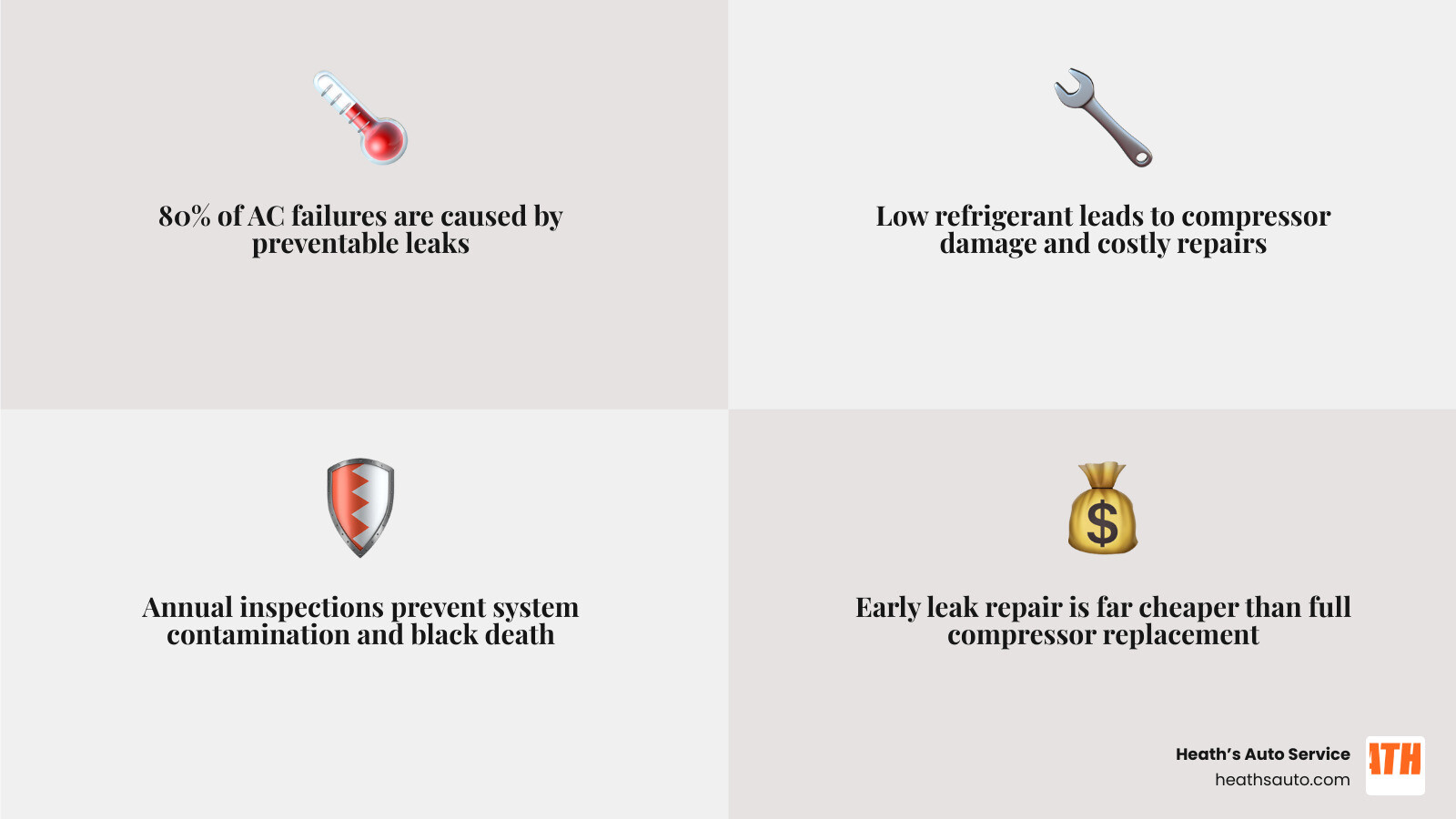
Do not wait until you are sweating through your shirt in the middle of a Phoenix-area traffic jam. Most automotive experts recommend an annual inspection, ideally in the spring before the summer heat hits its peak. Regular auto ac service helps catch minor issues, like a tiny leak in a hose or a worn serpentine belt, before they turn into a multi-thousand-dollar compressor replacement.
Consistent maintenance also helps prevent the buildup of “black death” – a term technicians use for the sludge created when a compressor begins to fail and contaminates the entire system. Following the importance of regular AC maintenance and repair helps keep your system efficient, which can even slightly improve fuel economy by reducing the load on the engine.
Recognizing Signs You Need an Auto AC Service
Your car usually gives warning signs when the system is struggling. Common red flags include:
- Warm Air: The most obvious sign. If the air is not cold within a minute of driving, something is wrong.
- Weak Airflow: This could be a clogged cabin filter or a failing blower motor.
- Strange Noises: Clicking or grinding when the AC kicks on often points to a compressor clutch issue.
- Musty Odors: This suggests mold or bacteria growth on the evaporator.
- Flashing AC Light: Many modern cars will flash the AC button light if the computer detects a pressure imbalance.
If you notice any of these, check for signs Freon is low in car Gilbert AZ or read up on why your cars AC could be dying if you notice the following signs.
Benefits of Early Diagnostic Intervention
Addressing a leak early is one of the best ways to save money. Since the AC system is a sealed unit, it should not “consume” refrigerant like an engine consumes oil. If it is low, there is a leak. If you keep running a system with low refrigerant, you are also running it with low oil, because the lubricating oil circulates with the refrigerant. This can lead to friction and total compressor failure.
What to Expect During an Auto AC Service Performance Check
When you visit our service center in Prescott or any of the other Arizona locations, the inspection follows a systematic process. The service starts with a manifold gauge set to check high-side and low-side pressures. This shows how well the compressor is pumping and whether there are restrictions in the lines. A center vent temperature test is also performed to measure exactly how cold the air is getting.
The evaluation does not stop at the gauges. Technicians also complete a visual inspection of the compressor drive belt and all accessible hoses. UV dye is often used as well. By injecting a small amount of fluorescent dye into the system and using a blacklight, tiny leaks that are invisible to the naked eye can be found. Electronic leak detectors, often called “sniffers,” may also be used to locate leaks hidden behind the dash. For those who are tech-savvy, knowing how to check AC compressor with multimeter can help diagnose electrical failures in the clutch coil.
Professional Evaluation vs. DIY Topping Off
The “AC in a can” products found at retail stores are often a temporary fix that can create bigger problems. These cans may contain stop-leak chemicals that can gum up professional recovery machines and clog the small passages inside your car’s AC system. Without gauges, it is also very easy to overcharge the system, which can blow out seals or damage compressor valves. Learning how to fix AC in car properly means understanding that a professional vacuum and precise weight-based recharge is the safest way to protect system longevity.
Standard Procedures for Modern Climate Control
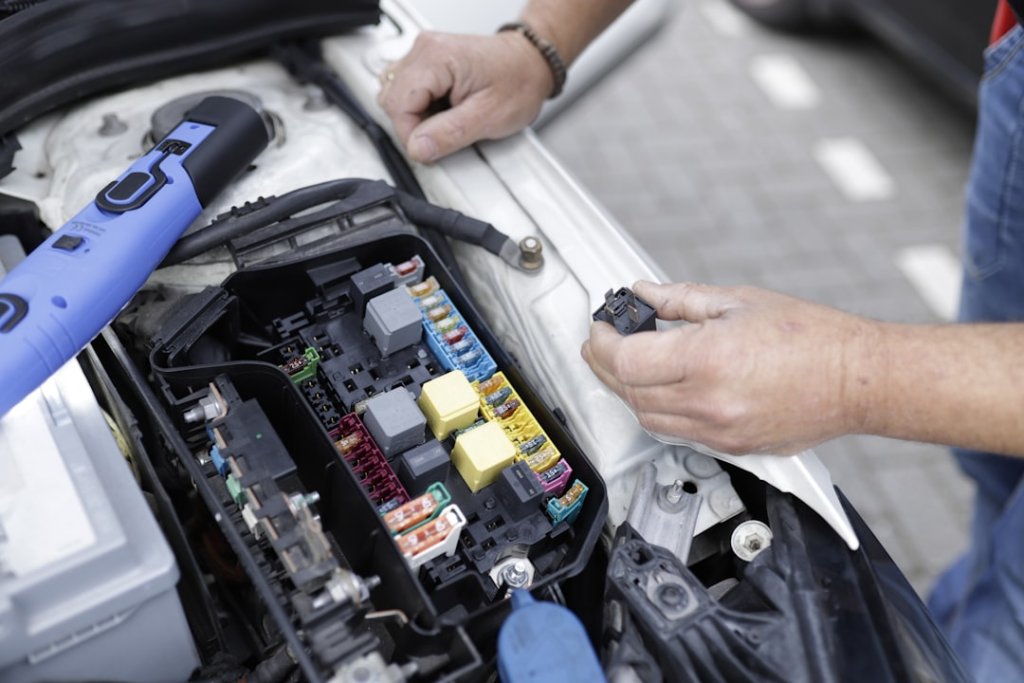
Modern auto ac service also involves the vehicle’s electrical controls. Sometimes the air is warm not because of a leak, but because a blend door actuator, a small motor that moves a plastic flap, is stuck on the heat setting. Diagnostic scanners are used to communicate with the vehicle computer and confirm that sensors and actuators are responding correctly. The service should also include a cabin air filter check and a review of likely repair options, including the expected car AC repair cost, so you can make the best decision for your budget.
Beyond the Breeze: Complementary Cooling System Services
A great auto ac service does not stop at the refrigerant. To keep you comfortable and safe, the entire climate control environment should be checked.
Improving In-Car Air Quality
If your car smells unpleasant when you turn on the air, you may have mold or mildew growing on the evaporator. This is not just a smell issue; it can also affect cabin air quality. Services like MiST can use microdroplets to treat the ventilation system, reduce bacteria, and help remove odors. The cabin air filter should also be checked. A clogged filter can reduce airflow significantly and put extra strain on the blower motor. If you have wondered how can I make my cars A/C cooler?, a fresh cabin filter is often one of the simplest answers.
Interconnected Systems: AC and Engine Cooling
Your AC system and your engine’s cooling system are closely related. If your engine is running hot, your AC performance may suffer, and vice versa. For example, if the radiator fan fails, your AC might work while driving down the highway but blow warm air when you stop at a red light. That happens because there is no airflow moving across the AC condenser. You might also notice your car shakes when AC is on if the compressor is putting too much load on a struggling engine. A complete inspection may also check for bad car A/C condenser symptoms and confirm that you are not dealing with a no heat in car problem caused by the same climate-control door issues.
Frequently Asked Questions about Auto AC Service
How often should a car’s air conditioning be serviced?
In the Arizona desert, an inspection every year is a smart approach. Many manufacturers suggest a full auto ac service every two to three years to remove contaminants and confirm the refrigerant level is correct. Staying on top of this helps prevent avoidable wear, which is why beat the heat: the importance of auto AC maintenance and repair remains such an important topic.
Why is my car AC blowing warm air?
The most common cause is low refrigerant due to a leak. However, it could also be a blown fuse, a failed compressor clutch, a clogged expansion valve, or a broken serpentine belt. If you find your AC and heat not working in car, it is time for a professional diagnostic to identify the root cause.
What is included in a professional AC recharge?
A professional recharge includes recovering the old refrigerant, performing a vacuum test to check for leaks and remove moisture, and refilling the system with the correct amount of refrigerant and lubricating oil. A final performance test should also be completed to verify that vent temperatures meet expected standards. If you are concerned about cost, researching how much to fix AC in car 2025 can provide a helpful baseline.
Heath’s Auto Service In Gilbert, AZ
We stand behind our work with a 3-year/36,000-mile nationwide warranty and offer free second opinions if you’ve been told you need a major repair elsewhere. Don’t spend another day melting in traffic.
At Heath’s Auto Service, our comprehensive range of services covers everything from routine maintenance to complex repairs. Our certified technicians are skilled in handling oil changes, brake inspections, engine diagnostics, tire rotations, and much more. Whether it’s a minor tune-up or a major overhaul, trust us to get you back on the road with confidence. Contact our team at Heath’s Auto Service today!
Every repair is backed by a 3-year/36,000-mile nationwide warranty, and free second opinions are always available. If another shop told you that you need a brand-new compressor, it may still be worth getting the system checked again; in some cases, the issue may be a sensor, electrical fault, or small leak instead. Do not suffer through another hot drive. For more tips, check out Keeping Your Cool: A Comprehensive Guide to Auto AC Repair and schedule your appointment today.