
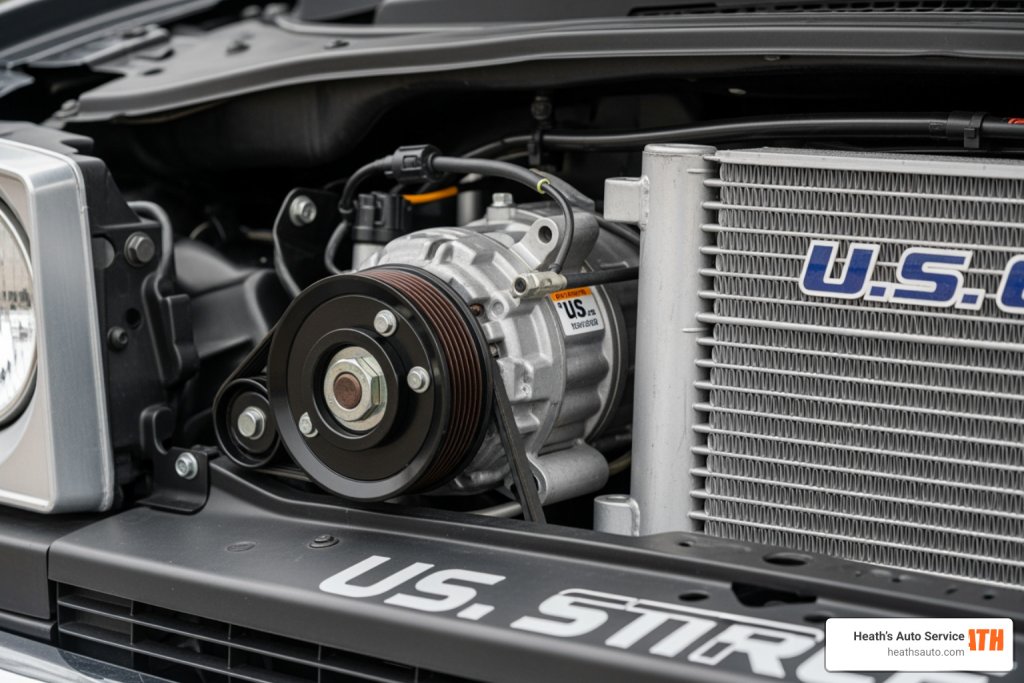
Understanding the Mechanics of Your Vehicle’s Cooling System
To understand why your car is currently acting like a convection oven, it helps to know that your AC doesn’t actually “create” cold air. Instead, it’s a master of heat relocation. It takes the heat from inside your cabin and dumps it outside. This magic trick happens through a continuous cycle of a substance called refrigerant, which changes states from a liquid to a gas and back again.
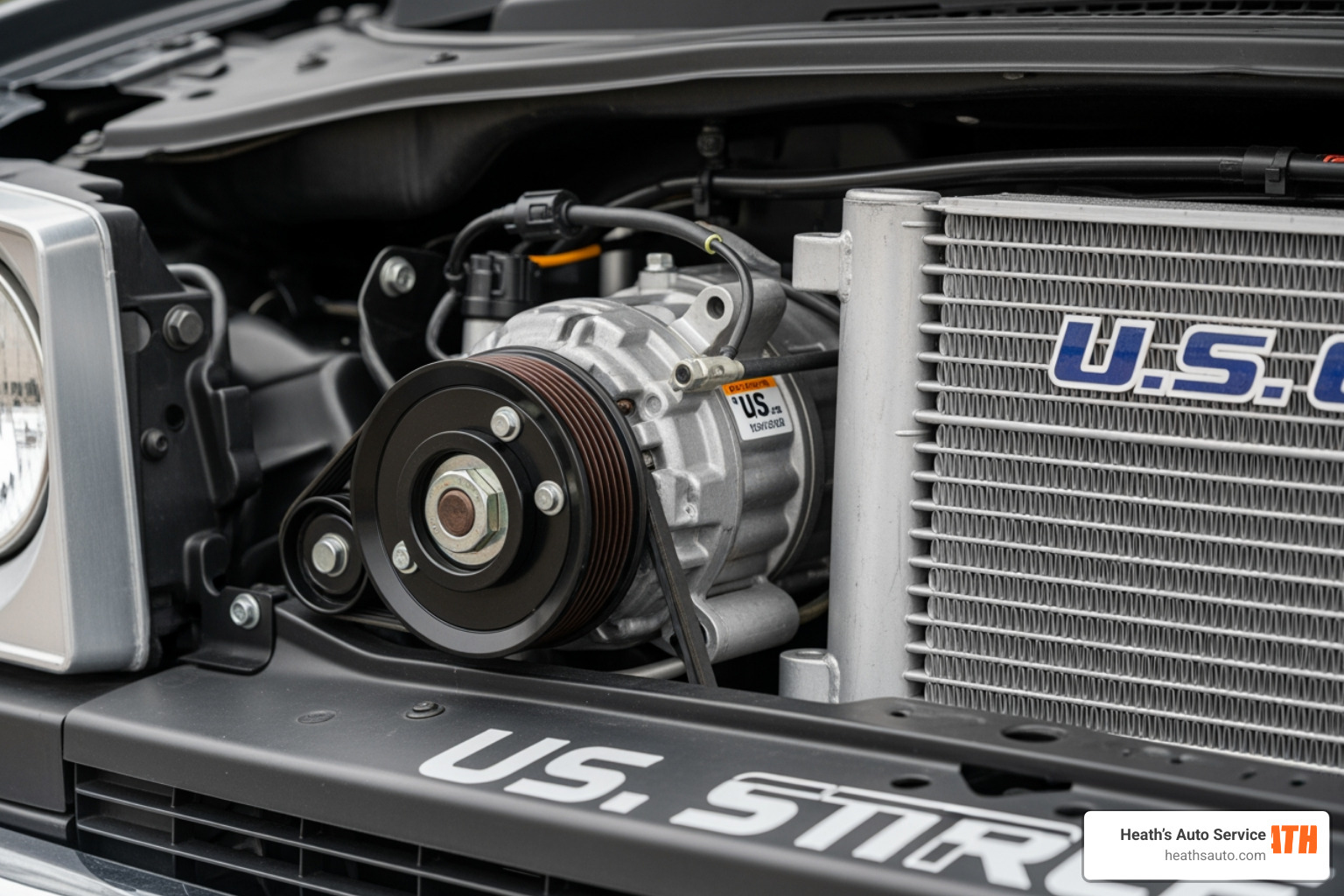
The process relies on several Car AC Components Flagstaff AZ working in perfect harmony:
- The Compressor: Often called the heart of the system, this pump pressurizes the refrigerant and keeps it moving.
- The Condenser: Located right behind your car’s grill, it looks like a mini radiator. Its job is to turn the hot, high-pressure gas back into a liquid by shedding heat into the outside air.
- The Receiver/Dryer or Accumulator: This acts as a filter, removing moisture and debris from the refrigerant to prevent internal corrosion.
- The Expansion Valve or Orifice Tube: This regulates the flow of refrigerant into the evaporator.
- The Evaporator: Tucked behind your dashboard, this is where the “cold” happens. As liquid refrigerant turns back into a gas, it absorbs heat from the air being blown across it by your fan, leaving you with the chilly breeze you crave.
In May 2026, most vehicles on the road in Arizona use one of two types of refrigerant. Older models (typically pre-2014 to 2017) use R134a, while newer vehicles have transitioned to R1234yf, which is much better for the environment but requires specialized equipment to service.
| Feature | R134a Refrigerant | R1234yf Refrigerant |
|---|---|---|
| Common Years | Pre-2017 | 2017 – Present (Mandatory after 2021) |
| Environmental Impact | High Global Warming Potential | Very Low Global Warming Potential |
| Flammability | Non-flammable | Slightly Flammable |
| System Pressure | High | Similar to R134a |
| Cost | Relatively Inexpensive | More Expensive |
If you suspect your compressor is the culprit behind the heat, technicians often use specialized tools to verify its health. For the DIY-inclined or the curious, learning how to check AC compressor with multimeter can help determine if the electromagnetic clutch or the internal coils have failed electrically.
Common Symptoms and Causes of AC Failure
When the cool breeze dies, your car usually tries to tell you why. However, because the AC is a closed, pressurized loop, one small failure can shut down the whole operation.
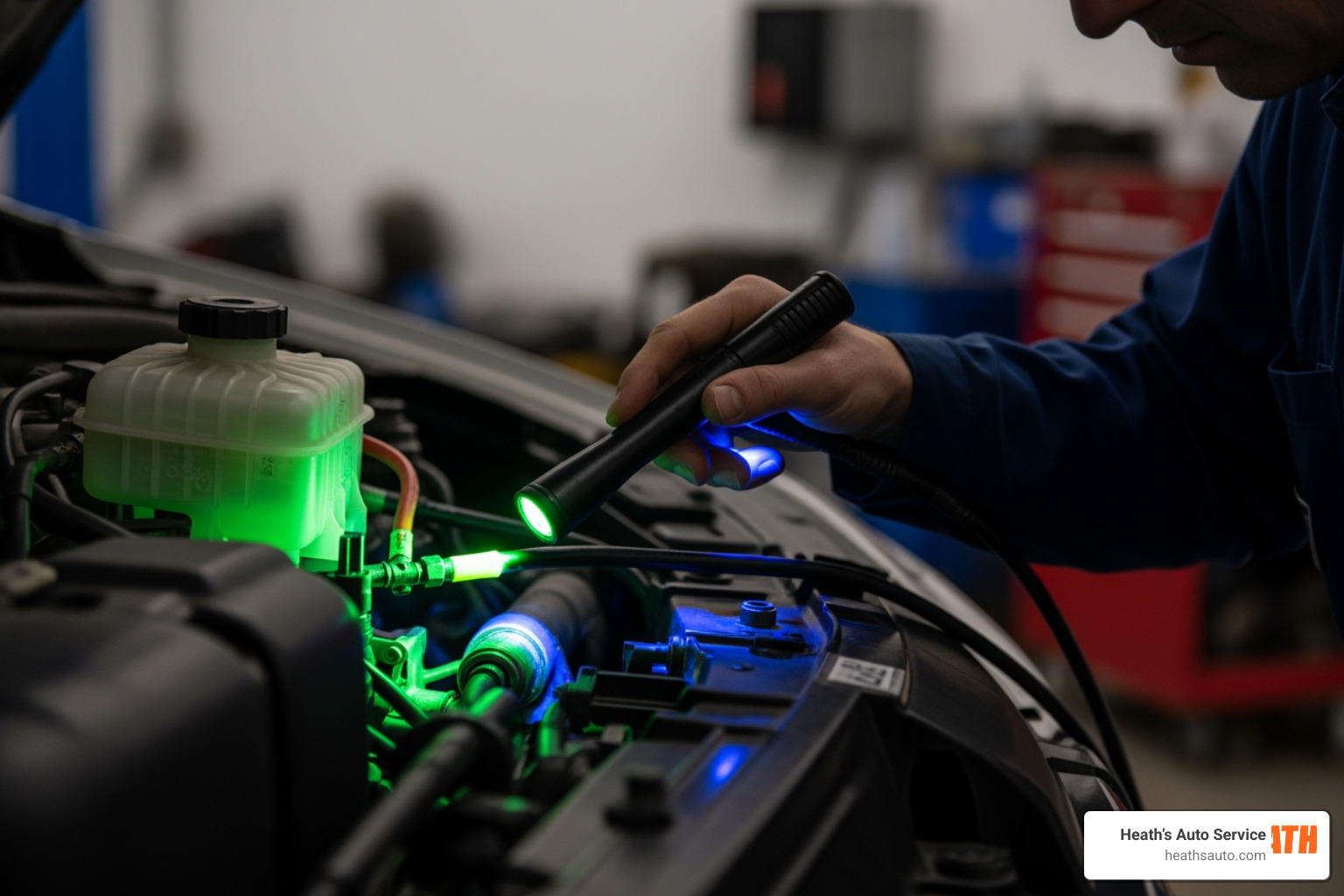
The most common reason for auto air conditioning repair near me is a leak. Since the system is sealed, you should never “lose” refrigerant like you lose gasoline. If it’s low, there is a hole. We often use UV dye and blacklights to find these leaks, as refrigerant is invisible to the naked eye.
Beyond just blowing warm air, your car’s AC could be dying if you notice the following signs:
- Weak Airflow: This is often a “breathing” problem. It could be a clogged cabin air filter, a failing blower motor, or even a mold-clogged evaporator core.
- The “Sweaty Foot” Syndrome: If you feel water dripping on your feet while driving, your AC box drain is likely clogged. This traps moisture inside the dash, which leads to mold and that classic “old gym bag” smell.
- Strange Vibrations: Does your car shake when AC is on? This could indicate a failing compressor putting an immense load on the engine, or a cooling fan that has become unbalanced.
- Intermittent Cooling: If the air is cold for ten minutes and then turns warm, your system might be “freezing up” due to moisture in the lines, or you might have bad car A/C condenser symptoms where the unit can’t shed heat fast enough when the car is idling.
Sometimes, the issue isn’t mechanical at all, but electrical. Blown fuses, frayed wires, or a faulty pressure sensor can prevent the compressor from ever engaging. In these cases, you might find both your AC and heat not working in car simultaneously.
Identifying Signs You Need Auto Air Conditioning Repair Near Me
Living in Arizona, we get used to a little dust, but your AC shouldn’t smell like a swamp. Mildew odors are a major red flag. When moisture sits on the evaporator, bacteria and mold thrive. This isn’t just a comfort issue; it’s an air quality issue for you and your family.
You should also keep your ears open. A healthy AC system should be relatively quiet. If you hear grinding noises, that’s usually the sound of a compressor bearing giving up the ghost. Rattling sounds might suggest a loose mounting bracket or debris caught in the blower motor.
In Gilbert, Chandler, or Scottsdale, where the heat is relentless, knowing the signs Freon is low in car Gilbert AZ is vital. If the air is “cool-ish” but not “cold,” or if you hear a faint hissing sound from the dashboard, you’re likely dealing with a slow leak. And remember, the system works both ways; if you’re experiencing no heat in car during our chilly desert nights, it could be a sign of a broader climate control failure or a low coolant level in the engine.
Professional Auto Air Conditioning Repair Near Me: Services and Solutions
When you bring your vehicle to a professional shop, we don’t just “squirt some Freon in it” and hope for the best. A proper repair follows a specific, scientific process to ensure the fix lasts longer than a single afternoon.
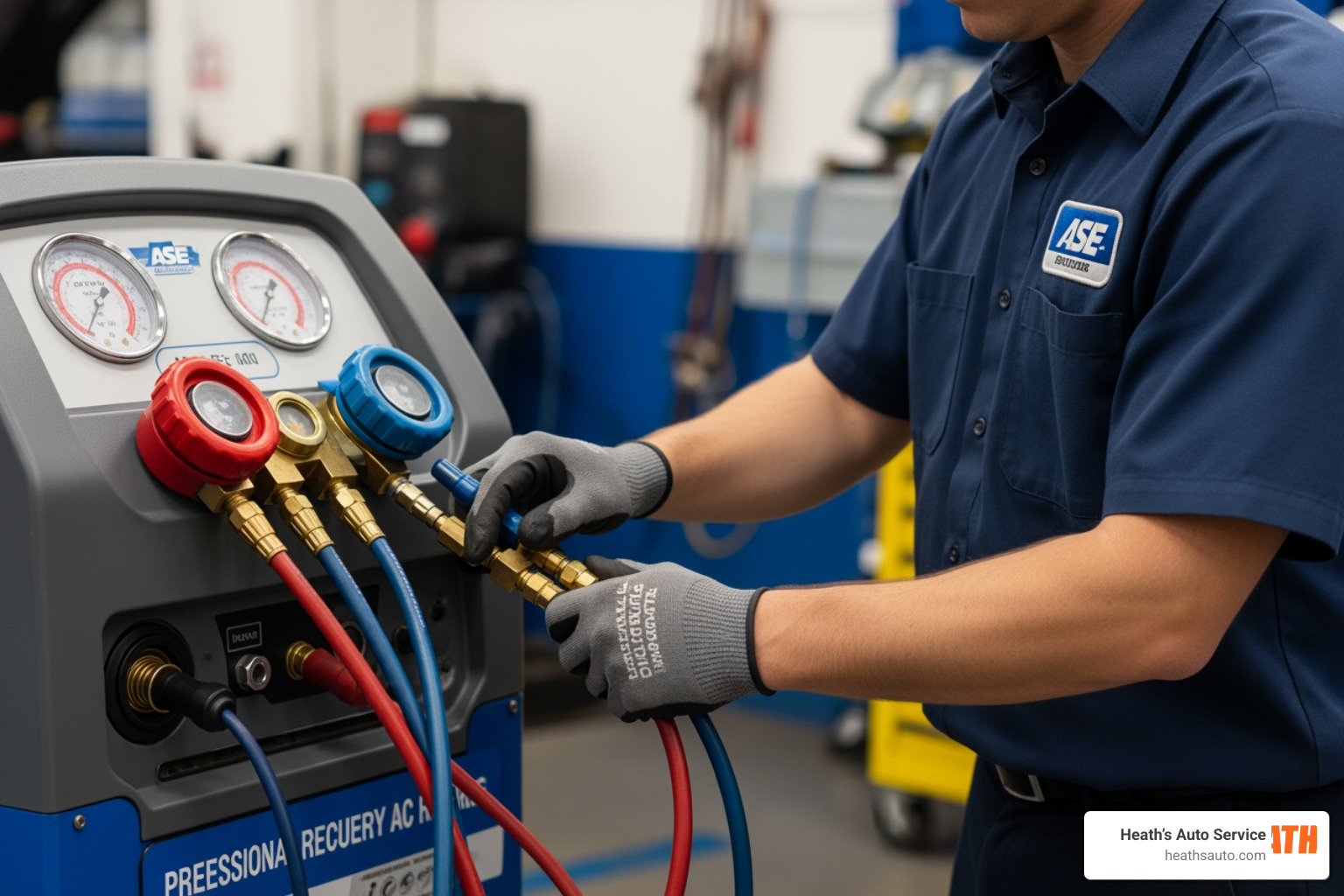
A standard professional service usually includes:
- Performance Evaluation: We measure the vent temperature and the pressures on both the “high” and “low” sides of the system.
- Leak Detection: Using electronic “sniffers” or UV dye to find the exact exit point of the refrigerant.
- Evacuation and Recharge: We use a machine to vacuum out all old refrigerant, moisture, and air. This vacuum stage is critical because it also tests if the system can hold pressure. Only then do we add the exact weight of fresh refrigerant specified by the manufacturer.
- Component Replacement: If a part is truly broken, like a leaking evaporator or a seized compressor, we replace it with high-quality parts.
Many drivers worry about the bill, asking how much to fix AC in car 2025. While a simple recharge might start around $150–$300 (depending on the refrigerant type), major component replacements can vary significantly. Understanding AC car compressor replacement costs is easier when you realize that most of the cost comes from the labor of disassembling the front of the car or the dashboard to reach the parts.
One thing we take very seriously is the environment. Federal law prohibits the “venting” of refrigerant into the atmosphere. Removing refrigerant from a car must be done with a recovery machine that cleans and stores the gas for proper recycling.
Finding Reliable Auto Air Conditioning Repair Near Me for Long-Term Solutions
Not all shops are created equal. When searching for auto air conditioning repair near me, look for ASE-certified technicians. This certification ensures the person working on your car has the specialized training required for high-pressure systems.
At Heath’s Auto Service, we believe in transparency. We provide digital inspections with photos, so you can see the leak or the broken belt for yourself. We also stay ahead of the curve with specialized tools for EV and Hybrid vehicles, which often use electric compressors that require specific, non-conductive oils. Using the wrong oil in a hybrid AC system can actually lead to a high-voltage short—an expensive mistake you want to avoid!
Before we ever start a repair, we’ll show you how to fix AC in car the right way, and we’ll even teach you how to test car AC compressor health so you understand the “why” behind our recommendations.
Maintenance Tips to Prevent Future AC Breakdowns
You wouldn’t go five years without an oil change, and your AC shouldn’t be ignored either. Preventive maintenance is the best way to avoid a $1,500 repair bill in the middle of July.
Here is how you can keep your cool:
- Replace the Cabin Air Filter: This is the most overlooked maintenance item. A clogged filter makes your AC work twice as hard to move half as much air.
- Annual Inspections: The importance of regular AC maintenance and repair cannot be overstated. A quick check-up every spring can catch a $20 O-ring leak before it turns into a $600 compressor failure.
- Clean the Condenser: Gently spray your car’s grill with a garden hose to wash away bugs and dirt. This helps the condenser shed heat more efficiently.
- Run it in Winter: This sounds crazy, but you should run your AC for 10 minutes once a week during the winter. This keeps the oil circulating and prevents the rubber seals (O-rings) from drying out and leaking.
- Park in the Shade: It’s simple, but it works. Reducing the “heat soak” of your interior means your AC doesn’t have to fight as hard to get the temperature down. If you’re wondering how can I make my car’s A/C cooler, start with a high-quality sunshade.
By prioritizing beat the heat: the importance of auto AC maintenance and repair, you ensure that your car remains a sanctuary from the Arizona sun.
Frequently Asked Questions about Car AC Repair
How much does a car AC recharge typically cost?
The cost of a recharge depends heavily on your car’s age. Older cars using R134a are generally cheaper to service. Newer cars using R1234yf can be more expensive because the refrigerant itself costs significantly more per ounce. Most standard vehicles hold between 28 and 32 ounces of refrigerant. When you factor in the how much to fix AC in car diagnostic fee (which usually includes a leak test), you can expect to pay anywhere from $150 to $450 for a professional evacuation and recharge service.
Can I recharge my car’s AC myself with a DIY kit?
While those “AC in a can” kits at the parts store are tempting, we generally advise against them. These kits often contain “stop-leak” additives that can gum up the internal valves and sensors of your system, leading to much more expensive repairs later. Furthermore, without a manifold gauge set, it is very easy to overfill the system. If you’re wondering how to remove excess Freon from car AC, the answer is that you can’t do it at home safely or legally. Overfilling can actually cause the compressor to “slug” (trying to compress a liquid), which will destroy it instantly.
How often should I have my car’s air conditioning serviced?
We recommend an AC check-up at least once a year. Bring your vehicle to Heaths Auto Service for a spring AC check before the temperatures hit triple digits. This ensures your refrigerant levels are topped off and your cabin filter is clean, providing you with maximum cooling efficiency all summer long.
Conclusion
At Heath’s Auto Service, we know that in Arizona, a working air conditioner isn’t a luxury—it’s a survival tool. Whether you are in Flagstaff, Scottsdale, Prescott, Cottonwood, Gilbert, or Chandler, our team of ASE-certified experts is ready to get you back to sub-zero temperatures.
Heath’s Auto Service In Gilbert, AZ
We stand behind our work with a 3-year/36,000-mile nationwide warranty and offer free second opinions if you’ve been told you need a major repair elsewhere. Don’t spend another day melting in traffic.
At Heath’s Auto Service, our comprehensive range of services covers everything from routine maintenance to complex repairs. Our certified technicians are skilled in handling oil changes, brake inspections, engine diagnostics, tire rotations, and much more. Whether it’s a minor tune-up or a major overhaul, trust us to get you back on the road with confidence. Contact our team at Heath’s Auto Service today!