
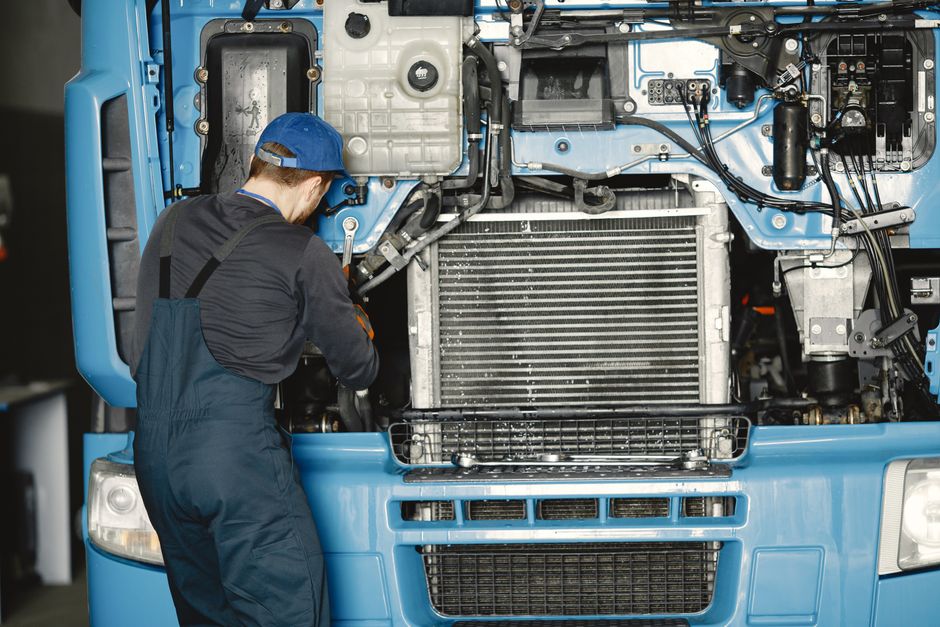
Why Auto Diesel Repair Requires a Different Kind of Expertise
Auto diesel repair covers a wide range of specialized services that standard gas-engine shops often are not equipped to handle. Here is a quick look at what it involves:
- Fuel system service – injector testing, high-pressure pump diagnosis, fuel filter replacement
- Turbocharger repair – inspection, boost leak testing, rebuild or replacement
- Emissions system maintenance – DPF regeneration, EGR cleaning, DEF system diagnostics
- Engine diagnostics – diesel-specific scan tools, live data monitoring, fault code analysis
- Routine maintenance – oil changes with diesel-rated oil, air filters, water separator service
- Cooling and electrical systems – glow plugs, starting systems, cooling load management
Diesel engines are built to last – some reaching 300,000 to 500,000 miles with proper care. But that longevity only happens when problems are diagnosed at the root cause, not just patched with a parts swap. A diesel that is ignored or misdiagnosed can go from a minor fix to a major overhaul fast.
That is exactly why finding a shop that specializes in diesel matters so much.
At Heath’s Auto Service, our certified technicians bring hands-on experience with auto diesel repair across Arizona – from light-duty trucks to passenger diesels. Whether you are dealing with a warning light, unusual smoke, or just need a straight answer on a repair quote, we are here to provide honest diagnostics and transparent service.
For a general overview of diesel engine design and operating principles, see Diesel engine.
What Auto Diesel Repair Includes and Why Specialized Service Matters
Diesel vehicles are different by design. They run with higher compression, depend on precise fuel delivery, often use turbochargers to make power, and rely on emissions hardware that can be far more complex than what you find on older gas vehicles.
That means auto diesel repair is not just “regular car repair with bigger parts.” It requires the right training, the right tools, and the discipline to diagnose the cause of the issue instead of guessing.
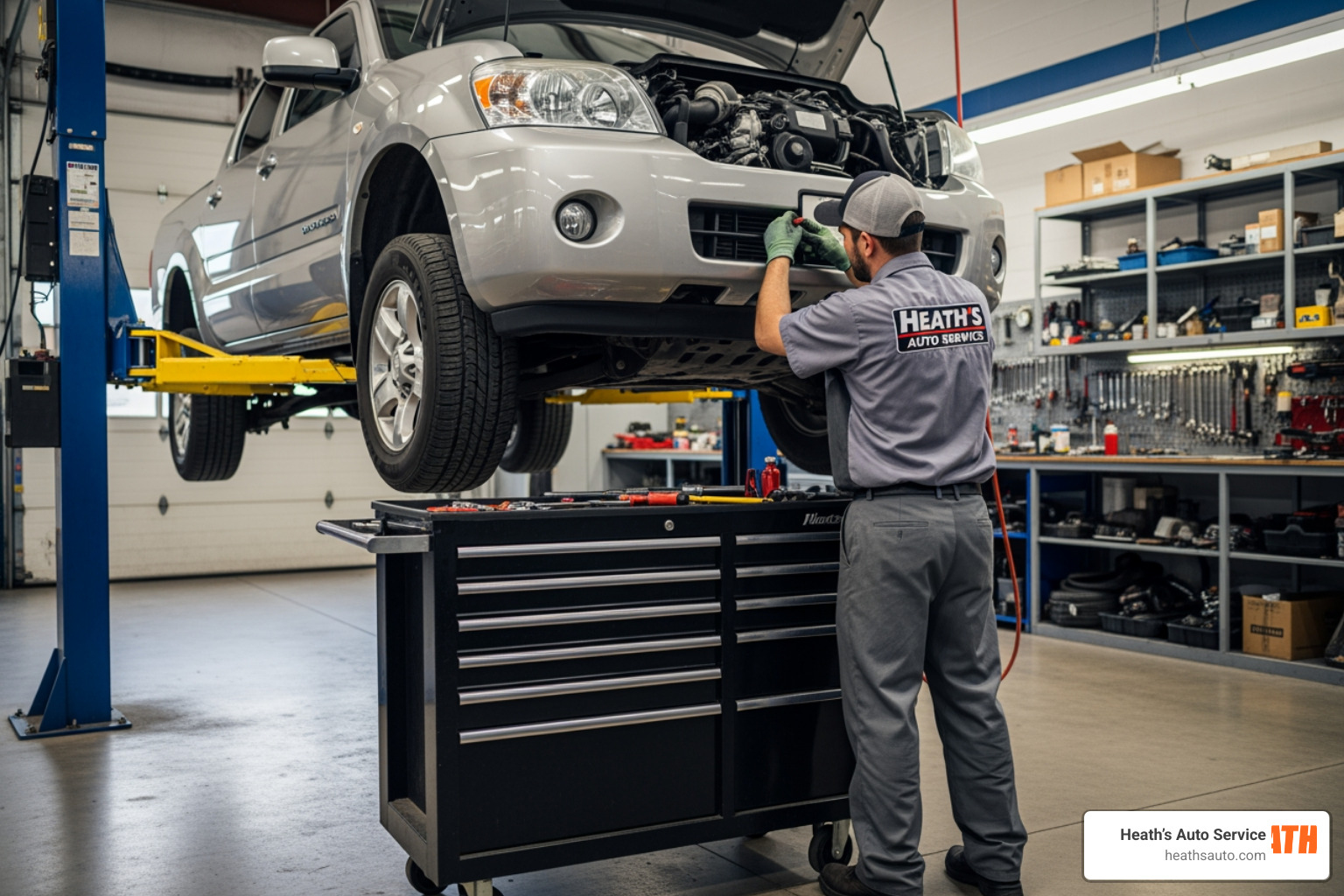
How auto diesel repair differs from basic auto repair
A diesel engine asks more from a technician than many gas vehicles do. The differences include:
- High-pressure fuel systems with very tight tolerances
- Glow plug and cold-start systems
- Turbo and charge-air piping that affect power delivery
- Soot management through DPF and EGR systems
- Higher cooling demands under towing and heavy-load use
- Diesel-specific scan data and regen procedures
In plain English: a diesel can have a check engine light for reasons that are not obvious from the driver seat. We use diesel-capable scan tools, live data, pressure testing, and visual inspection to narrow down the true source.
Vehicles and systems commonly covered in diesel service
Most diesel service for local drivers centers on light-duty trucks and diesel passenger vehicles, but the systems we inspect are broad. Typical diesel repair work may involve:
- Fuel injectors and high-pressure pumps
- Turbochargers and intercoolers
- DPF, EGR, and DEF systems
- Cooling systems and thermostats
- Starting and charging systems
- Transmission and driveline concerns
- Brakes, suspension, and steering
- Electrical faults and sensor diagnostics
If you want a broader look at what professional diesel care includes, visit our Diesel Maintenance and Repair page.
The Most Common Diesel Problems That Need Professional Repair
Diesel engines are durable, but they are not indestructible. The most common problems that bring drivers in usually start with a symptom they can feel, hear, or smell.
Some of the top issues we see include:
- Hard starting or no-start conditions
- Excessive smoke from the exhaust
- Loss of power under load
- Rough idle or misfire-like behavior
- Overheating
- Warning lights or limp mode
- Fuel system contamination
- Turbocharger and boost problems
- Emissions system faults

Fuel, air, and turbo issues behind many auto diesel repair visits
Many diesel problems trace back to the balance of fuel, air, and boost.
Fuel system issues may involve worn injectors, a failing pump, restricted filters, or water contamination. Diesel fuel systems operate under extremely high pressure, so even a small problem can affect performance in a big way.
Air and turbo issues are just as common. A split intercooler boot, leaking charge pipe, sticking turbo actuator, or worn turbo can cause:
- Sluggish acceleration
- Poor towing performance
- Whistling noises
- Black smoke under throttle
- Reduced fuel economy
This is why we do not believe in throwing parts at a problem. We test first. A turbo complaint is not always a failed turbo, and an injector code does not always mean every injector is bad.
Emissions and sensor problems that trigger warning lights
Modern diesels depend on emissions systems working correctly. The big three are:
- DPF – traps soot
- EGR – recirculates exhaust gases to reduce combustion temps
- DEF/SCR – helps reduce NOx emissions
When one part of that system struggles, you may see a warning light, reduced power, or a forced regen issue. In more severe cases, the vehicle may enter derate or limp mode to protect itself or stay emissions compliant.
Common emissions-related diesel issues include:
- DPF not completing regeneration
- EGR valve sticking open or closed
- Poor-quality or contaminated DEF
- NOx sensor failures
- Pressure sensor faults
- Excess soot buildup from other engine problems
For more on DEF, read How Does DEF Work in a Diesel Engine. If you are seeing smoke during acceleration, our guide on White Smoke from Diesel Engine When Accelerating can help explain what it may mean.
Red-flag symptoms that need immediate attention
Some diesel symptoms should move to the top of your to-do list fast:
- White smoke, especially with rough running
- Blue smoke, which may point to oil burning
- Heavy black smoke with major power loss
- Knocking or sharp metallic engine noise
- Overheating
- Strong diesel fuel smell
- Flashing warning lights
- Hard starting that gets worse by the day
- Sudden derate or limp mode
Cold weather can also expose weak batteries and starting systems. Industry data shows February is one of the most common months for battery failures, and diesels can be especially sensitive when cranking power drops.
If your truck is overheating, smoking heavily, or losing power suddenly, do not keep “seeing if it clears up.” That is mechanic-speak for “please do not turn a repair into an engine replacement.”
Routine Maintenance That Prevents Costly Diesel Repairs
The best diesel repair bill is the one you never have to pay.
Routine service is what helps a diesel engine reach the long life it is known for. When maintained correctly, many diesel engines can last 300,000 to 500,000 miles or more. Skip the basics, and expensive components wear out sooner than they should.
The core preventive services usually include:
- Oil and filter changes
- Fuel filter replacement
- Water separator service
- Air filter inspection or replacement
- Cooling system checks
- Battery and charging system testing
- Belt and hose inspections
- Emissions system monitoring
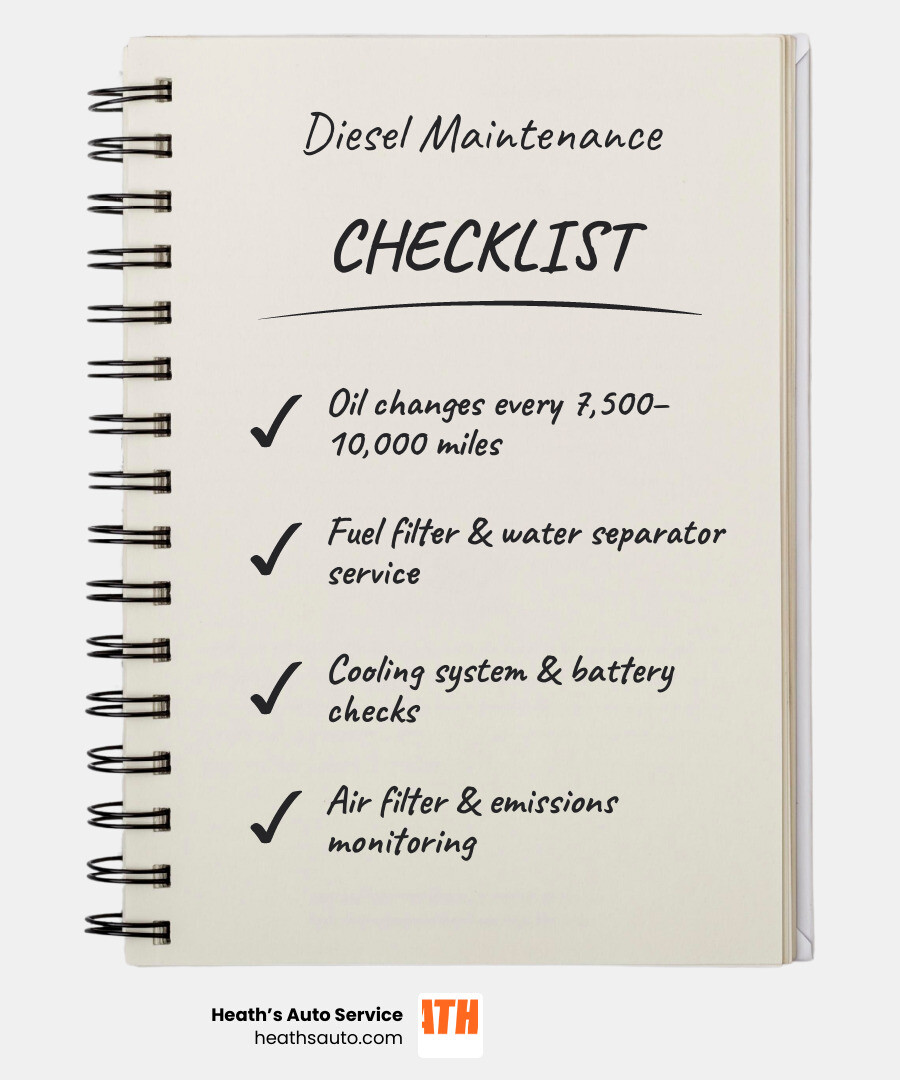
How often diesel vehicles need oil changes and inspections
For many modern diesel pickups and passenger diesels, a general service range of 7,500 to 10,000 miles is common. That said, the right interval depends on:
- Towing frequency
- Stop-and-go driving
- Dusty Arizona conditions
- Idling time
- Engine platform
- Oil specification requirements
Severe-duty use usually means shorter intervals. If you tow, haul, idle heavily, or drive in hot conditions, waiting too long between services is asking a lot from your oil.
Diesels need the correct diesel-rated oil and quality filtration. Cheap filters and incorrect oil can contribute to wear, soot handling problems, and poor protection under load.
If you are not sure whether your vehicle is due, check out 7 Signs Your Diesel Engine Car Needs an Oil Change.
Why DPF, EGR, and DEF maintenance cannot be ignored
Emissions systems are not optional side characters anymore. They are major players in diesel reliability.
Here is why they matter:
- DPF systems need successful regen cycles to burn off soot
- Over time, ash loading can reduce DPF effectiveness
- EGR passages can clog with soot and carbon
- DEF quality affects SCR performance
- Emissions faults can reduce fuel economy and trigger limp mode
A passive regen may happen during steady driving. An active regen adds heat to burn soot. If neither happens successfully, a forced regen or deeper repair may be needed.
Neglect here gets expensive. A small issue upstream can create bigger aftertreatment problems downstream. It is also one reason rising operating costs matter in 2026. Our article on High Diesel Prices in 2026 How to Keep Your Diesel on the Road explains why smart maintenance matters even more when fuel is not getting any cheaper.
Services diesel repair shops offer beyond the basics
A quality diesel shop should do much more than oil changes and brake jobs. Professional diesel service often includes:
- Injector balance and performance testing
- High-pressure fuel diagnosis
- Turbocharger inspection and replacement
- Boost leak and intercooler testing
- DPF regeneration and aftertreatment diagnostics
- EGR and DEF system repair
- Cooling system pressure testing
- Transmission service
- Driveline and differential checks
- Electrical and sensor troubleshooting
- Digital or documented inspections
The goal is to catch immediate needs and upcoming issues early, when repairs are usually smaller and less disruptive.
What to Expect During Diagnostics, Repairs, and Costs
One of the biggest questions drivers have is simple: “What happens after I bring my diesel in?”
A professional process should be clear, documented, and based on testing.
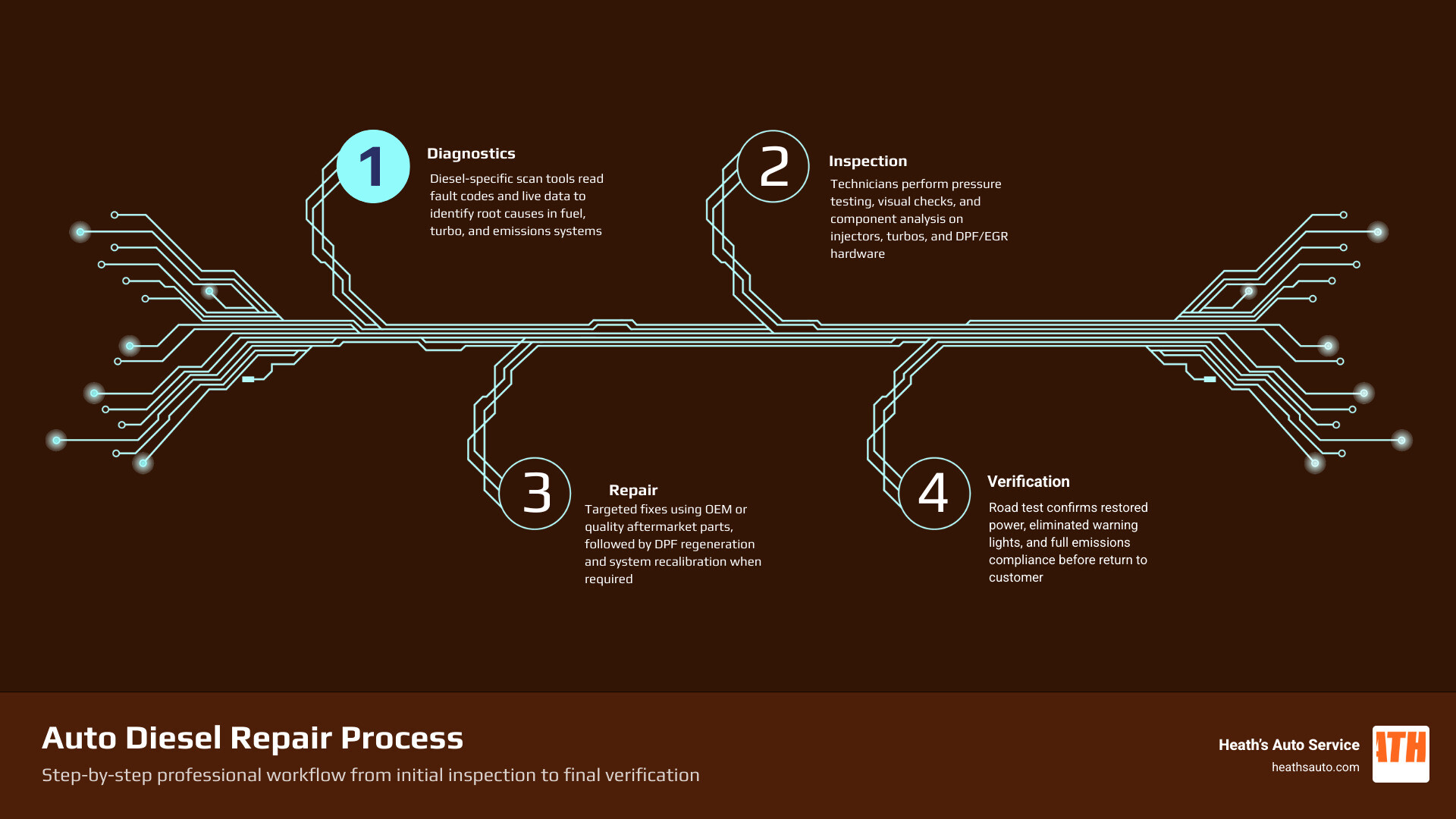
A typical auto diesel repair process from check-in to road test
A good diesel diagnostic visit usually looks like this:
- Customer interview
- We ask about symptoms, timing, recent repairs, towing use, and whether the issue is constant or intermittent.
- Initial scan and inspection
- We check stored codes, pending codes, and available live data.
- We inspect visible components, fluid condition, leaks, hoses, and wiring.
- System testing
- Depending on the complaint, this may include fuel pressure checks, boost testing, cooling system testing, battery and charging tests, or regen-related diagnostics.
- Diagnosis and estimate
- We identify the likely root cause, explain what we found, and provide a written estimate before repairs begin.
- Approval and repair
- Work starts only after approval.
- We use appropriate parts and follow service procedures for the platform.
- Verification
- After repair, we clear codes as needed, confirm operation, and verify that the original symptom is resolved.
- Road test or final check
- If conditions allow, we road test and make sure the vehicle is ready to return to service.
That process matters because diesel repairs can get expensive when shortcuts replace diagnostics.
Understanding diesel repair value and cost factors
Diesel repair costs vary widely based on the issue, engine design, labor time, and parts involved. In general, independent shops often charge lower labor rates than dealerships, which can save customers hundreds of dollars on a single repair.
But price alone is not the whole story. Real value comes from:
- Accurate diagnosis
- Avoiding unnecessary part replacement
- Using quality parts
- Explaining repair priorities clearly
- Fixing the cause, not just the symptom
Research consistently shows that proper diagnostics can reduce unnecessary replacements and lower overall repair spending. In practical terms, this can mean not replacing a whole set of components when testing shows only one part has failed.
OEM and aftermarket parts both have a place. The right choice depends on the repair, budget, warranty, and vehicle use. We walk customers through those options instead of making the decision a mystery.
Certifications, qualifications, and warranties to look for
When comparing diesel shops, customers should look for:
- ASE-certified technicians
- Diesel-specific experience
- Ongoing training
- Written estimates
- Clear communication
- Warranty terms in writing
- The right scan tools and testing equipment
A minimum 12-month/12,000-mile warranty is a good baseline in the repair industry. Stronger coverage is even better.
At Heath’s Auto Service, we back qualifying work with a 3-year/36,000-mile nationwide warranty, offer free second opinions, and provide service through our ASE-certified team. That combination helps customers feel more confident before authorizing major work.
How to Find a Reliable Local Diesel Repair Shop
Choosing a diesel shop should not feel like speed dating for your truck. A little homework now can save a lot of money later.
Here is a practical checklist:
- Read recent reviews for diesel-specific feedback
- Ask whether the shop regularly services diesel vehicles
- Confirm technician certifications
- Ask how diagnostics are performed
- Request written estimates
- Review warranty coverage
- Notice how clearly the staff explains findings
- Look for a clean, organized facility
- Ask whether they offer second opinions
- Consider convenience and turnaround time
Questions to ask before scheduling service
Before booking, ask:
- Do you specialize in diesel diagnostics and repair?
- What diesel systems do you work on?
- How do you confirm the root cause before replacing parts?
- Do you provide written estimates?
- What parts brands do you use?
- What is your warranty on parts and labor?
- How long does diagnosis usually take?
- Can you handle emissions-system repairs?
- Do you support work trucks or fleet vehicles if needed?
These questions help separate true diesel-capable shops from general shops that only dabble in it.
What local drivers should look for in Arizona diesel service
Arizona drivers have some specific needs. Heat, towing, elevation changes, dust, and stop-and-go driving all affect diesel reliability. A local shop should understand how those conditions impact cooling systems, batteries, filters, and emissions behavior.
At Heath’s Auto Service, we make that easier with:
- Six Arizona locations
- Same-day service on many maintenance and repair needs
- ASE-certified technicians
- Free second opinions
- 3-year/36,000-mile nationwide warranty
Frequently Asked Questions About Auto Diesel Repair
How long can a diesel engine last with proper maintenance?
A well-maintained diesel engine can often last 300,000 to 500,000 miles or more. The keys are regular oil changes, good filters, cooling system care, prompt fuel-system service, and fixing small issues before they become large ones.
Longevity is one of diesel’s biggest strengths, but it is earned through preventive care.
How do I know if a diesel problem is urgent or can wait?
Treat it as urgent if you notice:
- Overheating
- Heavy smoke
- Flashing warning lights
- Severe power loss
- Hard starting or no-start
- Fuel smell or visible leaks
- Limp mode or derate
- Loud knocking or new metal noises
Less urgent issues, like a maintenance reminder or minor drivability concern, may be schedulable, but they should still be checked soon. Diesel problems rarely get cheaper by being ignored.
What warranty should I expect on diesel repairs and parts?
Look for written warranty terms on both parts and labor. A baseline of 12 months/12,000 miles is common, while stronger shops may offer more. At Heath’s Auto Service, qualifying repairs are backed by our 3-year/36,000-mile nationwide warranty, which gives drivers extra peace of mind whether they are commuting locally or traveling.
Conclusion
Professional auto diesel repair is about more than replacing parts. It is about understanding how fuel delivery, turbocharging, emissions controls, cooling, and electronics all work together – and then diagnosing the real problem with care.
That is the approach we believe in at Heath’s Auto Service. We focus on honest diagnostics, clear communication, and long-term value for drivers across Arizona. If your diesel has a warning light, smoke issue, starting problem, or just needs expert maintenance, we are here to help you make the right call the first time.
Heath’s Auto Service in Cottonwood, AZ
At Heath’s Auto Service, our comprehensive range of services covers everything from routine maintenance to complex repairs. Whether it’s a minor tune-up or a major overhaul, trust us to get you back on the road with confidence. Contact our team at Heath’s Auto Service today!
We stand behind our work with an industry-leading 3-year/36,000-mile nationwide warranty and offer same-day service to keep your life moving. Don’t let a tiny leak cause a big problem.