

Why a Smoke Machine Is the Fastest Way to Find Car Vacuum Leaks
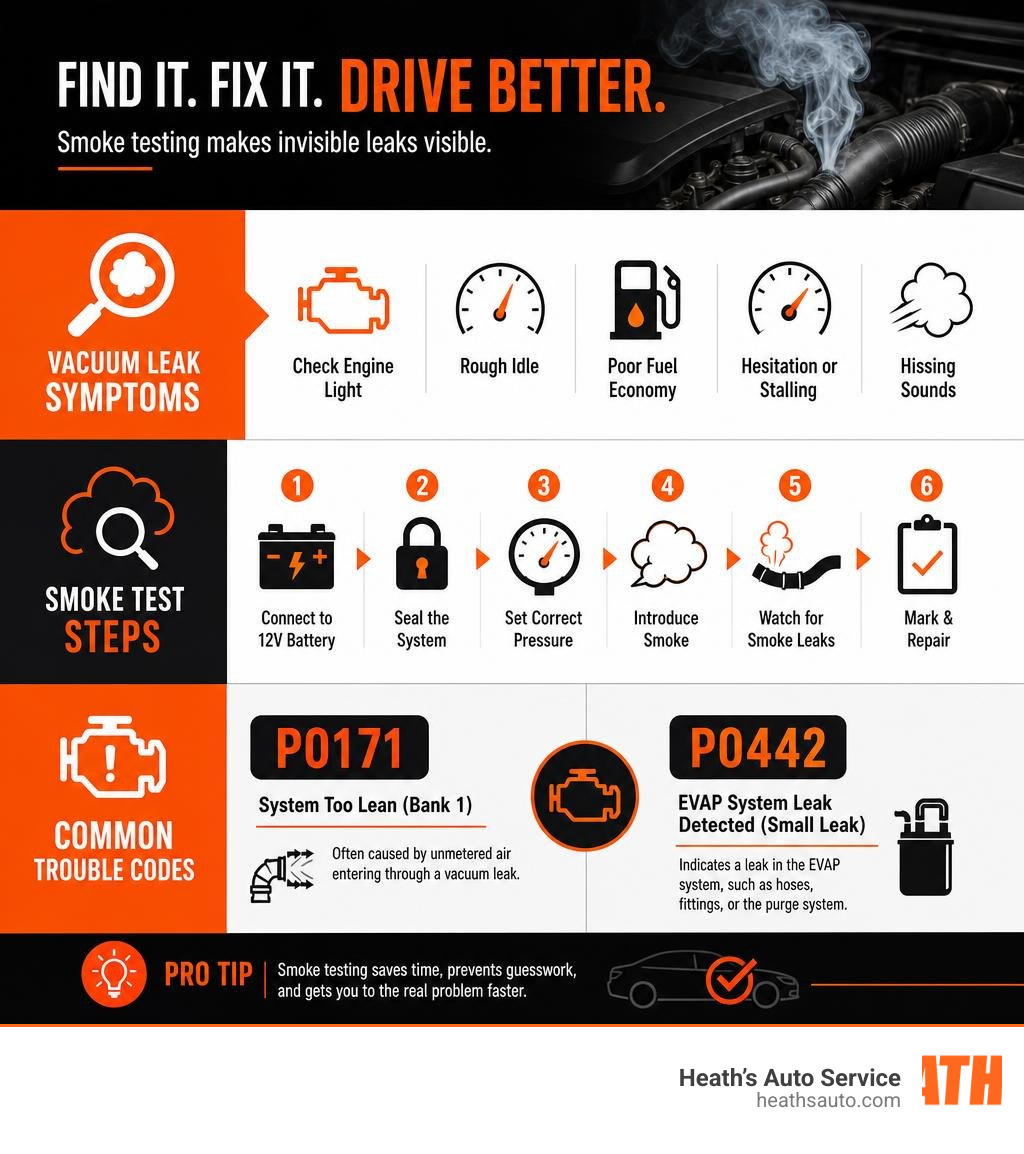
Using a smoke machine for car vacuum leaks is one of the quickest and most reliable ways to diagnose hidden engine problems. Here’s the short answer on how it works:
How to use a smoke machine to find vacuum leaks:
- Connect the machine to your car’s 12V battery
- Seal off the system you want to test (intake, EVAP, or exhaust)
- Set the correct pressure (low for EVAP, higher for intake/exhaust)
- Introduce smoke into the system
- Watch for smoke escaping from cracks, loose fittings, or failed gaskets
- Mark the leak location and repair it
That’s the core process. The sections below break down every step in detail.
A vacuum leak might seem like a minor issue, but it can trigger a check engine light, cause rough idling, hurt fuel economy, and even lead to engine damage if ignored. The tricky part? Vacuum leaks are often invisible. A tiny crack in a hose or a worn gasket can let in unmetered air without leaving any obvious sign.
That’s exactly why professional technicians rely on smoke testing. Instead of guessing, you pump visible smoke into the system and watch where it escapes. It turns an invisible problem into a visible one — fast.
At Heath’s Auto Service, after years of diagnosing vacuum leaks across all makes and models in Arizona, we’ve seen how a smoke machine for car vacuum leaks saves both time and money compared to traditional guesswork methods. In this guide, we’ll walk you through everything you need to know to perform a smoke leak test correctly and safely.
Smoke machine for car vacuum leaks vocab explained:
What is a Vacuum Leak and Why is Smoke Testing the Gold Standard?
To understand why a smoke machine for car vacuum leaks is so highly valued, we first have to understand how an engine breathes. Modern internal combustion engines are essentially large air pumps. For them to run efficiently, the engine control unit (ECU) must measure every single molecule of air entering the cylinders. This is done via the Mass Air Flow (MAF) sensor or Manifold Absolute Pressure (MAP) sensor.
A vacuum leak occurs when “unmetered air”—air that bypasses these sensors—slips into the intake manifold behind the throttle body. This extra oxygen throws off the carefully balanced air-fuel ratio, leaning out the mixture in the combustion chamber. When there is too much air and not enough fuel, you get a rough idle, poor throttle response, and erratic fuel trims.
Historically, finding these leaks was a tedious process of trial and error. However, modern automotive diagnostics have evolved. Utilizing a smoke machine has become the gold standard for diagnostic efficiency because it allows us to test the physical integrity of sealed systems without taking the entire engine bay apart.
Signs Your Car’s Engine Has a Vacuum Leak
If your engine is pulling in unmetered air, it will let you know. Recognizing the symptoms early can prevent major diagnostic headaches down the road. Some of the most common Signs Your Car’s Engine Has a Vacuum Leak include:
- A Hissing Sound: This is the literal sound of your engine sucking in outside air. It is often most noticeable when idling with the hood popped.
- High or Erratic Idle: Because the engine is receiving extra air, the ECU may try to compensate by raising the idle RPM or letting it bounce up and down.
- Engine Stalling: If the leak is large enough, the air-fuel mixture becomes too lean to support combustion, causing the vehicle to stall at stoplights.
- The Dreaded Check Engine Light: The ECU will quickly detect that the fuel trims are maxed out trying to compensate for the excess oxygen, triggering diagnostic trouble codes (DTCs).
How a Smoke Machine for Car Vacuum Leaks Works
The science behind a diagnostic smoke machine is surprisingly simple yet highly effective. The machine utilizes an internal heating element to vaporize a specialized oil (often highly refined mineral oil or baby oil). Once this oil is converted into a thick, dense, high-visibility vapor, the machine uses either an internal compressor or an external air supply to pressurize the system under test.
As we pump this pressurized smoke into the intake manifold, EVAP system, or vacuum lines, the entire system fills up. If there is even a microscopic tear in a rubber boot, a hairline crack in a plastic vacuum tee, or a failing intake manifold gasket, the pressurized smoke will escape. By watching for where the wisps of white smoke emerge, we can pinpoint the exact origin of the leak in seconds. This level of precision is why we emphasize Understanding the Importance of Diagnostics in Auto Repair—it takes the guesswork out of the equation.
Smoke Testing vs. Traditional Leak Detection Methods
Before professional smoke machines became widely accessible, mechanics had to rely on creative—and sometimes dangerous—workarounds. Some of these older methods are still discussed in DIY forums today, but they carry significant drawbacks:
- The Soapy Water Test: Spraying soapy water on hoses and watching for bubbles works well for pressurized systems (like tires or turbo boost pipes), but it is incredibly difficult to use on vacuum systems where the engine is sucking air in rather than blowing it out.
- The Propane Torch or Carburetor Cleaner Method: This involves spraying flammable gas or liquid around suspected leak areas while the engine is running. If the engine idle suddenly changes, you’ve found your leak. The obvious downside? Spraying highly flammable aerosol cans or unlit propane torches around a hot engine bay is a massive fire hazard.
- The Listening Hose / Stethoscope Method: Using a section of vacuum hose pressed to your ear to listen for a hissing sound can work for large, open leaks, but it is completely useless for tiny micro-leaks buried deep behind the engine block.
A smoke machine for car vacuum leaks eliminates all of these safety hazards and physical limitations. It is safe, non-destructive, and incredibly accurate, making it the superior choice for modern vacuum leak car repair.
Choosing the Best Smoke Machine for Car Vacuum Leaks
When shopping for a smoke machine, you will find a wide variety of options ranging from $70 DIY units to professional-grade systems costing upwards of $1,000. Choosing the right one depends on how often you plan to use it and which vehicle systems you need to test.
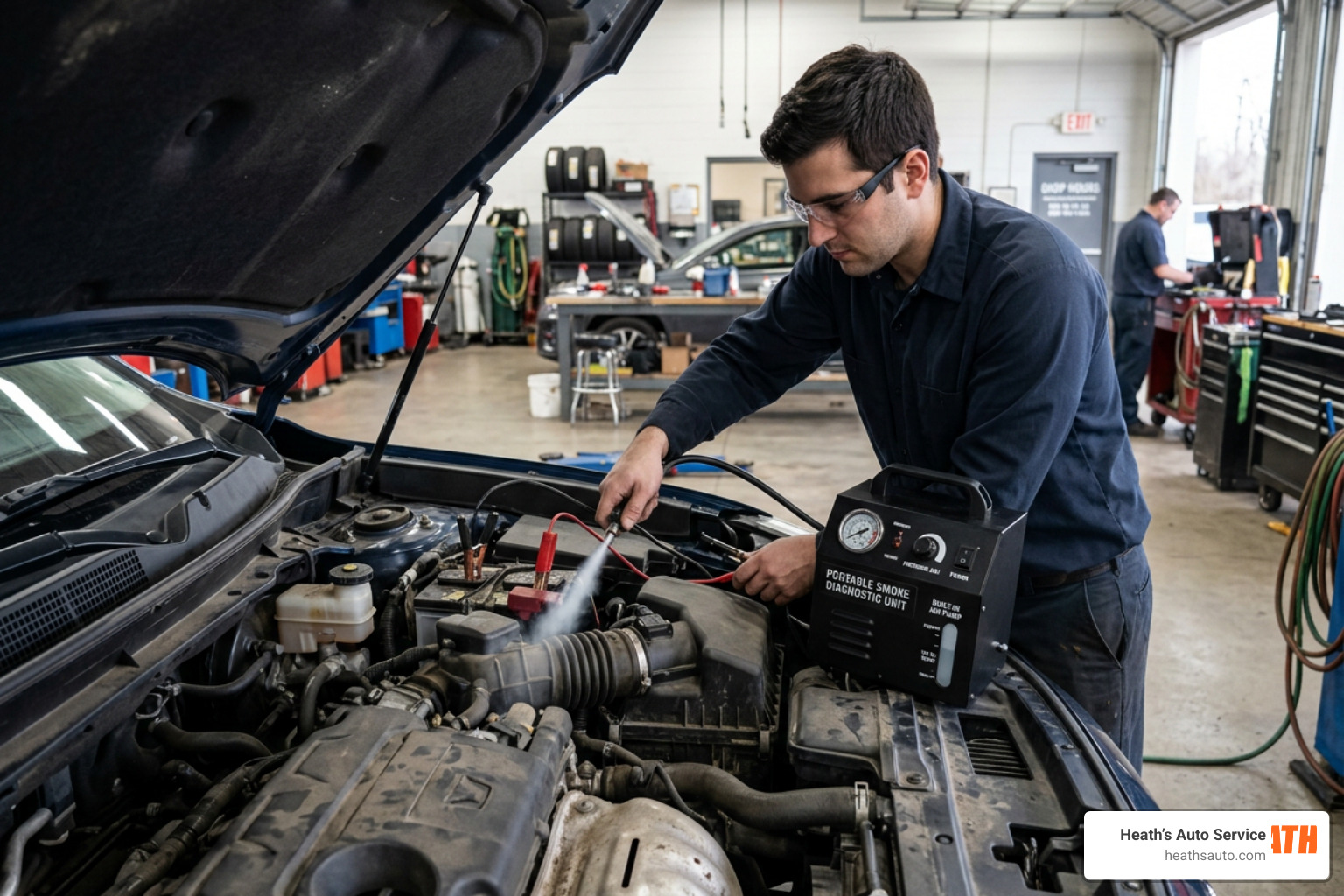
Key Features: Built-In Pumps vs. External Air Supplies
One of the first decisions you’ll need to make is how the machine generates its pressure.
- Built-In Air Pump: Many popular mid-range and DIY units feature an integrated 12V electric air compressor. These are highly portable because they run entirely off your car’s 12V battery. You don’t need a noisy shop compressor to use them.
- External Air Supply: Higher-end shop units often require you to connect them to an external air compressor line. These machines regulate the incoming high-pressure shop air down to safe testing levels. While less portable, they often offer more consistent, high-volume smoke output for larger commercial applications.
Pressure Settings: Low-Pressure EVAP vs. High-Pressure Turbo Systems
Operating pressure is a critical factor when choosing and using a smoke machine. Different systems on your vehicle are built to withstand different levels of pressure:
- Low-Pressure EVAP Testing (0.5 to 1 PSI): The Evaporative Emission Control (EVAP) system, which manages fuel vapors, is highly sensitive. Testing this system with anything over 1 PSI can pop internal valves, tear charcoal canisters, and cause expensive damage. Dedicated EVAP testers operate at a safe 0.5 PSI limit.
- High-Pressure Turbo/Boost Testing (7 to 23 PSI): If you are hunting down a boost leak on a turbocharged or supercharged vehicle, a low-pressure tester won’t cut it. You need a machine capable of mimicking the actual boost pressure your engine produces. For these systems, look for heavy-duty units that can push up to 15-23 PSI to reveal leaks that only occur under load. Check out our guide on how to prevent a turbo vacuum leak from ruining your performance.
Comparing Popular Models: DIY vs. Professional Tools
To help you decide, let’s look at some of the most popular smoke machines on the market as of June 2026:
| Brand & Model | Pressure Range | Power Source | Best For | Key Features |
|---|---|---|---|---|
| AutoLine Pro HyperSmoke | 0–7 PSI (Adjustable) | 12V DC Battery | DIYers & Enthusiasts | Highly portable, adjustable dial, dual EVAP/Normal modes |
| VEVOR Diagnostic Tester | 19–23 PSI | 12V DC Battery | Heavy-Duty / Turbo | VEVOR Automotive Smoke Machine Leak Detector – 19-23 PSI with built-in pump, high pressure |
| FOXWELL ST101 Pro | 0.5 PSI (Fixed) | 12V DC Battery | Safe EVAP Testing | FOXWELL 0.5 PSI EVAP Smoke Machine Automotive Built-in Air Pump, Flowmeter, Air/Smoke Mode, Professional Engine EVAP Vacuum Leak Detector for All DC12V Vehicles – Walmart.com |
| Solary 12V Tester | ~1 PSI | 12V DC Battery | Budget DIY | Affordable, quick 20-second smoke start, over-temp protection |
| ANCEL S3000 | 0.5–15 PSI | 12V DC Battery | Professional Shop | Built-in flowmeter, pressure gauge, robust metal housing |
How to Safely Perform a Smoke Leak Test on Your Vehicle
Performing a smoke test is straightforward, but it requires a methodical approach to ensure accuracy and prevent damage to your car’s delicate components.
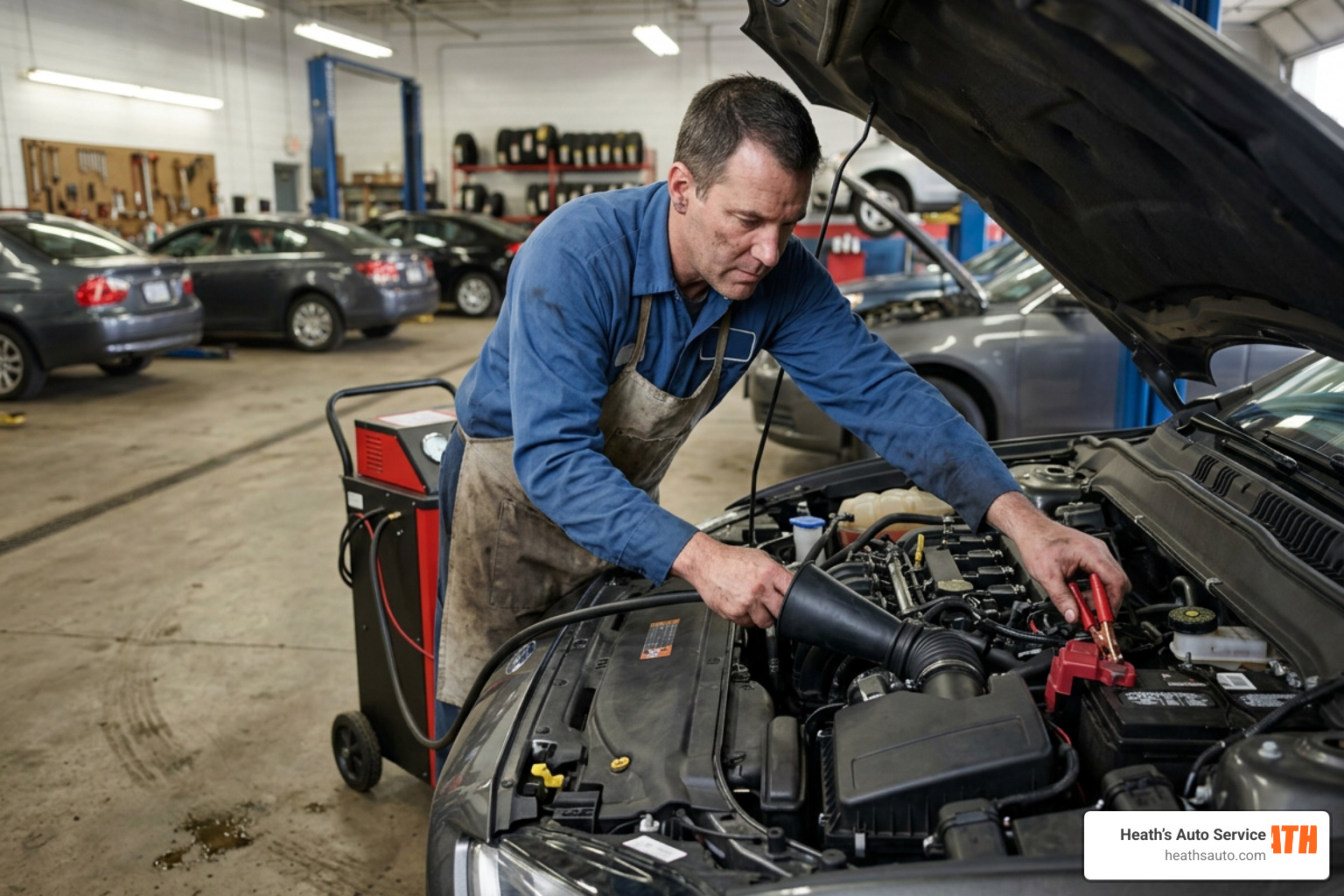
Step-by-Step: Operating a Smoke Machine for Car Vacuum Leaks
Follow this step-by-step process to perform a standard intake vacuum leak test:
- Preparation: Ensure the vehicle’s engine is completely turned off and cool to the touch. Working on a hot engine increases fire risks and makes handling components uncomfortable.
- Locate an Entry Point: Remove the air intake duct near the MAF sensor. You want to introduce smoke into the intake manifold behind the throttle body.
- Seal the Intake: Insert a cone adapter or an inflatable bladder adapter into the intake boot. This creates an airtight seal so smoke is forced through the engine’s vacuum lines rather than escaping back out of the air filter housing.
- Connect Power: Hook up the smoke machine’s alligator clips to the vehicle’s 12V battery (red to positive, black to negative).
- Run Air Mode First: If your machine has a dual-mode switch, turn on “Air Mode” first. Watch the built-in pressure gauge or flow meter. If the flow meter drops to zero, your system is fully sealed, meaning you don’t have a leak! If the flow meter stays elevated, you have a leak.
- Introduce Smoke: Switch the machine to “Smoke Mode.” Within 20 to 30 seconds, thick white smoke will begin filling the intake tract.
- Inspect the Engine Bay: Use a bright LED flashlight to scan the vacuum lines, intake manifold gaskets, throttle body, and brake booster hose connection. Look for any wisps of smoke escaping.
- Mark and Repair: Once you spot a leak, mark it with tape or take a photo. Turn off the machine, disconnect the power, and proceed with the necessary vacuum pump leak repair or hose replacement.
Testing Specific Systems: Intake, Exhaust, and EVAP
While the general steps are similar, testing different automotive systems requires unique adapters and settings:
- Intake Systems: Use a universal cone adapter or an inflatable intake bladder. Ensure the throttle plate is held open (either manually or by having an assistant press the gas pedal with the key in the “ON” position but engine off) so smoke can freely enter the entire intake plenum.
- Exhaust Systems: Yes, you can use a smoke machine to find annoying exhaust leaks! Insert the cone adapter directly into the tailpipe. If the vehicle has dual exhaust, seal off the second tailpipe with a rubber plug or a latex glove. Look for smoke escaping around the exhaust manifold, catalytic converter flanges, or weld joints.
- EVAP Systems: Always use the dedicated low-pressure setting (under 1 PSI). Connect the smoke machine to the vehicle’s EVAP service port (usually marked with a green cap in the engine bay) or use a specialized gas cap adapter. Many modern vehicles require a diagnostic scan tool to command the EVAP vent valve closed before you can successfully pressurize the system. For high-quality gear, we often recommend checking out the HyperSmoke™ Automotive Smoke Machine – AutoLine Pro for its dedicated EVAP and normal pressure modes.
Essential Safety Precautions and Fluid Recommendations
Whenever you are working with heat, electricity, and pressurized systems in an engine bay, safety must be your top priority:
- Use the Right Fluid: Always use the manufacturer-recommended fluid. Highly refined, cosmetic-grade mineral oil or pure baby oil is standard. Never use water-based fog machine fluids (like those used for Halloween parties), as they will leave a corrosive water residue inside your intake manifold and ruin your oxygen sensors.
- Keep the Engine Off: Never run the engine while performing a smoke test. The engine’s natural vacuum will suck the smoke right into the cylinders, preventing you from seeing any external leaks, and moving engine parts (like the alternator belt or radiator fan) pose a severe physical hazard.
- Work in a Well-Ventilated Area: Although the vaporized mineral oil is non-toxic, breathing in dense smoke in a closed garage can irritate your lungs. Keep garage doors open or work outdoors.
- Watch the Overheat Indicator: Most modern smoke machines have built-in automatic thermal shutdown protection. If the machine gets too hot, let it cool down for 5 to 10 minutes before resuming.
Interpreting Test Results and Diagnosing Common Trouble Codes
Finding a leak isn’t just about watching smoke rise; it’s also about understanding what that leak means for your car’s computer.
Pinpointing the Leak and Analyzing Smoke Flow
When you introduce smoke, keep a close eye on the machine’s flow meter. A high-quality flow meter acts as a diagnostic scale:
- No Flow (Float at Bottom): The system is perfectly sealed.
- Low Flow: You have a minor micro-leak (such as a pinhole in a vacuum line or a slightly weeping gasket). These can be incredibly hard to find without a bright flashlight and a steady stream of smoke.
- High Flow (Float at Top): You have a massive leak. The smoke will likely pour out in a thick cloud, making it very easy to spot.
If you are struggling to find a tiny leak, try dimming your shop lights and shining a blue or green LED flashlight through the engine bay. The colored light will cause the white mineral oil smoke to stand out brilliantly against the dark plastic engine components. If you need professional assistance interpreting these signs, our team at Heath’s Auto Service can perform advanced Diagnostics to pinpoint the issue.
Common Diagnostic Trouble Codes (P0171, P0442, P0455)
When a vacuum or EVAP leak occurs, your car’s OBD-II system will store specific trouble codes. A smoke machine is the ultimate tool for diagnosing these exact codes:
- P0171 / P0174 (System Too Lean): This indicates that the oxygen sensors are detecting too much oxygen in the exhaust. It is the classic signature of an intake manifold vacuum leak or a torn intake boot.
- P0442 (EVAP System Small Leak Detected): Often caused by a hairline crack in a fuel vapor line or a failing gas cap seal. A low-pressure smoke test is usually the only way to find these tiny leaks.
- P0455 / P0456 (EVAP System Large/Very Small Leak Detected): This points to a major opening in the EVAP system, such as a stuck-open purge valve or a completely loose gas cap.
Low-Cost and DIY Alternatives to Professional Smoke Machines
If you are a casual DIYer who only needs to find a single leak once every few years, spending $100+ on a dedicated tool might not seem practical. Fortunately, there are some clever homemade alternatives.
Homemade Smoke Canisters and Alternative Methods
Many home mechanics build their own smoke testers using simple household items. A popular DIY design includes:
- A sealed glass jar or metal paint can
- A clean soldering iron or a glow plug to act as the heating element
- A small piece of cotton wick soaked in mineral oil or baby oil
- A low-pressure air source, such as a bicycle tire pump or a regulated air compressor set to under 2 PSI
- Flexible vinyl tubing to route the smoke to the engine
While these DIY canisters can work, they carry significant risks. Without precise pressure regulation, it is incredibly easy to over-pressurize your intake or EVAP system, blowing out delicate internal seals. Additionally, homemade heating elements can become fire hazards if the oil gets too hot or if the container isn’t perfectly sealed. For most drivers, investing in an affordable, entry-level commercial smoke machine is much safer and more reliable.
Frequently Asked Questions about Vacuum Leak Smoke Testing
What fluid do you put in a car smoke machine?
Most automotive smoke machines run on pure, USP-grade mineral oil or standard baby oil. These oils vaporize at a relatively low temperature and produce a thick, highly visible white smoke that doesn’t leave behind a sticky or corrosive residue. Avoid using water-based party fog fluids, motor oil, or transmission fluid, as these can damage your car’s sensors and clog the machine’s heating element.
Can a smoke test damage my car’s engine or sensors?
No, as long as you follow basic safety guidelines. When performed at the correct pressure (under 1 PSI for EVAP, and under 10 PSI for standard intakes), a smoke test is completely safe and non-destructive. The vaporized mineral oil will not harm your oxygen sensors, catalytic converters, or delicate intake gaskets.
How much does a professional vacuum leak smoke test cost?
If you prefer to have a professional handle the job, most automotive repair shops charge a standard diagnostic fee of $100 to $150 to perform a comprehensive smoke test. This fee covers the technician’s time, the use of professional-grade diagnostic equipment, and a complete inspection of your vehicle’s vacuum, intake, and EVAP systems. If you want to get your vehicle back in top shape today, find out Where to Get Your Vacuum Leak Fixed Today.
Conclusion
A smoke machine for car vacuum leaks is an invaluable tool that transforms a frustrating, invisible diagnostic puzzle into a quick, visual fix. Whether you are a dedicated DIYer utilizing an entry-level portable unit or a professional technician relying on shop-grade equipment, smoke testing remains the absolute best way to ensure your engine runs smoothly, efficiently, and trouble-free.
If your check engine light is on, your car is idling rough, or you suspect an elusive vacuum leak is robbing you of fuel mileage, don’t waste hours guessing. At Heath’s Auto Service, our ASE-certified team has the advanced diagnostic tools and training to find and fix your leaks fast.
Heath’s Auto Service In Gilbert, AZ
We stand behind our work with a 3-year/36,000-mile nationwide warranty and offer free second opinions if you’ve been told you need a major repair elsewhere. Don’t spend another day melting in traffic.
At Heath’s Auto Service, our comprehensive range of services covers everything from routine maintenance to complex repairs. Our certified technicians are skilled in handling brake inspections, tire rotations, and much more. Whether it’s a minor tune-up or a major overhaul, trust us to get you back on the road with confidence. Contact our team at Heath’s Auto Service today!