

Why Your Steering Wheel Is Shaking (And What It’s Telling You)
If your steering wheel is shaking, here are the most likely causes at a glance:
| When does it shake? | Most likely cause |
|---|---|
| At 55-65 mph on the highway | Unbalanced or worn tires |
| Only when braking | Warped brake rotors or sticking caliper |
| During acceleration or turns | CV axle, worn tie rods, or engine mounts |
| At low speeds constantly | Wheel bearing or suspension wear |
| After hitting a pothole | Bent rim, lost wheel weight, or alignment shift |
A steering wheel is shaking in a way that feels wrong the moment you grip the wheel — and that feeling is your car telling you something needs attention. It might be a subtle vibration at highway speeds, a hard shudder when you press the brakes, or a persistent wobble that gets worse the faster you go. Whatever the pattern, it almost always points to a specific mechanical problem — and the good news is that most of them are diagnosable without a lift or special tools.
The tricky part? Several different problems can feel almost identical from the driver’s seat. Knowing what to look for — and when it happens — is the fastest way to pinpoint the cause and avoid paying for repairs you don’t need.
What a shaking steering wheel usually means
A shaking steering wheel is usually not a steering-wheel problem by itself. It is more often feedback from another part of the vehicle reaching your hands through the front suspension and steering system.
The pattern matters most:
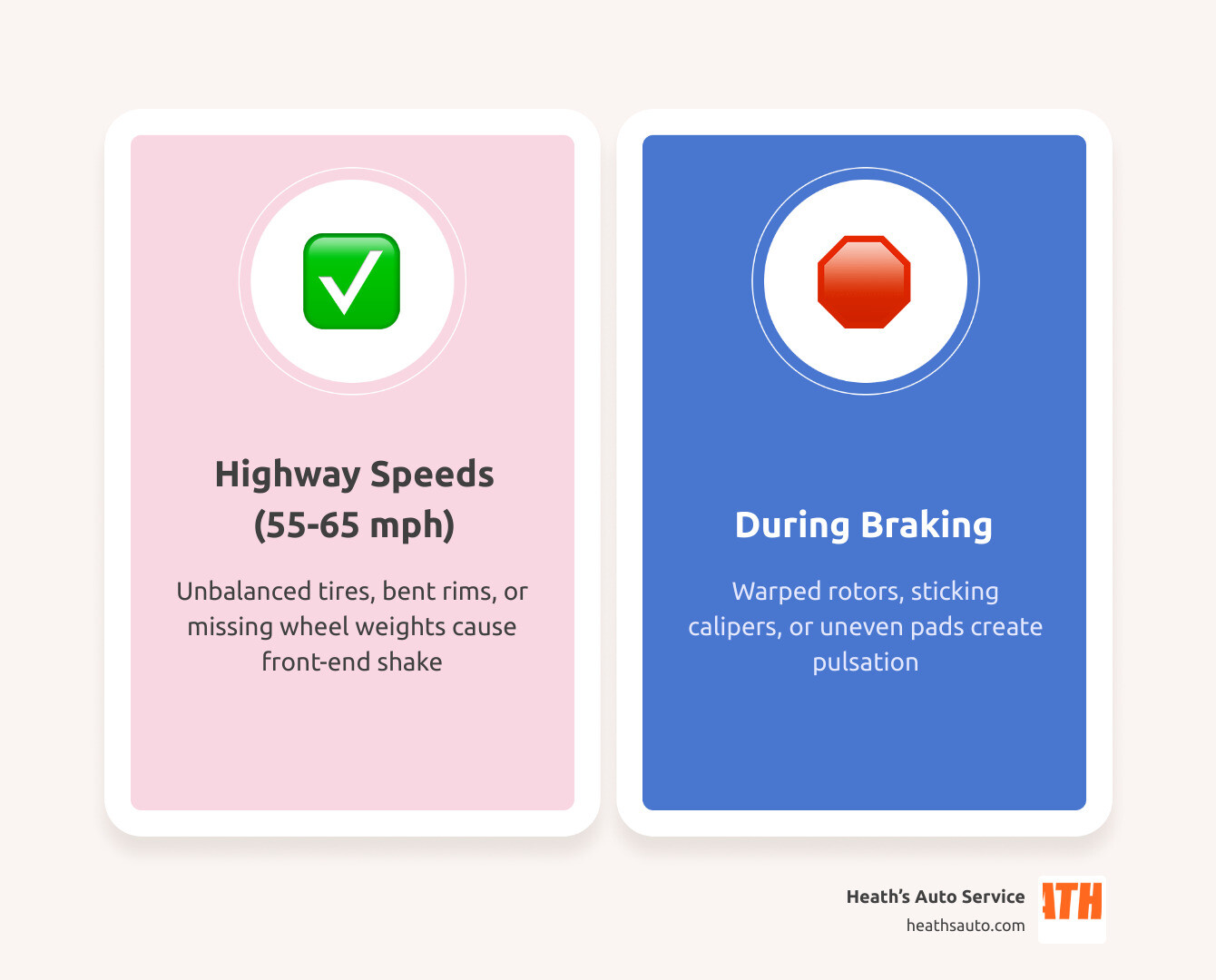
- Shake at steady highway speed usually points to tires or wheels
- Shake only while braking usually points to brake rotors, pads, or calipers
- Shake during acceleration can point to CV axles or engine mounts
- Shake during turns can suggest wheel bearings, CV joints, or worn steering parts
- Constant wobble at low speed can mean tire damage, bent wheels, or front-end wear
Other possible causes include wheel bearing play, steering linkage wear, loose hardware, and in some cases motor mounts. On newer vehicles, lane-assist systems can also create a brief steering wheel vibration by design, so it helps to know whether the vibration is mechanical or just your car politely nagging you to stay in your lane.
When steering wheel is shaking at highway speeds
If the vibration starts around 55 to 65 mph, tire and wheel issues move to the top of the list. Research consistently points to this speed range as the classic sign of wheel imbalance.
Common causes include:
- Unbalanced front tires
- Missing wheel weights
- Bent rim from pothole impact
- Uneven tire wear or cupping
- Tire flat spots after the vehicle sat for a while
If the shake gets stronger as speed climbs, that often supports the tire/wheel theory even more.
When steering wheel is shaking only while braking
If everything feels smooth until you press the brake pedal, the brakes are the first place to look. The most common cause is warped or uneven brake rotors. As the pads clamp onto a rotor with thickness variation or heat spots, you feel pulsing through the wheel and often through the brake pedal too.
Other brake-related causes include:
- Sticking brake caliper
- Uneven brake pad wear
- Brake hardware issues
- Overheated front brake components
If this sounds familiar, our guide on how to tell if your brakes are going bad goes deeper.
When the shake happens during acceleration, turning, or at low speeds
A shake during acceleration or while turning usually points away from simple tire balance and toward driveline or suspension problems.
Possible causes include:
- Worn CV axle or CV joint
- Engine or transmission mounts allowing excess movement
- Failing wheel bearing
- Worn tie rods or ball joints
- Damaged suspension bushings
At low speed, clunks, clicking, or a wobble you can feel in parking lots are valuable clues. If that is your symptom, read Why Your Steering Wheel Shakes At Low Speeds.
The most common causes of steering wheel vibration
Most cases come down to one of a handful of problems:
- Unbalanced tires
- Uneven tread wear
- Low tire pressure
- Wheel alignment issues
- Warped brake rotors
- Sticking brake calipers
- Worn shocks or struts
- Bad ball joints or tie rod ends
- Worn control arm bushings
- Loose lug nuts
Tire and wheel problems are the top cause
In real-world diagnosis, tires and wheels are the most common starting point. Every tire has tiny weight variations, and when that imbalance grows, the wheel begins to wobble as speed rises.
Check for:
- Low pressure compared to the door-jamb sticker
- Uneven tread wear
- Cupping or scalloping
- Bulges in the sidewall
- Missing wheel weights
- Bent or cracked rims
- Tire separation after pothole damage
Arizona roads can be rough on tires and wheels, especially after curb hits or potholes. Heat also changes tire pressure faster than many drivers realize, which can make a mild shake feel worse.
Related reading:
Brake problems that make the steering wheel shake
Brake vibration is usually felt during deceleration, especially from higher speeds. The front brakes are often the main source because that is where most stopping force happens.
Watch for:
- Steering wheel shake only while braking
- Brake pedal pulsation
- Burning smell after driving
- Vehicle pulling while braking
- Rotor hot spots or blue discoloration
- Uneven pad wear
Warped rotors are common, but a sticking caliper can feel similar and often gets worse if ignored. This is one reason brake shudder should not be shrugged off as “just old brakes.” For a good outside overview, see Why Your Steering Wheel Shakes: 6 Possible Causes.
Suspension and steering parts that transmit vibration
The suspension is supposed to absorb bumps and keep the tires planted. When parts wear out, road vibration passes much more directly to the steering wheel.
Common culprits include:
- Ball joints
- Tie rod ends
- Control arm bushings
- Shocks and struts
- Steering linkage
- Steering rack play
These parts can also cause wandering, poor return-to-center, clunking, and uneven tire wear. If your car feels loose or unsettled, learn more about steering and suspension service and car suspension problems.
Less common causes drivers overlook
Not every shake is a simple balance job. Less obvious causes include:
- Wheel bearings
- CV joints
- Driveshaft issues on some vehicles
- Motor mounts
- Low power steering fluid on older hydraulic systems
- Loose lug nuts or other hardware
- Lane assist vibration alerts
That last one catches some people off guard. If the vibration is brief and tied to lane departure warnings, it may be normal system behavior, not a fault.
How to diagnose a shaking steering wheel at home
You can narrow down the cause at home before booking service. The goal is not to play mechanic-hero in your driveway with bad jack placement and extra confidence. The goal is to gather clues safely.
Use:
- A tire pressure gauge
- Flashlight
- Torque wrench if you have one
- Jack stands if you lift the vehicle
- A notepad or phone to record symptoms
Start with a simple symptom checklist
Before touching anything, answer these questions:
- What speed does the shake start?
- Does it happen only when braking?
- Does it change during turns?
- Do you feel it mostly in the steering wheel, seat, or brake pedal?
- Did it start after a pothole, curb hit, or recent tire service?
- Is the car pulling left or right?
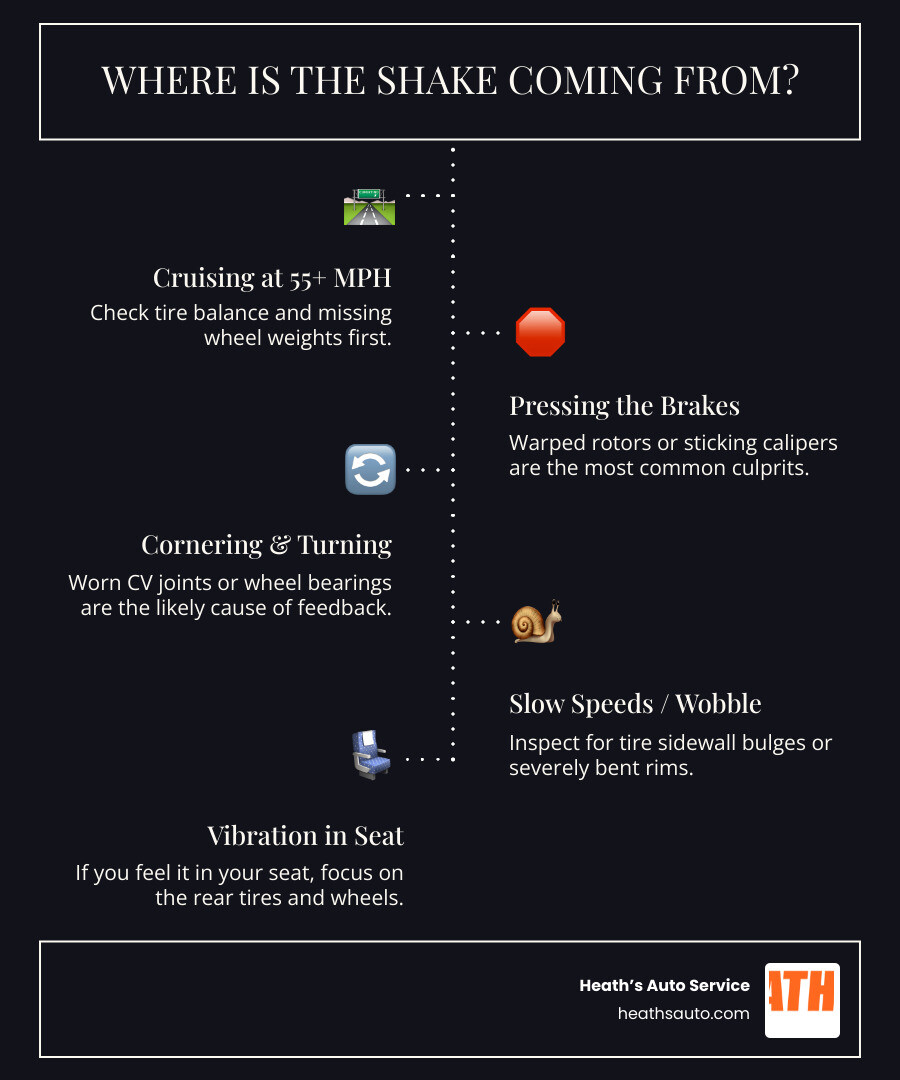
| Driving condition | Most likely area to inspect first |
|---|---|
| Steady speed vibration | Tires, wheels, balance |
| Braking vibration | Rotors, pads, calipers |
| Turning vibration/noise | CV joints, bearings, tie rods |
| Low-speed wobble | Tire damage, bent wheel, suspension |
| Vibration in seat more than wheel | Rear tires or rear wheel issue |
Inspect tires, wheels, and lug nuts first
This is the fastest and most productive first step.
- Check all four tire pressures against the door-jamb sticker.
- Look for uneven tread wear, feathering, or cupping.
- Inspect sidewalls for bulges, cuts, or bubbles.
- Look at the rims for dents or bends.
- Check for missing wheel weights. A clean rectangular mark on the wheel can be a clue one came off.
- Verify lug nuts are properly torqued if you have the correct spec and a torque wrench.
A loose lug nut issue is rare, but when it happens, it is urgent.
Check brakes and suspension for obvious warning signs
If the tires look decent, move on.
Look for:
- Grooved or heat-spotted rotors
- Uneven brake pad wear
- One wheel hotter than the others after a short drive, which can hint at a sticking caliper
- Leaking shocks or struts
- Torn bushings
- Clunks when rocking the wheel
- Excess bouncing after pushing down on a corner of the car
A simple bounce test is not perfect, but if the vehicle keeps bouncing, worn dampers may be part of the problem.
Step-by-step troubleshooting order that saves time
If you want the shortest path to an answer, use this order:
- Check tire pressure
- Inspect tread and sidewalls
- Check for bent rims or missing wheel weights
- Confirm lug nuts are properly torqued
- Note the exact speed where vibration starts
- Test whether braking changes the vibration
- Notice whether turning changes it
- Rotate tires only if they are in good condition and you know what you are doing
- Schedule tire balancing or alignment if symptoms fit
- Have the front end inspected if the shake persists
This general pattern lines up with common diagnostic advice in guides like Reasons why your steering wheel is shaking.
Is it safe to drive if your steering wheel is shaking?
Sometimes for a very short distance, yes. Sometimes absolutely not.
A mild vibration from a small tire imbalance is very different from a violent wobble caused by a damaged tire, loose suspension part, or loose wheel hardware.
Risks of ignoring it include:
- Longer stopping distances
- Tire failure
- Increased suspension wear
- Loss of steering precision
- Driver fatigue on longer trips
Safe to drive a short distance vs pull over now
Usually safe for a short trip to a shop:
- Mild shake only at highway speed
- No pulling, clunking, or noise
- No brake pulsation
- Tires appear undamaged
Pull over and stop driving if:
- The steering wheel shakes violently
- The car feels hard to steer
- You hear clunking or grinding
- A tire has a bulge, exposed cords, or is losing air
- The vehicle suddenly started wobbling after hitting something
- You suspect loose lug nuts
- Braking causes severe shudder or pulling
When in doubt, towing is cheaper than an accident and often cheaper than the damage caused by “just driving it for a few days.”
When you should see a professional mechanic
You should schedule an inspection if:
- The vibration keeps coming back
- It gets worse with speed
- It happens during braking
- The car pulls or drifts
- You hear clunks, clicks, or grinding
- Tire wear looks uneven
- The problem began after a pothole hit
Related reading:
What a shop will check during a professional diagnosis
A proper diagnosis goes beyond a quick glance.
A shop may check:
- Tire condition and road-force balance
- Wheel balance and bent rims
- Alignment angles
- Rotor runout and brake condition
- Bearing play
- Ball joints, tie rods, bushings, and struts
- CV axles and mounts
- Stored steering or stability-control codes on newer vehicles
At Heath’s Auto Service, we can usually narrow this down quickly because the symptom pattern tells us where to start. Our ASE-certified team works on all makes and models at our Arizona locations, and many vibration-related repairs can be handled the same day.
Repair costs and how to prevent the problem from coming back
Cost depends on the cause, but here are the ranges drivers most often want to know.
Typical cost to fix common causes in 2026
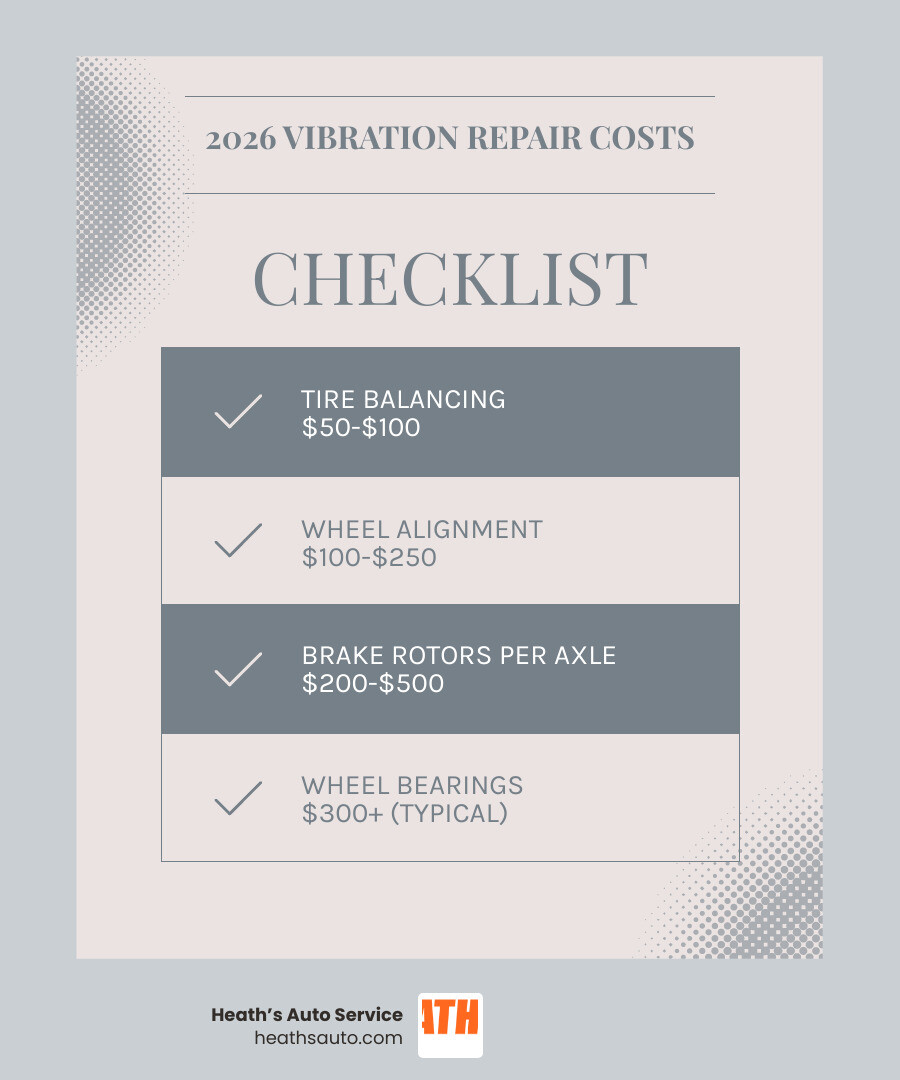
Common 2026 repair ranges include:
- Tire balancing: about $50-$100
- Wheel alignment: about $100-$250
- Brake rotors and related brake service: about $200-$500 per axle
- Tire replacement: varies widely by size and brand
- Wheel bearing replacement: typically more than balancing or alignment
- Suspension part replacement: varies by part and vehicle
- Diagnostic fee: may apply, depending on shop and testing required
The final number depends on what is actually wrong. A balance and alignment is very different from a wheel bearing plus suspension repair. That is exactly why guessing gets expensive.
Maintenance habits that prevent future steering wheel shake
Good maintenance prevents a lot of these problems before they start.
- Rotate tires every 5,000 to 7,500 miles
- Balance tires every 10,000 to 12,000 miles
- Check alignment about every 6,000 miles or during regular service
- Check tire pressure monthly
- Inspect tires after pothole or curb impacts
- Keep lug nuts torqued to spec after wheel service
- Service brakes before pads wear down enough to damage rotors
- Inspect suspension periodically, especially if the ride feels looser than normal
More on alignment timing:
Frequently asked questions about steering wheel is shaking
Can low tire pressure make the steering wheel is shaking?
Yes. Low pressure changes the tire’s contact patch and lets the sidewall flex more than it should. That can create vibration, worsen existing imbalance, and speed up uneven wear. In Arizona, temperature swings and seasonal changes can move tire pressure enough to matter, so monthly checks are worth the two minutes.
Why does the steering wheel is shaking after hitting a pothole?
Because potholes can damage several things at once:
- Bend a rim
- Knock off a wheel weight
- Shift alignment
- Damage a tire belt
- Wear or loosen suspension parts
If the shake started right after impact, get it checked soon. Pothole damage is one of the clearest before-and-after clues in diagnosis.
Can bad rear tires cause the steering wheel is shaking?
Yes, although rear tire problems are often felt more in the seat or floor than directly in the steering wheel. Still, rear tire imbalance or damage can send vibration through the chassis and make the whole car feel unsettled. A tire rotation or balance check can help isolate whether the issue is front or rear.
Conclusion: Fix the shake before it becomes a bigger repair
If your steering wheel is shaking, the smartest move is to treat it like an early warning, not an inconvenience. Tire balance issues, brake rotor problems, bent wheels, and worn suspension parts usually start small and get more expensive the longer they are ignored.
That is especially true on Arizona roads, where heat, potholes, rough pavement, and long highway drives can all magnify vibration problems.
Heath’s Auto Service In Prescott, AZ
At Heath’s Auto Service, we take pride in being your one-stop destination for full-service auto and truck repair in Prescott, AZ. Our team of skilled technicians possesses a wealth of experience and knowledge, allowing us to confidently handle domestic, Asian, and European vehicles with precision and expertise. Contact our team today!