
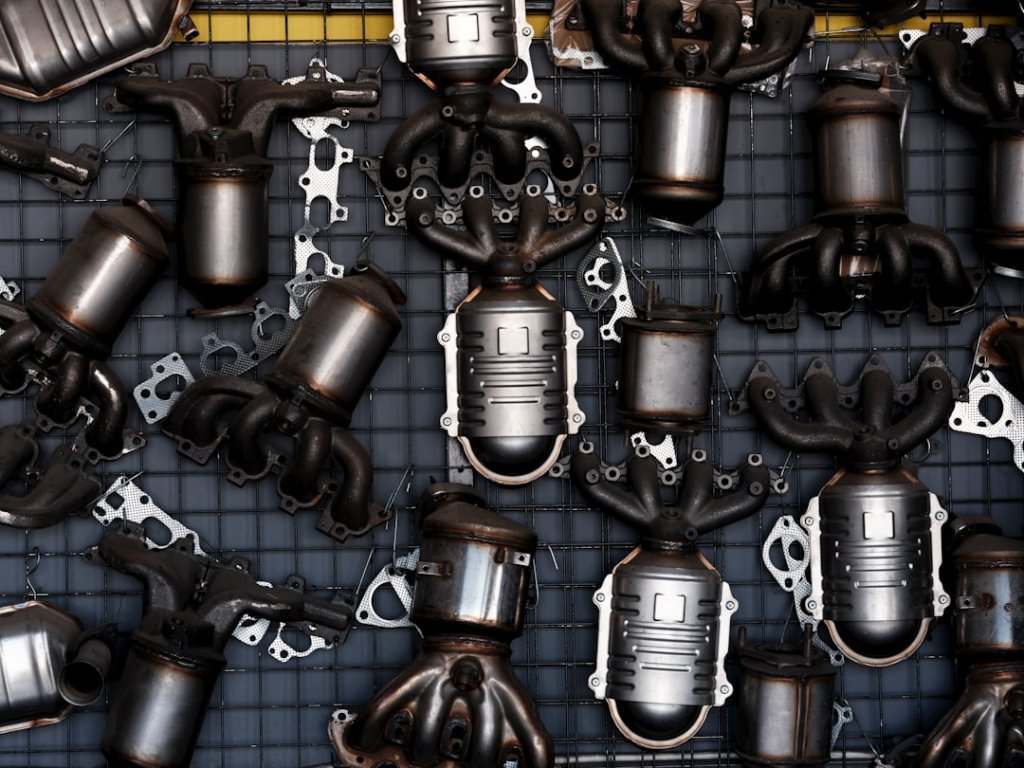
A failing catalytic converter is one of those problems that sneaks up on you — and by the time most drivers notice something is off, the damage is already done.
Here are the 6 most common signs of a bad catalytic converter:
- Rotten egg smell from the exhaust
- Sluggish acceleration or loss of engine power
- Rattling noise from underneath the vehicle
- Check engine light (often code P0420 or P0430)
- Poor fuel economy — the engine starts “running rich”
- Failed emissions test — common in Arizona and 33 other states
Most people don’t think about their catalytic converter until something feels wrong. But by then, what started as a small issue can turn into a much bigger repair bill — or worse, engine damage.
The good news? The warning signs show up before things get critical. Knowing what to look for can save you hundreds — sometimes thousands — of dollars.
What is a Catalytic Converter and How Does It Work?
Your catalytic converter is part of the exhaust system. It sits underneath the vehicle, usually between the engine and muffler, and its job is to turn harmful exhaust gases into less harmful ones before they leave the tailpipe.
If you want a deeper primer, our guide on what a catalytic converter is covers the basics well.
Inside the converter is a honeycomb-shaped substrate coated with precious metals such as platinum, palladium, and rhodium. These metals do not get “used up” like fuel. Instead, they act as catalysts, helping chemical reactions happen faster.
In a modern three-way catalytic converter, three main things happen:
- Nitrogen oxides are reduced into nitrogen and oxygen
- Carbon monoxide is oxidized into carbon dioxide
- Unburned hydrocarbons are converted into carbon dioxide and water vapor
That is a lot of chemistry for a part most drivers never see.
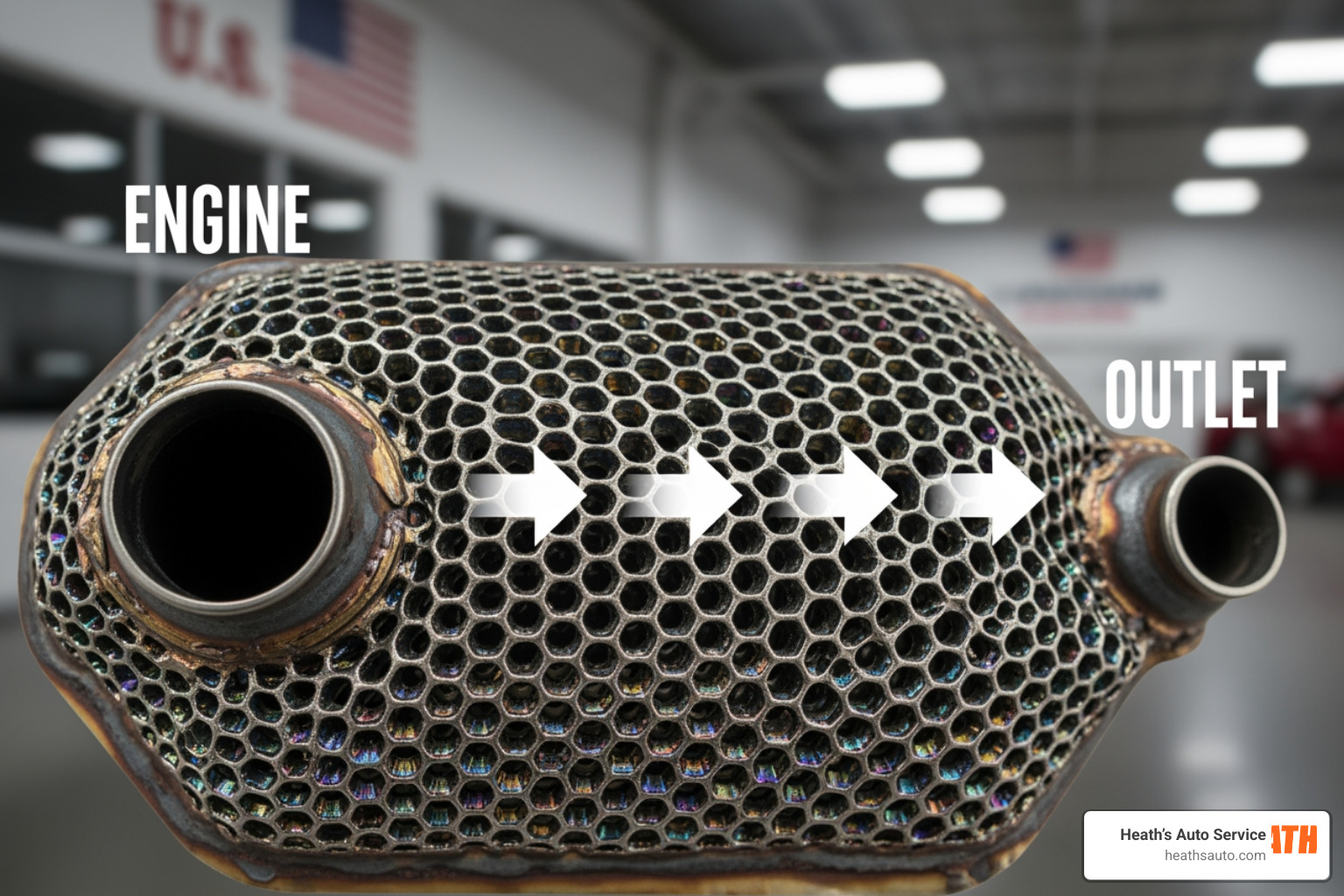
A healthy converter works quietly in the background. But it depends on the engine running properly. When the air-fuel mixture is off, the engine misfires, oil gets into the exhaust, or coolant leaks internally, the converter can overheat, clog, or become chemically contaminated.
That is why we often tell customers the converter is not always the root problem. Many times, it is the part that suffered because something upstream went wrong first.
For more technical reading, these outside resources also explain the chemistry and failure patterns well: What is a Catalytic Converter? and Signs of a Failing Catalytic Converter: Comprehensive Symptoms, Diagnosis, and Replacement Guide.
6 Common Symptoms of a Bad Catalytic Converter
A failing catalytic converter usually gives clues before it completely quits. Here are the six signs we see most often.
1. Rotten egg smell from the exhaust
This is the classic symptom.
If your exhaust smells like rotten eggs or sulfur, the converter may no longer be processing hydrogen sulfide properly. Instead of cleaning up sulfur compounds, it lets that unmistakable smell pass through.
Sometimes the smell is strongest under acceleration, when climbing grades, or when towing. In Arizona, heat can make exhaust odors more noticeable too, especially if you’re idling in traffic with the windows cracked.
A sulfur smell does not automatically mean the converter itself is dead. It can also point to a rich-running engine, fuel delivery problem, or misfire that is overloading the converter. But either way, it deserves attention.
Related reading: Signs of A Bad Catalytic Converter and 7 Common Symptoms Of A Failing Catalytic Converter
2. Sluggish acceleration or loss of engine power
When the converter becomes clogged or restricted, exhaust cannot flow out of the engine normally. That creates backpressure, which makes the engine feel weak.
You may notice:
- Slow takeoff from a stop
- Poor highway acceleration
- Trouble climbing hills
- A feeling that the engine is “holding back”
- Loss of power at higher RPM
This is one of the most important symptoms because it can easily be mistaken for a transmission issue, fuel problem, or ignition problem. We have seen vehicles where the real issue was a restricted converter choking the engine.
In severe cases, the vehicle may stall or barely stay running. That is not your car being dramatic. Well, maybe a little dramatic. But mostly it is struggling to breathe.
3. Rattling noise from underneath the vehicle
Inside the converter is a ceramic or metallic substrate. If that internal material cracks, breaks apart, or comes loose, it can rattle inside the shell.
Drivers often hear this:
- On cold startup
- At idle
- When tapping the gas lightly
- After hitting a bump
A rattling converter often means the internal structure is physically damaged. That can happen from road impact, overheating, age, or thermal shock from rapid temperature changes.
If the converter has been stolen rather than failed internally, the symptoms are very different: the vehicle will usually get much louder immediately. Our article on what happens when the catalytic converter has been stolen explains how to tell the difference.
4. Check engine light, often with P0420 or P0430
A bad converter often triggers the check engine light, especially on newer vehicles that monitor catalytic efficiency closely.
The most common codes are:
- P0420 – Catalyst System Efficiency Below Threshold, Bank 1
- P0430 – Catalyst System Efficiency Below Threshold, Bank 2
These codes usually mean the computer sees the downstream oxygen sensor behaving too much like the upstream sensor. In simple terms, the converter is not cleaning the exhaust the way it should.
But here is the important part: P0420 or P0430 does not always mean the converter itself is the only problem.
The real cause may be:
- A misfire
- A lazy oxygen sensor
- An exhaust leak
- Fuel trim issues
- Oil burning
- Coolant contamination
That is why proper diagnosis matters. Replacing the converter without fixing the root cause is like mopping the floor while the sink is still overflowing.
5. Poor fuel economy
A clogged or inefficient converter can hurt fuel economy, especially if the engine starts compensating for exhaust restriction or incorrect sensor readings.
You may notice:
- More frequent fill-ups
- Lower miles per gallon
- A heavy or sluggish engine feel
- A rich-running condition
Some vehicles respond to converter-related issues by adjusting fuel delivery in ways that make efficiency worse. If your gas mileage drops along with power loss or a sulfur smell, the converter should be on the suspect list.
6. Failed emissions test
This symptom matters a lot in Arizona.
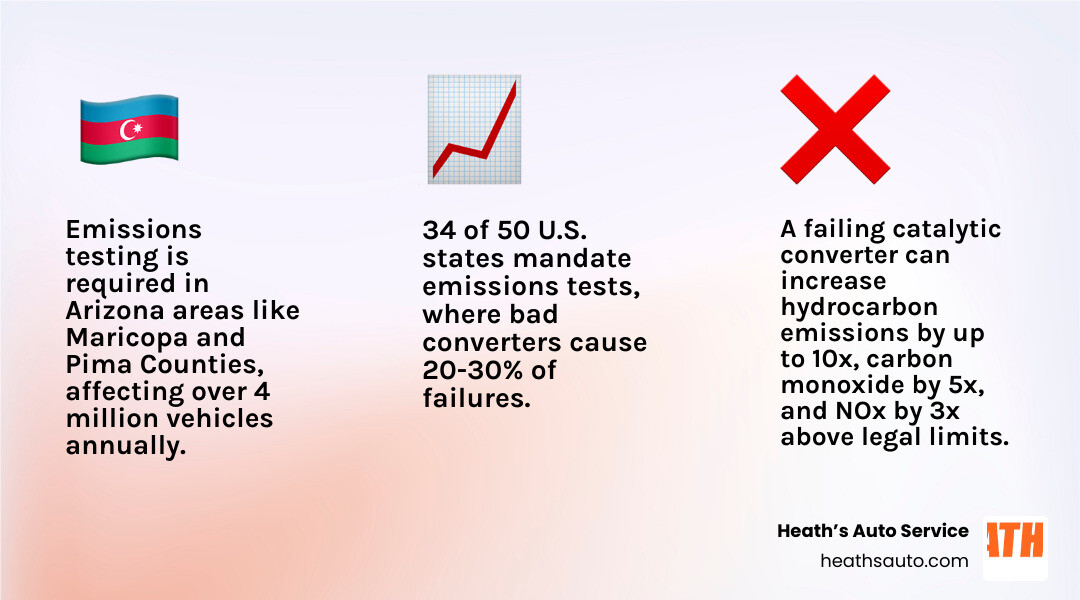
Emissions testing is required in certain Arizona areas, and a failing converter can prevent your vehicle from passing. Research also shows emissions testing is required in 34 of 50 states, so this is far from a minor issue.
A bad converter can cause excessive hydrocarbon, carbon monoxide, or nitrogen oxide emissions. Even if the vehicle still seems to run “pretty okay,” the emissions numbers may say otherwise.
If your vehicle fails emissions and the report points to catalyst efficiency, do not rush straight to replacing parts. We want to confirm whether the converter is truly bad or whether another engine problem caused the failure.
What Causes a Failing Catalytic Converter?
Converters usually do not fail all by themselves. In most cases, they are victims.
That is one of the biggest takeaways from the best technical sources on this subject, including What Causes a Catalytic Converter to Go Bad?, Why Do Catalytic Converters Fail? Common Causes Explained, and What’s really wrong when a catalytic converter ‘fails’.
The most common root causes
Engine misfires and unburned fuel
This is a major one.
When the engine misfires, unburned fuel can enter the converter and ignite inside it. That drives temperatures sky high. Modern three-way converters can survive short exposures to about 2,000 degrees Fahrenheit, but sustained overheating can melt or damage the substrate. Some technical sources note that damage can begin above about 1,600 degrees Fahrenheit, even before obvious melting is visible.
Oil contamination
If the engine burns oil, the converter can become coated with ash and deposits. That reduces the active surface area on the catalyst and blocks the chemical reactions it needs to perform.
Common causes include:
- Worn piston rings
- Valve guide seal leaks
- Chronic oil consumption
- Overfilled oil
Coolant leaks
An internal coolant leak, such as from a head gasket problem, can contaminate the converter. Coolant does not belong in the exhaust stream. When it gets there, it can coat the substrate and stop the catalyst from working properly.
Rich fuel mixture or injector problems
Leaking injectors, incorrect fuel pressure, sensor faults, or air-fuel imbalance can send too much fuel through the engine. That extra fuel increases converter temperature and can eventually damage the core.
Physical damage
Converters live under the car, which is not exactly a spa environment.
They can be damaged by:
- Road debris
- Speed bumps
- Off-road impact
- Corrosion
- Exhaust pipe stress
- Thermal shock from cold water hitting a hot converter
Contamination from the wrong products
Certain sealants and additives can poison the catalyst. Research specifically warns against non-sensor-safe RTV silicone and improper sealants in systems that affect the exhaust stream.
Internal contamination vs. external physical damage
| Failure type | Common causes | What it leads to |
|---|---|---|
| Internal contamination | Misfires, oil burning, coolant leaks, rich running, bad fuel | Overheating, clogging, loss of efficiency, failed emissions |
| External physical damage | Road impact, corrosion, theft-related damage, cracked pipes, thermal shock | Rattling, leaks, broken substrate, restriction, loud exhaust |
If the converter has been cut off or stolen, that is a different repair path altogether. If you suspect theft, read The Following Problems Happen When The Catalytic Converter Has Been Stolen.
Diagnosing and Replacing a Failing Catalytic Converter
The biggest mistake we see is replacing the converter before confirming why it failed.
A converter can be expensive. Research shows replacement can range from a few hundred dollars to more than $2,500 plus labor depending on the vehicle, parts required, and emissions compliance rules. So diagnosis comes first.
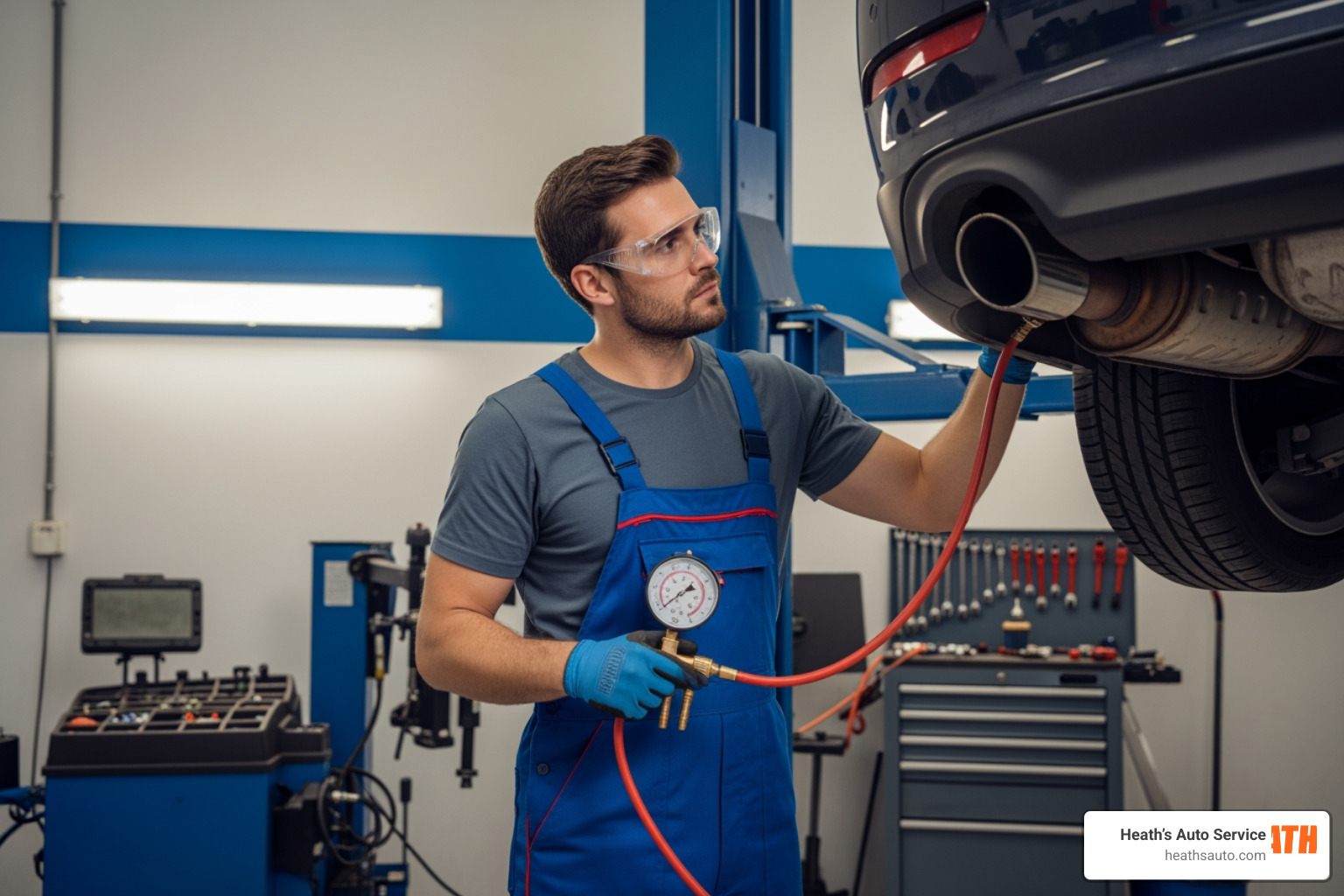
How we diagnose a suspected bad converter
A proper diagnosis may include:
- Scanning for OBD-II codes such as P0420 and P0430
- Checking fuel trims and oxygen sensor behavior
- Looking for misfires or rich-running conditions
- Inspecting for oil burning or coolant loss
- Checking for exhaust leaks upstream of the converter
- Listening for internal rattling
- Measuring exhaust backpressure
- Comparing inlet and outlet temperatures with an infrared thermometer
- Performing a vacuum test for signs of restriction
Backpressure testing is especially useful when a clogged converter is suspected. Technical guidance commonly flags excessive restriction when backpressure rises above normal thresholds at higher RPM.
Temperature testing can help too, but it is not perfect on every modern vehicle. Some late-model systems show smaller temperature differences than older diagnostic rules suggested, so we use test results as part of the whole picture, not in isolation.
Can a catalytic converter be cleaned or repaired?
Sometimes, but not often.
If the issue is a mild carbon buildup and the substrate is still structurally sound, cleaning may help temporarily. But if the converter is melted, broken, contaminated by oil or coolant, or heavily restricted, replacement is usually the correct fix.
Just as important: if the engine problem that caused the failure is not repaired first, the replacement converter can fail too.
OEM vs aftermarket catalytic converters
This is a common question.
OEM converters are made to the original vehicle specifications and often offer the best fit, durability, and emissions performance. Research suggests many factory converters last 100,000 to 150,000 miles under ideal conditions, and some high-quality originals can last far longer.
Aftermarket converters can cost less, but quality varies. The right choice depends on:
- Vehicle make and model
- Arizona emissions requirements
- Budget
- Availability
- Whether a direct-fit or universal design is appropriate
We always recommend using a compliant replacement that matches the vehicle and local requirements. Cheap parts can become expensive parts if they do not fit correctly or fail early.
If you are researching replacement steps, these guides may help: How To Install Catalytic Converter, How Long To Install A Catalytic Converter, and Catalytic Converter Installation Guide.
Frequently Asked Questions
Can you drive with a failing catalytic converter?
You might be able to drive for a short time, but we do not recommend ignoring it.
A failing converter can cause:
- Reduced power
- Severe backpressure
- Stalling
- Overheating
- Poor fuel economy
- Failed emissions
- Secondary engine damage in severe cases
If the converter is badly clogged, continuing to drive can make the car run worse and hotter. In extreme situations, it can leave you stranded or create safety concerns in traffic.
If you notice power loss, sulfur smell, rattling, or a flashing check engine light, it is time to have it checked.
How long does a failing catalytic converter typically last?
A healthy catalytic converter should generally last at least 10 years or around 100,000 miles. Many OEM units last 100,000 to 150,000 miles, and some factory converters can last much longer when the engine stays clean-burning and the exhaust system is not damaged.
But once a converter starts failing, there is no reliable countdown clock.
A lightly degraded converter may limp along for a while. A clogged or overheated one may deteriorate quickly. Lifespan depends on the cause:
- Misfire damage can destroy a converter fast
- Oil contamination may cause a slower decline
- Physical breakage can become severe suddenly
- High-quality factory units generally outlast cheap replacements
Does a bad converter always trigger the check engine light?
No.
This surprises a lot of people.
A converter that has lost chemical efficiency often sets a code like P0420 or P0430. But a physically restricted converter does not always trigger the check engine light right away. Some vehicles, especially older ones, may have major drivability problems before any catalyst code appears.
That is why we never use the check engine light as the only test. If your vehicle has obvious symptoms but no code, the converter can still be bad.
What should you do if you suspect your catalytic converter is failing?
Start with the symptoms and act early.
Pay attention to:
- Rotten egg smell
- Loss of power
- Rattling underneath
- Fuel economy drop
- Check engine light
- Failed emissions result
Then have the vehicle diagnosed before replacing parts. The goal is to find both the bad converter and the reason it failed.
How can you prevent premature catalytic converter failure?
Good maintenance goes a long way.
We recommend:
- Fix misfires immediately
- Keep up with oil changes
- Address oil burning and coolant leaks early
- Use the correct fuel
- Repair exhaust leaks
- Avoid road impacts when possible
- Do not ignore the check engine light
Most converter failures are preventable when engine problems are caught early.
Conclusion
A failing catalytic converter is not just an emissions issue. It can affect how your car smells, sounds, accelerates, and even whether it passes testing in Arizona.
The big takeaway is simple: do not guess.
If your vehicle smells like rotten eggs, feels sluggish, rattles underneath, throws a P0420 or P0430 code, burns more fuel, or fails emissions, let us inspect it properly and find the root cause before the problem gets worse.
Heath’s Auto Service In Scottsdale, AZ
At Heath’s Auto Service, we offer a comprehensive range of services and repairs to meet all your automotive needs. From routine maintenance like oil changes and tire rotations to more complex repairs involving brake systems, engine diagnostics, and transmission issues, our highly skilled technicians are equipped with the latest tools and technology to ensure your vehicle is serviced to the highest standards. Contact our team today!