
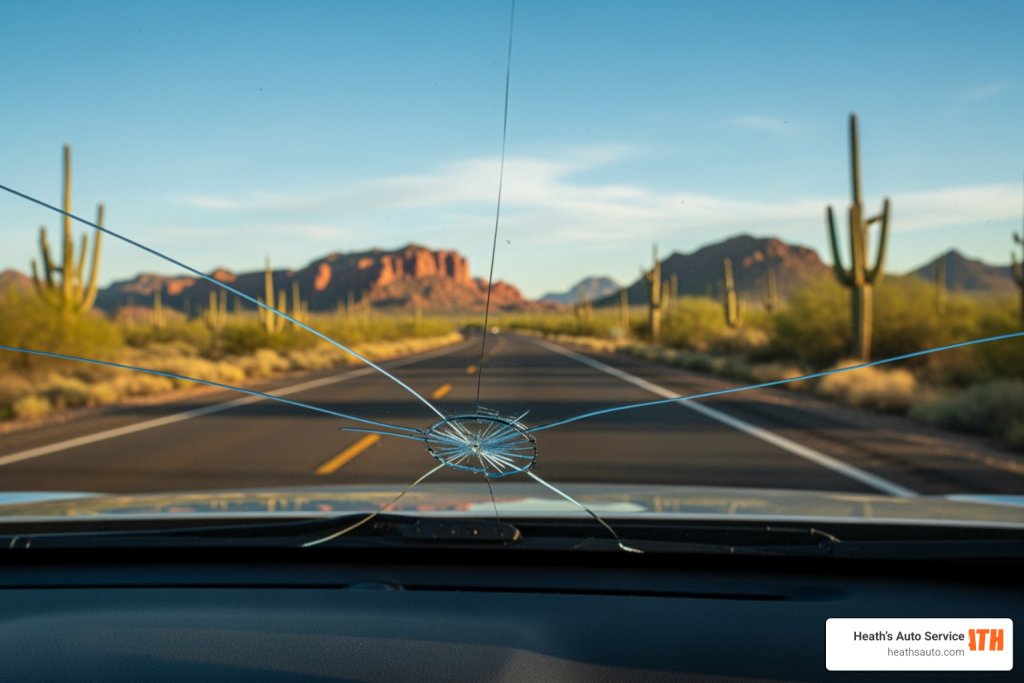
The cost to fix a small crack in a windshield is one of those expenses that catches Arizona drivers completely off guard — usually at the worst possible time.
Here’s the quick answer most people are looking for:
| Damage Type | Typical Repair Cost |
|---|---|
| Single rock chip | $60 – $100 |
| Small crack (under 3 inches) | $60 – $90 |
| Larger small crack (3–6 inches) | $80 – $150 |
| Multiple chips (same visit) | Discounted 30–50% |
These are professional repair costs for 2026. Full replacement is a separate, much higher expense.
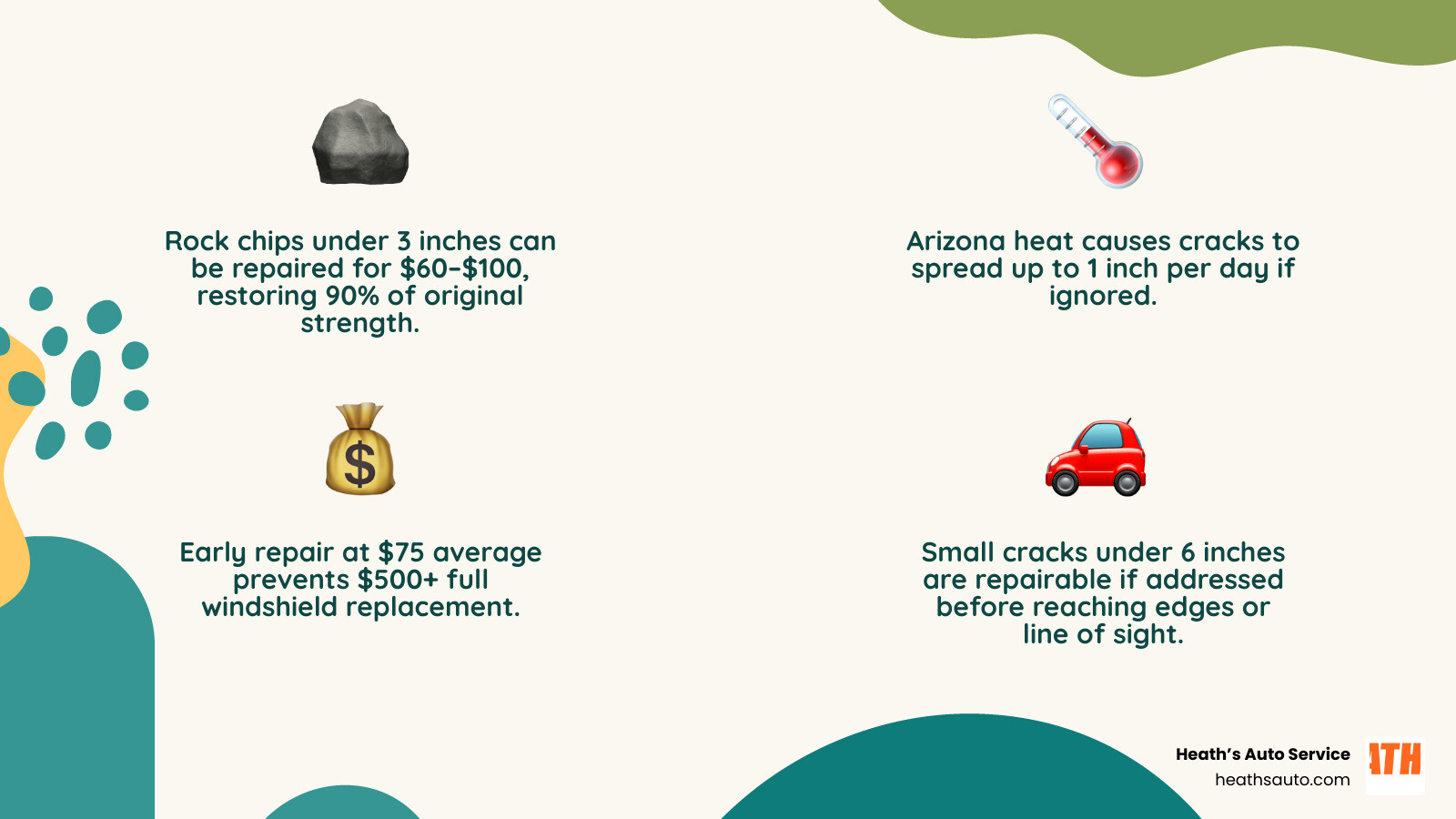
That $75 average sounds manageable. But here’s what most drivers don’t realize: a crack that’s repairable today can spread into an unrepairable one tomorrow — especially in Arizona’s punishing heat. What starts as a quick $80 fix can turn into a $500+ replacement if you wait too long.
Road debris doesn’t care about your schedule. A pebble kicked up on the I-17, a gravel road near Flagstaff, or even a sudden temperature swing from blasting your AC on a hot windshield — any of these can turn a tiny chip into a spreading web of cracks within days.
The good news? Most small cracks can be repaired — quickly, affordably, and with results that restore nearly full strength to your glass.
Understanding the Cost to Fix Small Crack in Windshield
When we talk about the cost to fix a small crack in a windshield, we are generally looking at a national average that falls between $60 and $150. In our experience across Arizona, the most common rock chip or single-line crack repair settles right around the $75 to $90 mark.
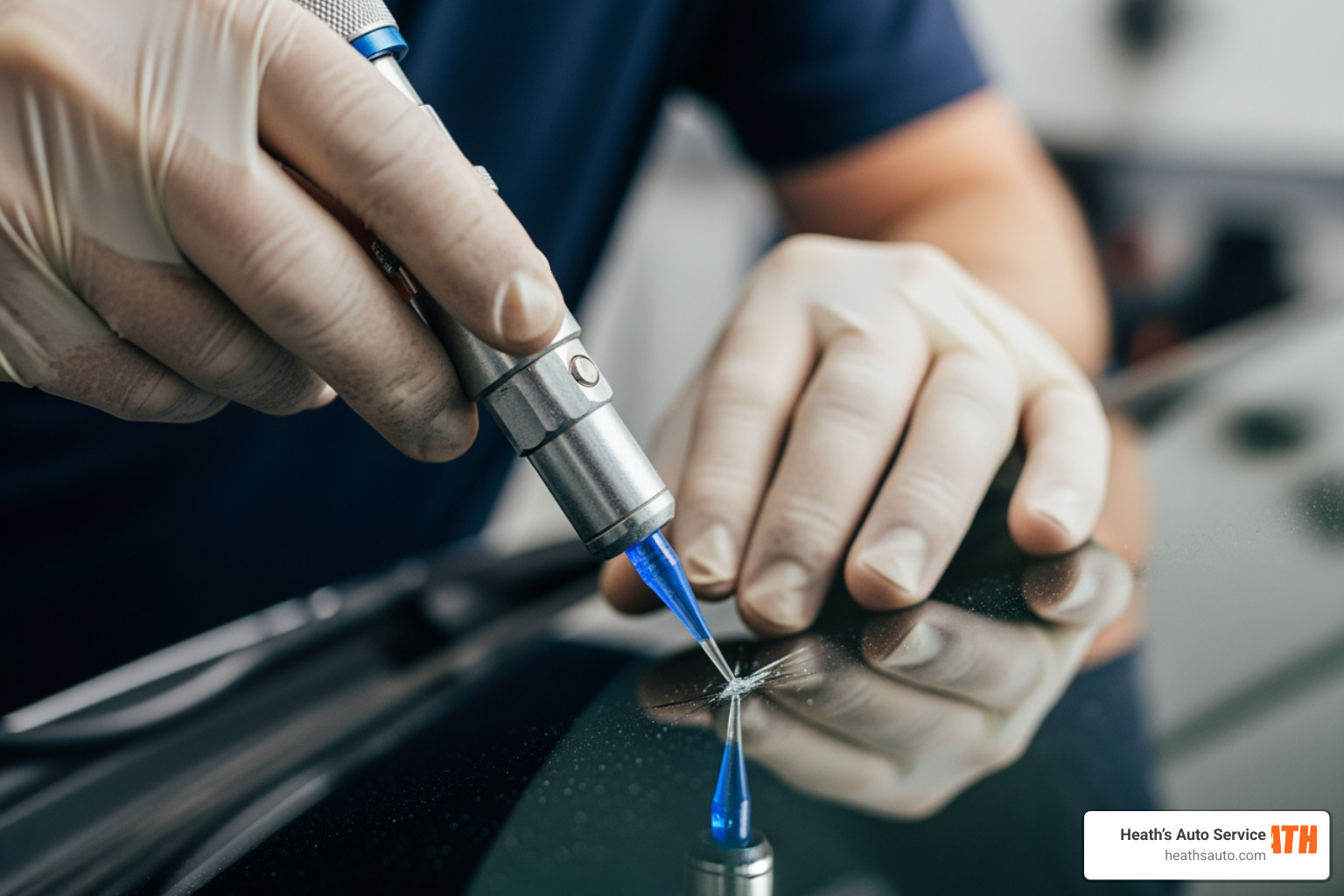
The process involves more than just “glue.” A professional technician uses high-quality, UV-cured resin. We first clean the impact point, often using a vacuum tool to remove air and moisture. Then, we inject the resin under pressure so it fills every microscopic fissure. Once cured under a UV light and polished, the structural integrity of the glass is restored to about 90–95% of its original strength.
Several factors influence where you fall on that $60–$150 spectrum:
- Number of chips: If you have two or three small chips, most shops (including us) offer a multi-chip discount. While the first chip might be $80, additional chips in the same session are often 30–50% cheaper.
- Complexity of the crack: A simple “bull’s-eye” is easier to fill than a “starburst” with multiple radiating legs.
- Labor and materials: High-quality resins that match the refractive index of glass cost more but provide much better visual clarity.
For a deeper dive into current pricing trends, you can check out our detailed guide on windshield chip repair costs updated for 2026 or see our general overview of windshield chip repair cost.
Impact of Vehicle Technology on the Cost to Fix Small Crack in Windshield
In May 2026, your windshield is no longer just a piece of glass; it’s a sophisticated housing for your car’s “eyes.” Modern vehicles are equipped with Advanced Driver Assistance Systems (ADAS). These include cameras and sensors mounted directly behind the rearview mirror that handle lane-keep assist, automatic emergency braking, and adaptive cruise control.
How does this affect the cost to fix a small crack in a windshield?
- Repair vs. Replacement: If a crack is directly in front of an ADAS camera, even a perfect repair might cause visual distortion that “confuses” the sensor. In these cases, a replacement is often mandatory for safety.
- Recalibration: While a simple resin repair usually doesn’t require it, any crack that necessitates a full replacement will trigger a need for ADAS recalibration. This can add $100 to $500 to the total bill.
- Glass Features: If your windshield has rain sensors, heating elements, or a Heads-Up Display (HUD), the replacement glass is significantly more expensive.
According to Auto Glass Service, these technological factors are the primary reason why windshield service costs vary so wildly between a 2010 sedan and a 2026 electric SUV.
Regional Pricing and Mobile Service Fees
Geography plays a huge role in what you’ll pay. In Arizona, we face unique environmental challenges. For instance, labor rates in Flagstaff might differ slightly from Gilbert or Scottsdale due to local overhead and demand.
Many drivers prefer mobile service — where a technician comes to your home or office. While some national chains charge a premium for this, many local shops include it in the base price or charge a small travel fee (usually $20–$50).
Factors That Influence Your Repair Bill
Not all cracks are created equal. The pattern of the break determines how much resin is needed and how long the technician will spend on the job.
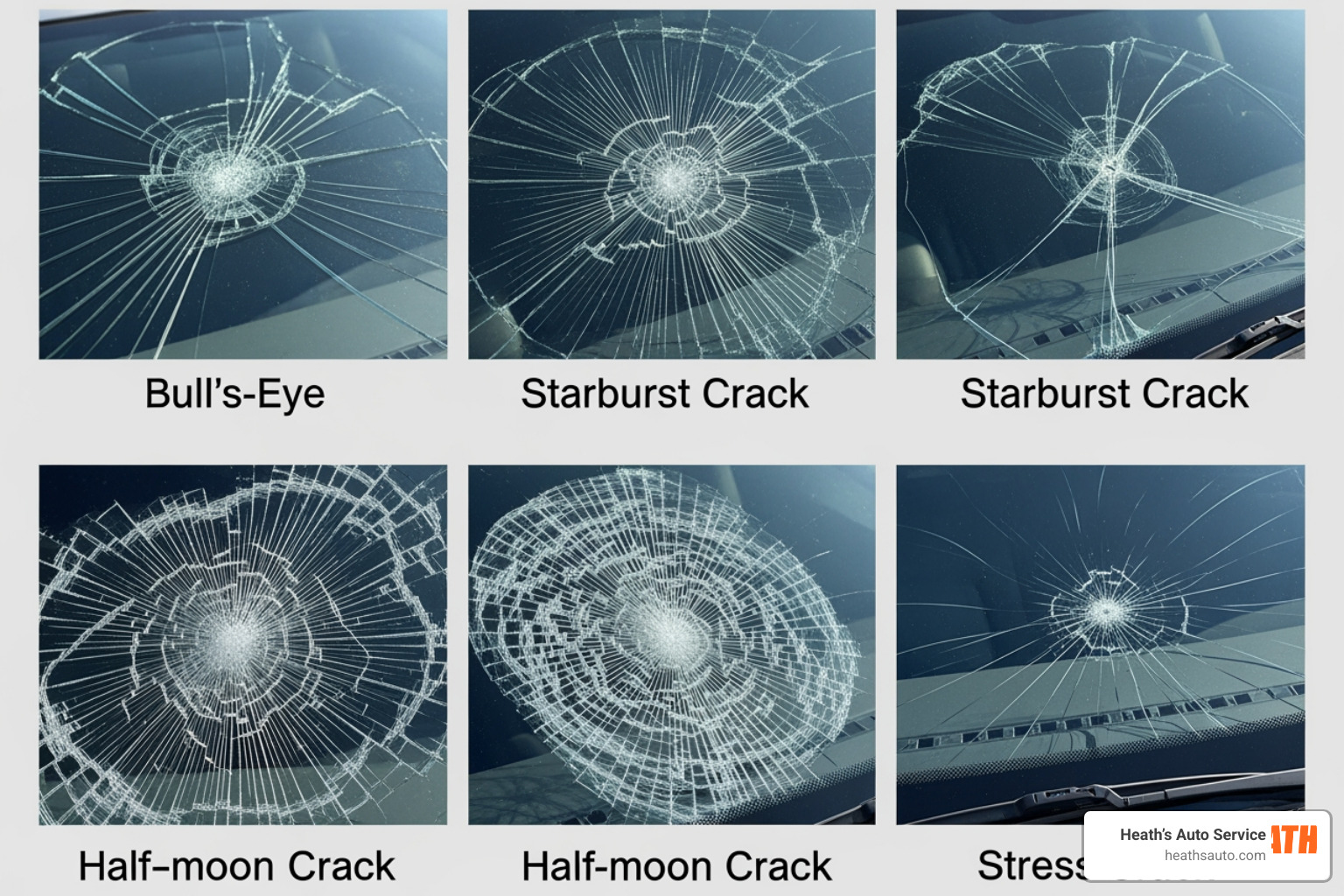
Common Damage Types and Repairability
- Bull’s-eye: A circular break with a dark circle in the center. These are the easiest to fix and usually the most affordable.
- Starburst: Radiating cracks that look like a star. These are trickier because the resin must reach the tip of every “leg” to prevent spreading.
- Half-moon: A partial bull’s-eye. These are generally stable and easy to repair.
- Stress Cracks: These often appear without an impact, caused by extreme temperature changes (like going from 110°F Scottsdale sun to a 60°F car wash). These are rarely repairable and usually require replacement.
| Damage Type | Repairability | Difficulty Level |
|---|---|---|
| Bull’s-eye | High | Low |
| Starburst | Moderate | High |
| Half-moon | High | Low |
| Combination | Moderate | Moderate |
| Edge Crack | Low | High |
Why Ignoring the Cost to Fix Small Crack in Windshield Leads to Replacement
We have a saying in the Arizona auto industry: “A chip is a crack waiting to happen.” Our environment is the perfect “stress test” for damaged glass.
- Temperature Fluctuations: In places like Prescott or Flagstaff, the temperature can swing 40 degrees between day and night. Glass expands and contracts with these changes. A tiny chip provides a weak point where that pressure can snap the glass, causing the crack to “run” across the entire shield.
- Desert Heat: If you leave a chipped car in the Phoenix sun, the glass can reach 180°F. When you jump in and blast the AC, the sudden thermal shock is often enough to turn a $75 repair into a $500 replacement instantly.
- Dirt Contamination: The longer you wait, the more dust, oil, and windshield wiper fluid get inside the crack. This makes it harder for the resin to bond and can result in a blurry, “dirty” looking repair.
As we often tell our customers, don’t ignore a damaged windshield — it’s the fastest way to double or triple your repair bill.
Repair vs. Replacement: When Can You Save?
The biggest question we get at Heath’s Auto Service is: “Do I really need a new windshield, or can you just fix this?”
Generally, you can save money by opting for a repair if the damage meets these criteria:
- The Three-Inch Rule: Most professional resins are rated to safely bridge cracks up to 3 inches long. Some specialists can handle up to 6 inches, but 3 is the standard for safety.
- The Quarter Test: If a circular chip is smaller than a quarter, it’s a prime candidate for repair.
- Depth: If the crack has only penetrated the outer layer of the laminated glass, it’s fixable. If you can feel the crack on the inside of the car, it has gone through the polyvinyl butyral (PVB) layer and requires a full replacement.
- Location: Cracks within 2 inches of the edge of the windshield are dangerous because they compromise the structural bond with the vehicle frame. These almost always require replacement.
According to Ally Auto Service, any damage directly in the driver’s critical line of sight should also be replaced, as repairs can leave a slight “ghost” image or distortion that impairs night driving.
The Structural Role of Your Windshield
It’s easy to think of the windshield as just a “window,” but it provides up to 30% of your vehicle’s structural strength. In a rollover accident, the windshield helps prevent the roof from caving in. It also provides the backstop for the passenger-side airbag; if the glass is cracked, the force of the airbag deploying could shatter the windshield and leave the passenger unprotected.
We take this seriously at all our locations, including our specialized team for windshield chip repair Cottonwood AZ, ensuring every repair meets safety standards.
Insurance and Savings Strategies
In Arizona, we are lucky to have some of the best glass coverage laws in the country. Many Arizona insurance policies include “Full Glass” coverage.
- Zero-Deductible: Arizona is a “zero-deductible” state for many comprehensive insurance plans. This means your insurance company may pay the full cost to fix a small crack in a windshield without you paying a penny out of pocket.
- No-Fault Claims: In many cases, a glass claim is considered a “no-fault” claim, meaning it won’t necessarily hike your monthly premiums like a fender-bender would.
- Preferred Providers: Insurance companies often have a network of preferred shops. However, in Arizona, you generally have the right to choose your own repair facility.
Tips for Reducing Out-of-Pocket Expenses
If you don’t have glass coverage, you can still save money with these strategies:
- Early Intervention: As mentioned, a $75 repair is always cheaper than a $400 replacement.
- Multi-Point Inspections: When you bring your car to Heath’s Auto Service for an oil change, we can spot tiny “pits” before they become cracks.
- Ask for Second Opinions: We offer free second opinions. If a national chain tells you that you must replace the whole windshield, bring it to us. We might be able to save it.
- Bundle Services: Some shops offer discounts if you’re already getting other work done.
Frequently Asked Questions
How long does it take to repair a small crack?
A professional repair is surprisingly fast. Most single-chip or small crack repairs take between 15 and 30 minutes. The technician spends about 10 minutes prepping and injecting the resin, and another 5–10 minutes for UV curing. You can usually drive the car immediately after the service is completed.
Are DIY windshield repair kits effective?
You can buy a DIY kit at most auto parts stores for $15–$20, but we generally advise against them. Professional tools use vacuum pressure to suck the air out of the crack before injecting resin; DIY kits rely on simple gravity or a basic syringe. This often leaves air bubbles or “dead spots” where the crack can still spread. Furthermore, if a DIY repair fails, it’s almost impossible for a professional to “redo” it because the old, cheap resin is already blocking the crack.
Will a small crack fail a vehicle inspection?
Arizona doesn’t have a traditional annual safety inspection for all vehicles like some other states, but you can still be pulled over and ticketed if a crack obstructs your view. Specifically, any crack that is in the “wiper sweep” area or directly in front of the driver is considered a safety hazard. If you’re trying to sell a car or register one from out of state, a cracked windshield will almost certainly prevent you from passing a safety certification.
Conclusion
At the end of the day, the cost to fix a small crack in a windshield is a small price to pay for your safety and peace of mind. Whether you’re commuting through the heat of Gilbert or driving the scenic, gravel-prone roads of Flagstaff, your windshield is your first line of defense.
Heath’s Auto Service in Cottonwood, AZ
At Heath’s Auto Service, our comprehensive range of services covers everything from routine maintenance to complex repairs. Whether it’s a minor tune-up or a major overhaul, trust us to get you back on the road with confidence. Contact our team at Heath’s Auto Service today!
Why choose us?
- ASE-Certified Team: Our techs are experts in both glass and complex vehicle systems.
- Same-Day Service: We know your time is valuable.
- 3-Year/36,000-Mile Nationwide Warranty: We stand behind every repair we do.
- Free Second Opinions: Not sure if that crack is fixable? We’ll give you an honest assessment at no cost.