
Why Steering Repair Matters More Than Most Drivers Realize
Steering repair is one of the most safety-critical services your vehicle will ever need — and it’s also one of the easiest to put off until things get seriously expensive.
Here’s a quick overview of what you need to know:
| Topic | Quick Answer |
|---|---|
| Most common problem | Low fluid, worn tie rods, or failing pump |
| Average fluid flush cost | $170–$205 at a shop |
| Pump replacement cost | $668–$941 |
| Rack-and-pinion replacement | Up to $2,400+ |
| Fluid change interval | Every 30,000–50,000 miles |
| Warning signs | Stiff wheel, whining noise, pulling, fluid leaks |
| Check engine light? | Usually not triggered — you must catch it yourself |
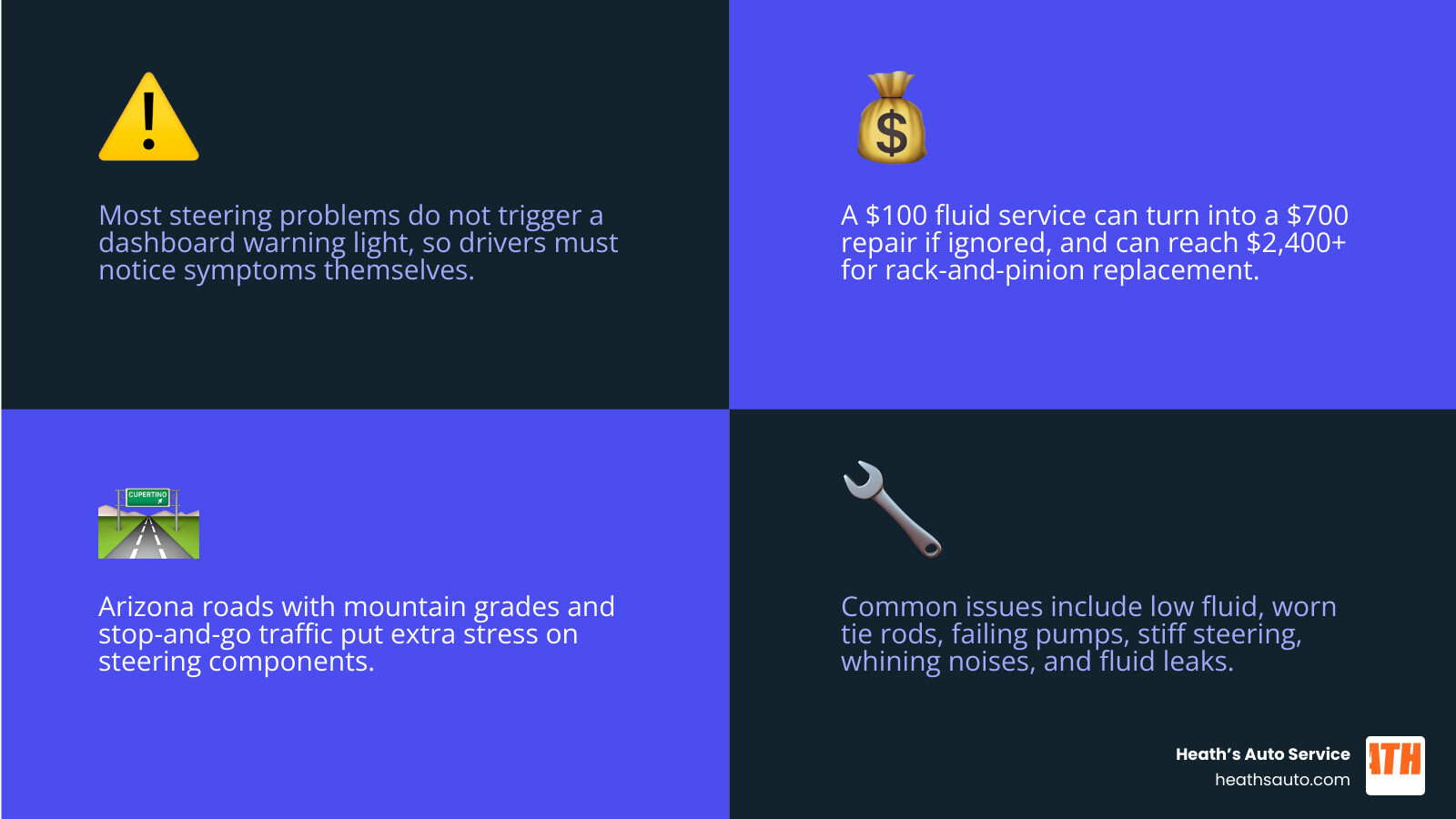
Most steering problems don’t set off a warning light on your dashboard. That means you have to notice the symptoms — a wheel that feels stiff, a faint whine during turns, or a car that drifts to one side.
Ignore those signs long enough, and a $100 fluid service can turn into a $700 repair. Wait even longer, and you’re looking at thousands.
Arizona roads put real stress on steering components. The earlier you catch a problem, the better.
Our team at Heath’s Auto Service has spent years diagnosing and fixing steering repair issues across Arizona, from simple fluid flushes to full rack-and-pinion replacements. In this guide, we’ll walk you through everything you need to know to protect your vehicle and your wallet.
Common Steering Problems Drivers Notice First
When your vehicle is working correctly, you don’t think about the steering at all. You turn the wheel, and the car goes where you want it to. But when things start to fail, the symptoms can range from mildly annoying to downright terrifying.
One of the most frequent complaints we hear is stiff steering. If you feel like you’re getting a gym-level arm workout just to pull into a parking spot in Prescott, your power assist is likely failing. Conversely, a loose steering wheel that feels like it has “play” or “dead space” before the wheels actually turn is a major red flag for worn-out mechanical parts.
Other common issues include:
- Pulling to one side: Your car wants to drift left or right even when the wheel is straight.
- Vibration: Shaking in the steering wheel, especially at highway speeds.
- Whining or Groaning: A high-pitched noise that gets louder as you turn the wheel.
- Clunking or Popping: Noises heard specifically when navigating bumps or making sharp turns.
- Uneven Tire Wear: If your tires are wearing out faster on the inside or outside edges, your steering geometry is likely off.

Early steering repair warning signs you should never ignore
Don’t wait for a total system failure. Early detection is the difference between a quick fix and a week-long stay at the shop. One subtle sign is a temporary lockup or resistance when you first start turning. This often happens because the power steering pump is “starving” for fluid.
If you notice your vehicle “wandering” on the road, requiring constant small corrections to stay in your lane, your steering rack or tie rods are likely worn. In modern vehicles equipped with Electric Power Steering (EPS), you might see a dashboard warning light, but in older hydraulic systems, you have to rely on your senses. A burning smell or a sudden increase in steering effort during hard turns should prompt an immediate Steering and Suspension Service.
How to diagnose steering problems early at home
You don’t need to be a certified mechanic to perform a basic “health check” on your steering system. Start with the fluid check. Open your hood and locate the power steering reservoir (check your owner’s manual if you aren’t sure where it is).
- Fluid Level: Is it between the “Min” and “Max” lines?
- Fluid Color: Fresh fluid is usually amber or pinkish. If it’s dark, murky, or smells burnt, it’s time for a flush.
- Puddle Location: If you see red or clear oily puddles under the front bumper, you have a leak.
- Belt Condition: Check the serpentine belt for cracks or fraying; if the belt slips, the pump can’t work.
- Steering Play: With the engine off, gently move the wheel. If it moves more than an inch or two without the tires moving, you have excessive play.
Steering Repair Cost Guide: What Different Fixes Usually Cost
Talking about steering repair costs can be stressful, but having a ballpark figure helps you plan. Costs vary wildly based on whether you have a traditional hydraulic system or a modern electric one.
| Repair Type | Estimated Cost (Parts & Labor) |
|---|---|
| Power Steering Fluid Flush | $170 – $205 |
| Low-Pressure Hose Replacement | $100 – $300 |
| High-Pressure Hose Replacement | $300 – $800 |
| Power Steering Pump Replacement | $668 – $941 |
| Rack-and-Pinion Replacement | $1,200 – $2,400+ |
| Electric Steering Column | $530 – $1,550 |
Using remanufactured parts can often save you 20% to 30% on the component cost, which is a great way to keep repairs affordable without sacrificing quality.
What steering repair costs for common hydraulic system fixes
Hydraulic systems are the most common type on the road today. The most affordable maintenance item is the fluid flush. We generally recommend this every 30,000 to 50,000 miles. Skipping this $100–$200 maintenance item is how people end up with a $700 pump replacement or an even more expensive rack repair.
Contamination is the silent killer of hydraulic systems. Over time, heat causes the fluid to break down, and tiny bits of rubber from the hoses can clog the pump’s internal valves. If you’re towing heavy loads through the Arizona mountains or dealing with constant stop-and-go traffic in Scottsdale, your fluid works harder and needs to be changed sooner.
Why rack, column, and electric steering repairs cost more
If your mechanic tells you that you need a new rack-and-pinion or an electric steering column, prepare for a higher bill. These components are the “brain” and “muscle” of your steering.
Modern electric racks are packed with sensors and integrated motors. After we install a new one, we often have to perform a “handshake” between the part and your car’s computer. This involves ADAS (Advanced Driver Assistance Systems) calibration and a steering angle sensor reset to ensure your lane-keep assist and stability control work correctly. This technical labor is why these repairs command premium pricing.
Hydraulic vs Electric Power Steering: Maintenance and Repair Differences
The way your car helps you turn has changed significantly over the last decade. Understanding which system you have is key to knowing what maintenance you need.
Hydraulic steering systems: service needs and common failures
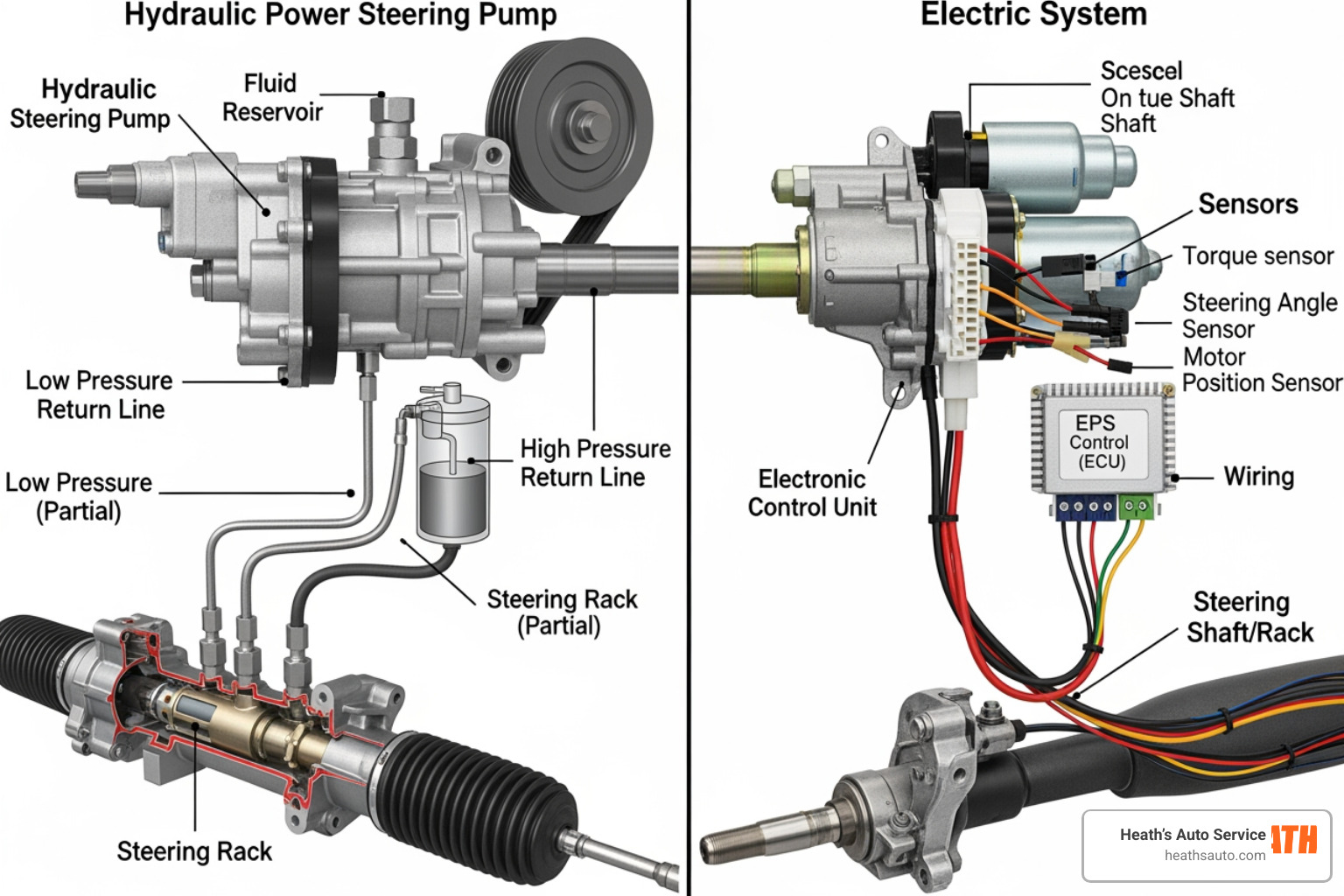
Hydraulic systems rely on a pump (driven by your engine’s serpentine belt) to pressurize fluid. This fluid travels through high-pressure hoses to the steering rack to help you turn.
The most common failures here are leaks and pump noise. If you hear a whining sound that changes pitch with the engine RPM, your pump is likely struggling. Seepage from hoses is also common as they age and become brittle in the dry Arizona heat. For more details on what to look for, check out our guide on Signs Your Power Steering Is Going Out.
Electric steering systems: what changes for diagnosis and cost
Electric Power Steering (EPS) replaces the pump and hoses with an electric motor, usually mounted on the steering column or the rack itself.
- Pros: Better fuel economy (no engine drag) and fewer leaks (no fluid).
- Cons: When they fail, you usually have to replace the entire assembly.
- Diagnosis: We use advanced diagnostic scanners to read fault codes from the steering control module.
Failures in EPS systems often manifest as “reduced assist” modes or software glitches. If your steering feels “notched” or inconsistent, it’s often an electronic issue rather than a mechanical one. Technicians must follow strict steering system service guidelines to ensure the sensors are calibrated to within 1 degree of accuracy.
How Steering, Suspension, and Alignment Work Together
Your steering system doesn’t live on an island. It is intimately connected to your suspension. When we perform a steering repair, we are also looking at your tie rods, ball joints, control arms, and bushings.
Why wheel alignment matters after steering repair
Whenever we replace a steering component — especially a tie rod or a rack — the physical geometry of your front end changes. Even a tiny adjustment can throw off your toe angle or camber.
If your alignment is off, you’ll notice:
- The steering wheel is off-center when driving straight.
- The car pulls to the left or right.
- Your tires wear out in a matter of weeks rather than years.
- Your fuel economy drops because the tires are “scrubbing” against the road.
Related parts that can mimic steering trouble
Sometimes, a “steering” problem isn’t the steering at all. A worn wheel bearing can cause a steering wheel vibration. A damaged CV shaft can cause clicking during turns that sounds like a steering rack issue. Even something as simple as a sticking brake caliper can make the car pull to one side, mimicking a steering alignment problem. This is why a professional diagnostic is so important — you don’t want to pay for a new steering pump when you actually just need a new tire or a brake job.
When to Seek Professional Steering Repair and How to Choose a Shop in Prescott, AZ
There is a “safety threshold” when it comes to your car. If your brakes feel soft or your steering feels loose, you have crossed that threshold. You should seek professional help immediately if:
- You have to “fight” the wheel to stay in a straight line.
- There is a visible, active leak of red or brown fluid.
- You hear loud metal-on-metal grinding.
- The steering wheel does not return to the center after a turn.
Signs you need professional steering repair immediately
If you’ve been in even a minor “curb-check” or collision, your steering system needs an inspection. Components like the steering rack seals are not serviceable; if they are damaged in an impact, the entire unit must be replaced. Furthermore, if an airbag has deployed, manufacturer guidelines often require a full replacement of the steering column and clock spring to ensure future safety. You can see how complex this gets in a steering gear replacement procedure overview.
What to look for in a reliable repair shop
Not all shops are equipped to handle modern steering repair. When choosing a provider in Arizona, look for:
- ASE-Certified Technicians: This ensures the person working on your car has been tested on these specific systems.
- Warranty: We offer a 3-year/36,000-mile nationwide warranty because we stand behind our work.
- Alignment Capability: A shop that can’t do an alignment in-house after a steering repair is only doing half the job.
- Transparency: You should receive a written estimate and a clear explanation of why a part needs replacement. At Heath’s, we even offer free second opinions if you’re unsure about a quote you received elsewhere.
Frequently Asked Questions About Steering Repair
How often should power steering fluid be changed?
For most vehicles, we recommend a flush every 30,000 to 50,000 miles. However, if you notice the fluid is dark or you’re doing a lot of heavy towing or stop-and-go driving in the Arizona heat, you should change it sooner. Fresh fluid protects the expensive seals inside your rack and pump.
Can I keep driving with a power steering leak or stiff steering?
We strongly advise against it. Beyond the obvious safety risk of not being able to swerve in an emergency, driving with low fluid will destroy your power steering pump in short order. A small leak can lead to a “sudden loss of assist,” which can be very dangerous if it happens while you’re mid-turn.
Is alignment always needed after steering parts are replaced?
Yes. If you replace tie rods, the steering rack, or even certain suspension bushings, your wheel angles will be affected. To protect your investment in new tires and ensure the car tracks straight, an alignment is a non-negotiable part of the repair process.
Conclusion
Your steering system is your primary connection to the road. Whether you’re navigating the snowy winters of Flagstaff or the blistering summer heat of Scottsdale and Mesa, you need to know your vehicle will respond exactly when and how you expect it to.
If your steering feels “off,” don’t wait for the problem to get more expensive. Stop by for a Steering and Suspension Service or take advantage of our free second opinion today. We’ll get you back on the road with the control and confidence you deserve.
Heath’s Auto Service In Prescott, AZ
At Heath’s Auto Service, we take pride in being your one-stop destination for full-service auto and truck repair in Prescott, AZ. Our team of skilled technicians possesses a wealth of experience and knowledge, allowing us to confidently handle domestic, Asian, and European vehicles with precision and expertise. Contact our team today!
We offer free second opinions, so if you’ve been given a quote that seems too high, bring it to us. We’ll verify the leak and give you a fair, honest estimate. Plus, all our repairs are backed by a 3-year/36,000-mile nationwide warranty, so you can drive with peace of mind.