
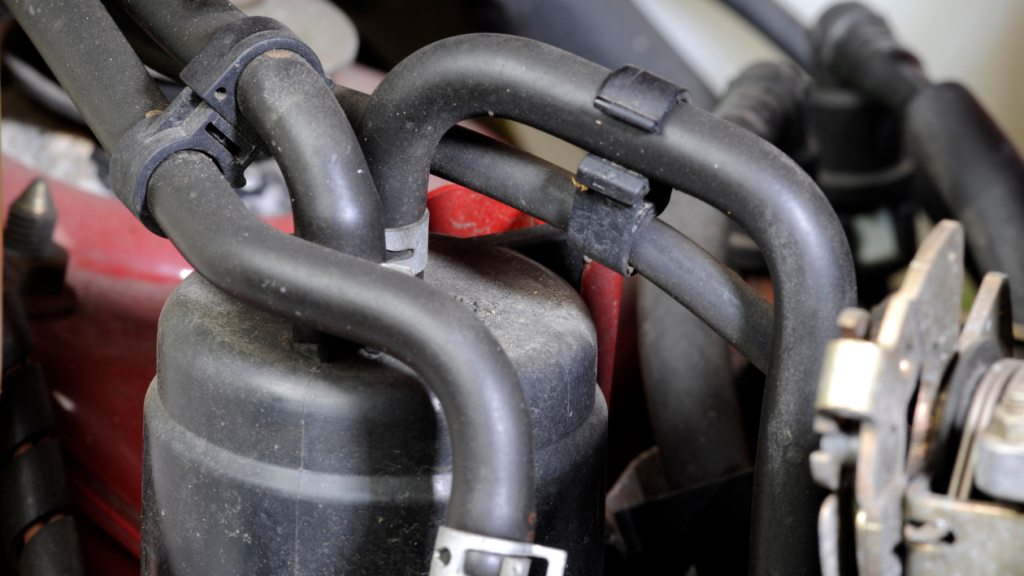
What Is the Vacuum Leak Repair Price? (Quick Answer)
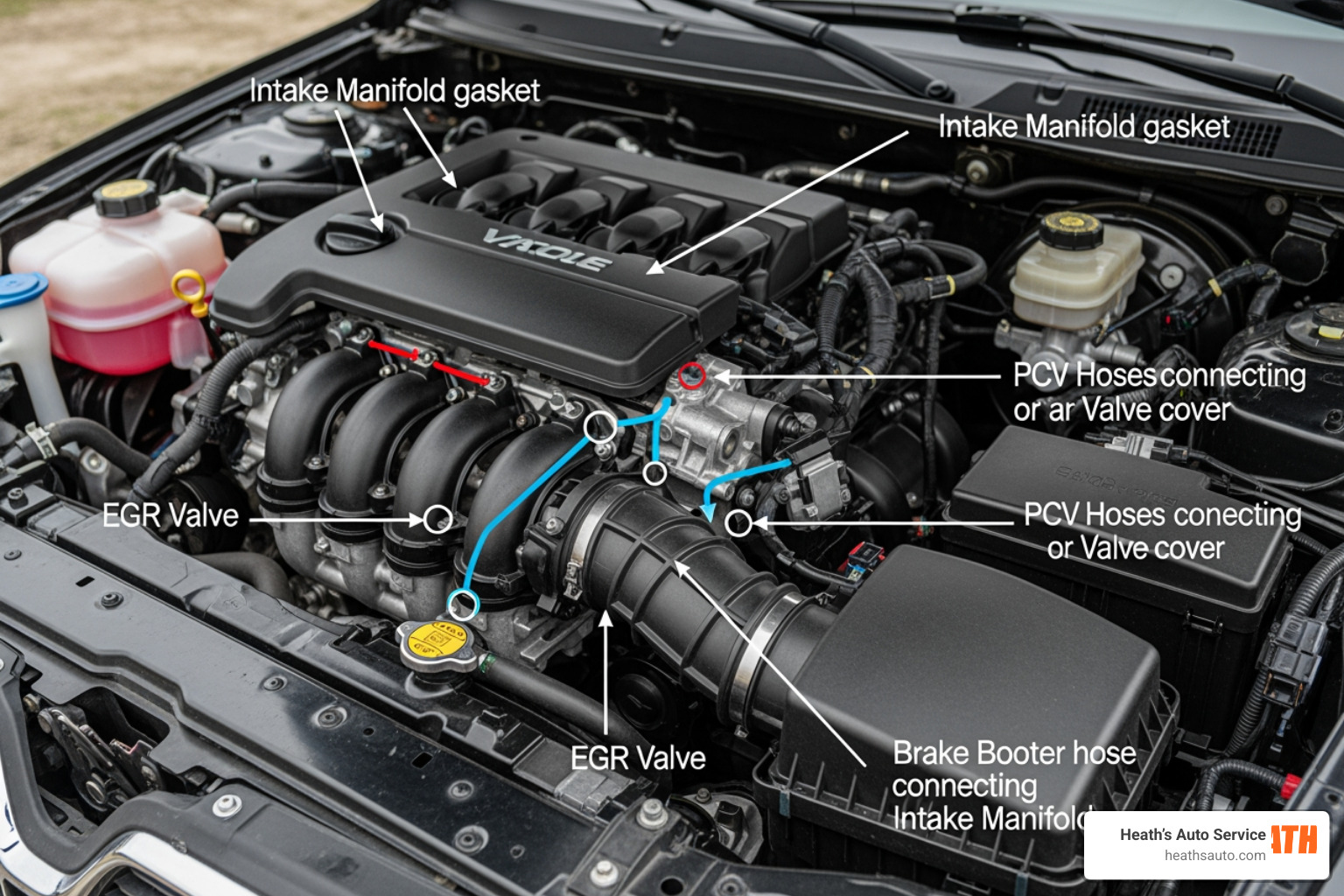
The vacuum leak repair price typically falls between $100 and $1,500, depending on where the leak is and how hard it is to find and fix.
| Repair Type | Estimated Cost (Parts + Labor) |
|---|---|
| Simple hose replacement | $100 – $250 |
| Smoke test + minor repair | $150 – $400 |
| PCV system repair | $150 – $450 |
| Intake manifold gasket | $400 – $1,000+ |
| EVAP purge valve | $200 – $600 |
| Intake manifold replacement | $500 – $1,500 |
Most drivers pay between $300 and $600 for a complete vacuum leak repair including parts and labor.
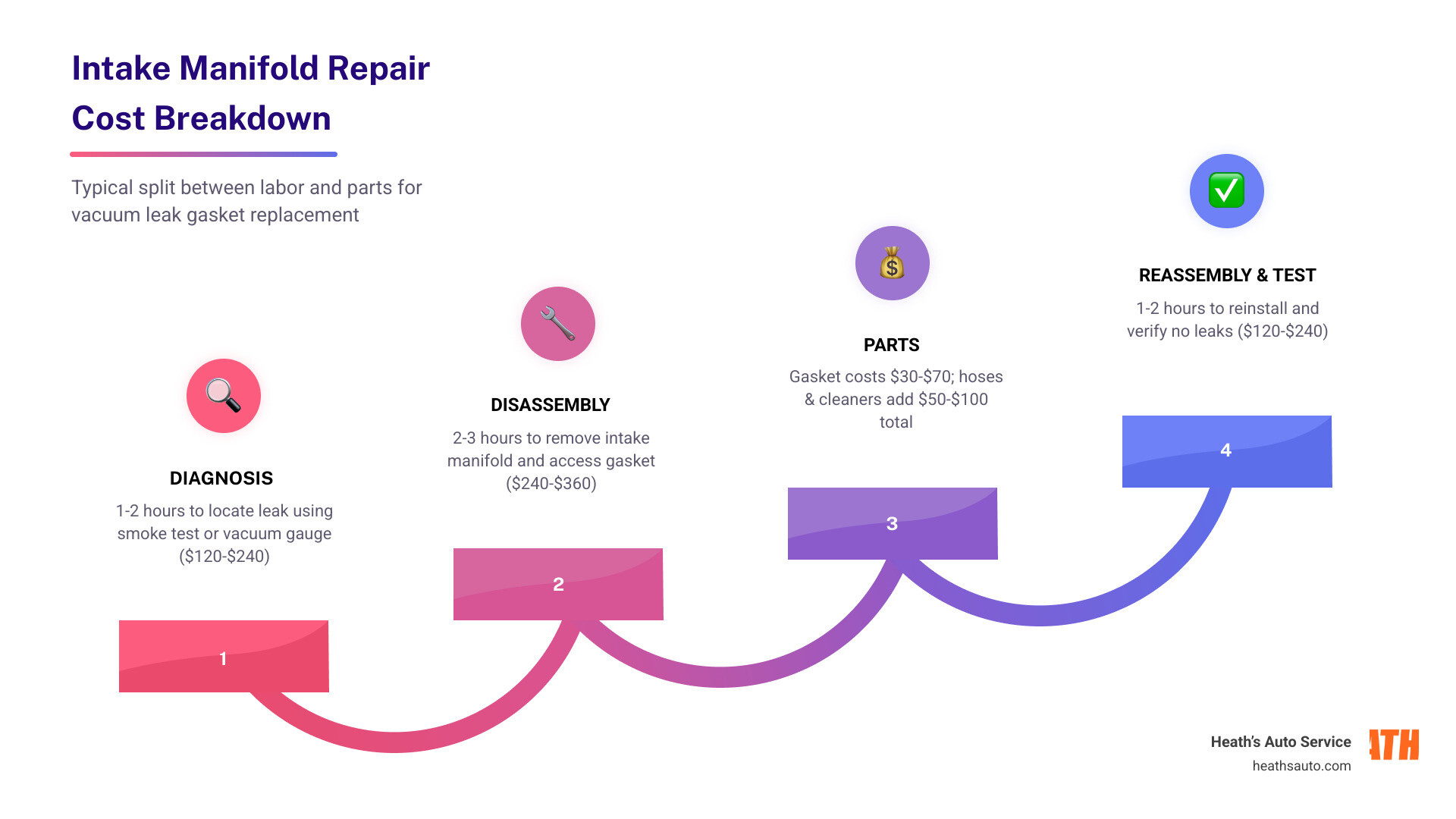
Diagnosis alone can cost $100–$150 if the leak isn’t immediately visible.
That range is wide — and for good reason. A vacuum leak could be a $6 cracked rubber hose that takes 20 minutes to swap out, or it could be a buried intake manifold gasket that requires hours of labor to access. The location of the leak matters far more than the leak itself.
If your car is idling rough, the check engine light just came on, or you’re hearing a faint hissing from the engine bay, there’s a real chance a vacuum leak is the culprit. And if you’ve already gotten a repair quote that made your jaw drop, you’re not alone — this is one of those repairs where prices can vary dramatically from shop to shop.
Symptoms and Causes of Engine Vacuum Leaks
To understand why a vacuum leak is such a headache, you first have to understand what it actually is. Your engine is essentially a giant air pump. For it to run efficiently, the computer (PCM) needs to know exactly how much air is entering the system so it can spray the perfect amount of fuel. A vacuum leak is any “unmetered air” that enters the engine behind the mass airflow sensor. This extra air ruins the combustion balance, leading to a “lean” fuel mixture (too much air, not enough gas).
Recognizing the Signs Your Cars Engine Has A Vacuum Leak early can save you from a much larger Engine Repair bill down the road.
Common Symptoms
- Hissing or Whistling: Small leaks often sound like a high-pitched whistle or the sound of air escaping a pressurized tire. It is most noticeable when the hood is open and the engine is idling.
- Rough Idling: If your tachometer needle is “hunting” (bouncing up and down) while you’re stopped at a red light in Gilbert or Chandler, the computer is likely fighting to stabilize the idle against a vacuum leak.
- Check Engine Light: The computer will often trigger codes like P0171 or P0174, which indicate a lean condition.
- Poor Acceleration: You might feel a hesitation or stumble when you try to merge onto the Loop 101 or I-17.
- Stalling: In severe cases, the leak is so large that the engine cannot maintain combustion at low speeds, causing it to die.
Why Do Leaks Happen?
The primary enemy of your vacuum system is heat. In Arizona, our extreme heat cycles are brutal on rubber. Over time, vacuum hoses become brittle and crack.
Common failure points include:
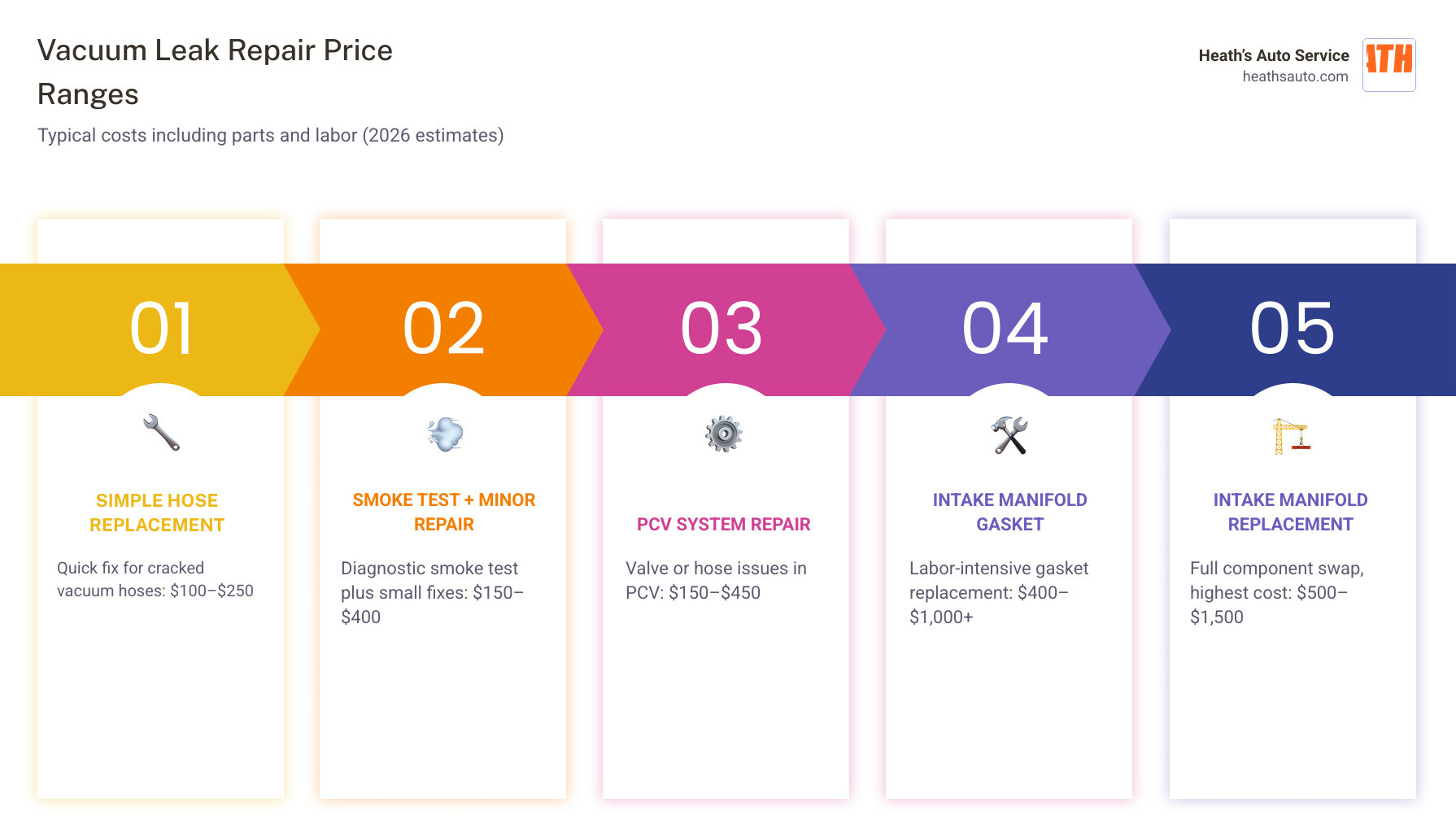
- Intake Manifold Gaskets: These seal the manifold to the engine block. When they fail, air is sucked directly into the cylinders.
- PCV System: The Positive Crankcase Ventilation system uses hoses that frequently clog or crack.
- EGR Valves: If the Exhaust Gas Recirculation valve gets stuck open, it acts like a massive vacuum leak.
- Brake Booster: A leak here does not just hurt the engine; it makes your brake pedal feel rock-hard and difficult to press.
Understanding the Vacuum Leak Repair Price in 2026
As we move through 2026, we have seen a steady rise in the vacuum leak repair price due to a 10% increase in general auto repair costs driven by labor demand and inflation. Modern vehicles also have more complex vacuum-actuated systems than cars from a decade ago, which adds to the diagnostic time.
2026 Component Price Comparison Table
| Component | Part Cost | Labor Hours | Total Estimated Price |
|---|---|---|---|
| Vacuum Hose (Standard) | $5 – $40 | 0.5 – 1.0 | $100 – $250 |
| PCV Valve & Hose | $50 – $100 | 1.0 – 2.0 | $200 – $450 |
| Intake Manifold Gasket | $30 – $70 | 3.0 – 5.0 | $450 – $900 |
| EGR Valve | $150 – $350 | 1.0 – 2.0 | $300 – $650 |
| Brake Booster | $250 – $600 | 2.0 – 4.0 | $500 – $1,200 |
When budgeting, the Car Diagnostic Cost is often a separate line item. Most professional shops in Arizona charge between $100 and $150 for a formal diagnostic session. However, many will apply that fee toward the repair if you choose to have the work done at their facility. For more details on current pricing trends, you can check this Vacuum Leak Repair Cost: 2026 Price Comparison guide.
Factors Influencing Your Vacuum Leak Repair Price
Not every car is created equal when it comes to the repair shop. Several factors can push your bill to the higher end of the spectrum:
- Vehicle Make and Model: Luxury European brands often use specialized, plastic-molded vacuum lines rather than generic rubber hoses. These parts are significantly more expensive.
- Component Accessibility: On some V6 or V8 engines, the intake manifold is buried under other components. If a mechanic has to spend three hours just to reach the leaking gasket, the labor cost will skyrocket.
- Regional Labor Rates: Labor rates in Scottsdale or Gilbert may be slightly higher than in more rural areas due to overhead, typically ranging from $120 to $200 per hour.
- Parts Quality: We always recommend OEM (Original Equipment Manufacturer) or high-quality aftermarket parts. Cheap, thin hoses might save you $20 today but will likely crack again in the Arizona sun within a year.
How to Estimate Your Vacuum Leak Repair Price
If you’re trying to figure out where you stand, start with the hunt. The hardest part of a vacuum leak is finding it. If your mechanic says they need to perform a smoke test, that is a standard and highly effective procedure.
For a How much does it cost to get a vacuum leak fixed? – AutoZone comparison, you’ll see that DIY parts are cheap, but the specialized tools like smoke generators are not usually in a home garage.
If your car is older, you should also consider the while-we’re-in-there factor. If the intake manifold has to come off to fix one leak, it is often smart to replace all related gaskets and brittle hoses at the same time. This increases the immediate vacuum leak repair price, but it prevents you from paying the labor for the same job again three months later. You can find more about 2025 Car Diagnostic Costs to see how these fees have evolved recently.
Professional Diagnosis vs. DIY Repair Methods
Many of our customers in Flagstaff and Prescott are hands-on and want to know if they can tackle this themselves. The answer depends entirely on your tools and your patience.
DIY Detection Methods
If you want to try to find the leak at home, there are three common methods:
- The Visual Inspection: Look for hoses that are disconnected, swollen, or have visible alligator-skin cracking.
- The Soapy Water Test: Spray a mixture of soap and water on hoses while the engine is running. If you see bubbles being sucked into a crack, you’ve found your leak.
- The Carb Cleaner Spray: (Use caution.) Spraying a tiny bit of carburetor cleaner near a suspected leak will cause the engine RPM to momentarily change as the flammable fluid is sucked into the engine. Warning: This is a fire risk and should only be done in a well-ventilated area with a fire extinguisher nearby.
The Professional Advantage
While DIY methods can find obvious cracks, they rarely find leaks buried under the intake manifold or inside the dashboard, where vacuum lines often control your A/C vents.
Professionals use a Smoke Machine. We hook this device up to your intake system and pump it full of thick, white smoke (actually vaporized oil). Within minutes, smoke will start drifting out of the exact spot where the leak is hidden. This eliminates the parts-cannon approach where you keep replacing parts hoping to hit the right one.
Understanding diagnostics is key. A proper Understanding The Importance Of Diagnostics In Auto Repair approach means you aren’t just paying for a fix, you’re paying for the certainty that the problem is actually solved.
Safety Risks of Ignoring a Leak
It might be tempting to drive with a small leak, but it is a gamble. A lean-running engine burns much hotter than it should. This extreme heat can eventually lead to:
- Melted Pistons: The excess heat can literally deform the metal inside your engine.
- Catalytic Converter Failure: Unburned fuel from misfires caused by the leak can overheat and destroy your expensive catalytic converter.
- Brake Failure: If the leak is in the brake booster system, your stopping distance will increase significantly.

Frequently Asked Questions About Vacuum Leaks
Is it safe to drive with a vacuum leak?
Technically, the car will often still move, but it is not advisable. Beyond the risk of engine damage mentioned above, a vacuum leak makes your vehicle unpredictable. It could stall while you are making a left turn across traffic or fail to provide enough power when you need to accelerate quickly. If the leak affects your brake booster, it becomes a major safety hazard.
Can a vacuum leak cause a car not to start?
Yes. If the leak is large enough (like a popped-off main intake boot), the engine will suck in too much air to allow the spark plugs to ignite the fuel. The engine may crank and “sputter” but fail to stay running.
Will a vacuum leak affect my power brakes?
Absolutely. Most power brake systems use engine vacuum to provide the “assist” that makes the pedal easy to push. If the vacuum is lost, you will have to use significant physical force to stop the vehicle. If you notice your brake pedal feels “hard” or “wooden,” get your vacuum system checked immediately.
Conclusion
A vacuum leak is one of those automotive issues that starts as a minor annoyance — a little hiss or a shaky idle — but can quickly spiral into a four-figure repair bill if the engine starts overheating or damaging internal components. While the vacuum leak repair price can seem daunting, getting an accurate diagnosis early is the best way to keep those costs under control.
Heath’s Auto Service In Prescott, AZ
At Heath’s Auto Service, we take pride in being your one-stop destination for full-service auto and truck repair in Prescott, AZ. Our team of skilled technicians possesses a wealth of experience and knowledge, allowing us to confidently handle domestic, Asian, and European vehicles with precision and expertise. Contact our team today!
We offer free second opinions, so if you’ve been given a quote that seems too high, bring it to us. We’ll verify the leak and give you a fair, honest estimate. Plus, all our repairs are backed by a 3-year/36,000-mile nationwide warranty, so you can drive with peace of mind.