
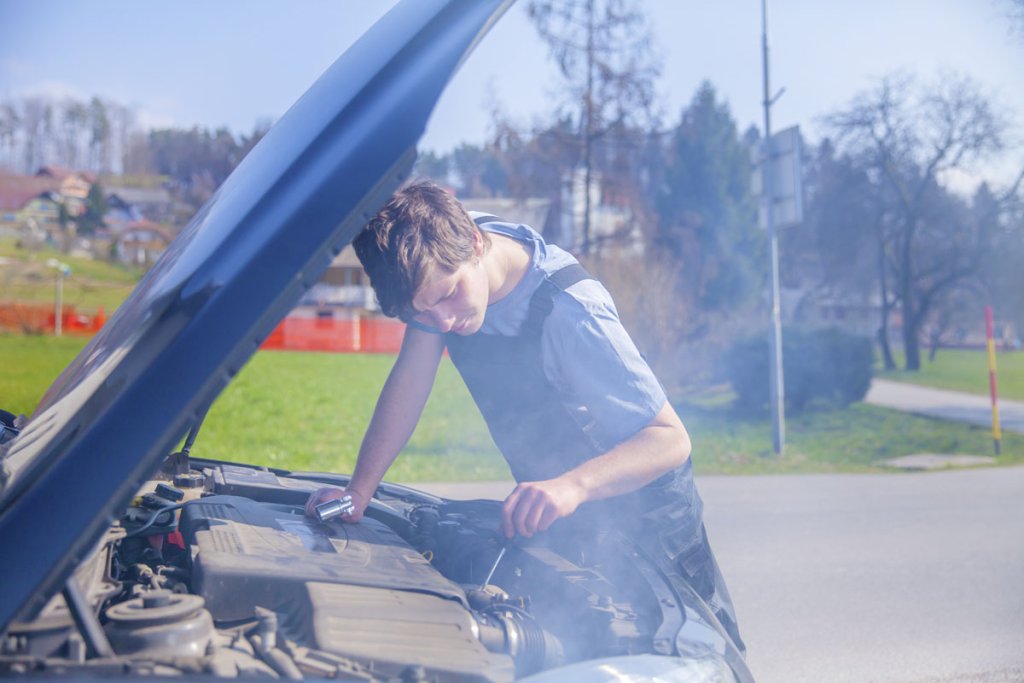
Whenever your vehicle’s engine starts to overheat and it won’t start, this is an obvious cause to be concerned. The following is what you should do if your car simply won’t start after it overheats.
What Causes Vehicle Engines to Overheat?
The engine typically overheats due to something amiss with the vehicle’s cooling system. Whenever this happens, the heat created by combustion can be so extreme it could melt and eventually cause catastrophic damage to the engine block. This can result in tremendous damage to the engine.
In order to prevent additional damage, turn off your A/C and let your windows down. After that, pull over to the side of the road as soon as possible, and shut your engine off.
There are four possible reasons why your engine has overheated, comprising:
Radiator Damage
The radiator is the place in which your coolant ultimately cools down. Therefore, if the radiator becomes impaired, the fluid can get too hot. This happens if the radiator fan fails, or the radiator has taken on damage caused by an accident.
Failing Thermostat
Your vehicle’s thermostat has the duty of managing the coolant flow. When your vehicle’s engine is started, the thermostat valve is going to remain closed, and the fluid is not going to flow. When your vehicle’s engine reaches its running temperature, the valve then opens for coolant flow. Nevertheless, a faulty thermostat might stay closed even if the engine gets hot.
Damage to the Water Pump
Coolant is a combination of antifreeze and water. A water pump is going to circulate the coolant throughout the engine, which absorbs the added heat. One issue with the water pump is that the coolant flow may become impaired.
Low Or Polluted Coolant
Even when your pump is working correctly, that is not going to be enough when the coolant itself is polluted. The build-up of these pollutants can create detrimental heat absorption.
Why Won’t My Car Start After It Overheats?
Now that the causes behind the overheating are recognized, it’s time to address starting the engine. If you aren’t able to start your car after it overheats, there are a couple of reasons why, comprising:
Vehicle Battery Damage
If the battery is not in good condition, your car probably won’t start up. If the battery has become corroded or otherwise impaired, a complete battery replacement is the only answer.
Blown Head Gasket
This can be a considerable cause of a vehicle starting to overheat. Vehicle head gaskets are made out of steel, expanding fast. Nevertheless, if they are made out of aluminum, they can simply do the reverse under higher temperatures. This can result in complete failure of the engine.
Melted Electric Sensors
Most electrical sensors in your vehicle provide signals for the electronic unit to function correctly. When your vehicle’s engine overheats, its sensors can warp or melt, preventing the car from starting.
Fuel System Damage
An impaired fuel system is the most probable suspect of an overheated engine failing to start. A failing system can cause the engine to get hot, creating heat and vapor as a result. This creates a lot of difficulty for the fuel to circulate throughout the engine.
Conclusion
There are a lot of reasons why a car could overheat, causing the inability to start it. Some of the issues can be solved on your own, whereas other significant issues call for the knowledge of auto repair professionals.
Auto Repair By Heath’s Auto Service In Flagstaff, AZ
If you’re looking for reliable, professional auto repair near Flagstaff, Heath’s Auto Service is here to provide expert care. Whether you are planning a road trip or buying a used vehicle, our detailed inspections will help drivers avoid costly surprises. Our technicians have the tools and expertise to handle your vehicle with precision and care.